0
0

PSM deal: lessons to learn
IN its 80-page judgment released on Tuesday, the Supreme Court of Pakistan has observed that the process adopted for privatisation of Pakistan Steel Mills (PSM) was in violation of law and reflected gross irregularities. The Rs 21.68 billion transaction was conducted with indecent haste by the Privatisation Commission (PC)and the Cabinet Committee on Privatisation (CCOP) with the financial adviser ignoring key aspects such as profitability and the intrinsic worth of PSM assets.The PC processed the report of the financial adviser in a single day instead of the mandated six weeks time to examine and fix a fair reference price. The Cabinet Committee on Privatisation ignored the PC Boards proposal that the PSMs net asset be included while evaluating the project. At that point of time, the value of inventories was Rs12 billion and one billion rupees excess tax was refundable to Pakistan Steel.The PC Board proposed a value of shares at Rs17.43 which was reduced to Rs16.18 by CCOP without assigning any reason. It appears from the judgment that transparency, accountability and, above all, good governance, so vital to enlist widest possible support for the privatization policy were absent in this case.
In an arbitrary manner, the Council of Common Interest was also bypassed, ignoring the provinces participation in decision-making in areas where they happen to be important stakeholders. The manipulated transaction raises the question whether privatization is being pursued in the best national interest or is it a convenient device to gift state enterprises to cronies. Finally, can the government be trusted with further privatisation without the assurance of strictly following the rules and procedures as directed by the highest judicial body, especially when no heads have rolled since the Supreme Court verdict annulling the PSM transaction seen by many as a scam. Others perceive privatization as distress sales by the government to manage the widening fiscal and current account deficits. If adhered to by the government in letter and spirit, the Supreme Court judgment can make the privatisation process more acceptable to the people as well as the provinces.
It is also amazing that the bidders were different from the purchasers. The names shown by the bidders were not there in the sale agreement signed on April 24 and had not been approved by the Cabinet Committee on Privatisation. Why such a shoddy effort to hide the real identity of the purchasers and for what purpose or for whose benefit? In the agreement, it was also stated that the holding period of shares of the Pakistan Steel had been fixed for three years. The Supreme Court expressed its fears that the PSM may change hands in a manner that may run counter to national interests. Pakistan Steel is the largest industrial enterprise in the country which had been set up after decades-long fierce opposition from powerful importers lobby supported by foreign suppliers. It is also a monopoly and a strategic national asset. In such cases, not only the sale price but the integrity and entrepreneurial background of buyers is equally important. With changing ownership and management, the Pakistan Steel could be deprived of the much needed modernisation and expansion. One hopes that the severe jolt given to the government by the Supreme Court judgment would persuade it from now on to abide by its own laws, rules and procedures to make privatisation a success. It should not be tempted to oblige its favoured ones.
Sindh bracing for floods
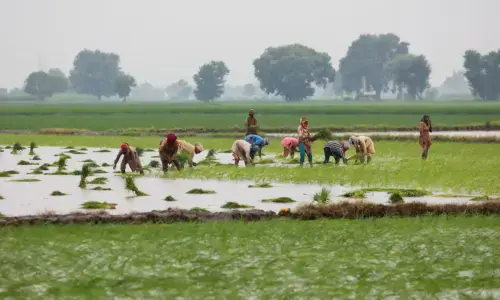
AMPLE notice has been served. Four days ago, the Federal Flood Commission (FFC) warned that a “very high flood” is likely to hit Guddu barrage on or about August 11. The flood surge is expected to reach Sukkur barrage two to three days later and should hit Kotri, the southernmost of the three barrages in Sindh, sometime between August 22 and 23. With the Indus rising at a rapid rate, and more rain predicted across the country, the FFC also advised the Sindh government to take urgent precautionary measures. As things stand, there is little doubt that some flooding will occur, and that too within a specified timeframe. Given the advance warning issued by the flood commission, one hopes that at least loss of life will be reduced to a minimum. But then the rain-related havoc in Karachi this year has shown that the situation can quickly get out of control despite prior knowledge of the impending deluge. It can also be argued that the country’s perennial vulnerability should be warning enough of the annual threat posed by the monsoon rains. After decades of relentless deforestation — and now global warming — flash floods and landslides have come to be accepted as inevitable phenomenon in the north of the country. Still, there is no excuse for the routine inundation of towns and cities because of flawed planning, shoddy building standards and poor drainage systems. Parts of Balochistan continue to be cut off from the rest of the province as makeshift roads are submerged or washed away every summer. Sadly, our civic management have failed to learn from past mistakes. Year after year, our familiarity with misery is renewed as death and destruction revisit the country yet again.
It is heartening, however, to note that the FFC’s warning has at least caused a stir in the Sindh administration. Army troops have been deployed for emergency duty in district Thatta while plans are afoot for the evacuation of some 55 villages in Nawabshah. The proof, though, will be in the plans’ execution. Given its manpower, material resources and organisational skills, the army must continue to take the lead in flood duty and protect life and property across the country.
Yet another traffic jam
WHILE road conditions in Karachi seem to be getting worse all the time, few traffic snarls could have matched the one witnessed on Tuesday when motorists were stuck for hours on end in long queues extending for miles. Several areas witnessed traffic jams but the worst was on Korangi Road where motorists, resigned to a long wait in the dark, simply turned off the ignition and the headlights of their cars. Few cops were around and in the end bystanders took matters into their own hands and started to direct the traffic flow. Unlike so many times in the past, this time VIP movement was apparently not responsible for the traffic jam: it was caused by the diversion of vehicles from certain city roads, rendered unusable by the recent rains, to other routes. The resulting crisis led to anxiety and panic among the commuters, some of whom included small children and patients on their way to hospital.
Meanwhile, true to form, the traffic police (who initially refused to accept that there was a crisis on Tuesday) and the city administration have once again displayed the kind of callousness that can only be associated with those not serious about carrying out their duties. Evidently, they have not learned from the past so many instances of interminable traffic jams in Karachi and are apathetic to criticism on this score. With this kind of attitude, little is likely to change, and traffic conditions will inevitably worsen with the rise in the number of vehicles on the roads and construction projects which never seem to end. One can only ask the relevant authorities to take corrective action by ensuring that traffic policemen are present at congested crossings during peak hours and that they quickly arrive at the scene of a vehicular accident which is often the cause of traffic coming to a standstill.
More facilities for legislators
Prime Minister Shaukat Aziz wants to improve the quality of life of the people of Pakistan. That has been promised by successive leaders often in the past. But the promise has hardly ever materialized except in case of a small number of people.
Not that they didn’t want to really fulfil their promise, but it is hard to deliver that when the number of people involved is 160 million and the government is usually preoccupied with its multifarious pursuits.
The prime minister wants to begin that process by providing clean drinking water to all. In fact he and the president are committed not only to deliver drinking water to all by the year 2007 or early 2008, but also electricity as well. It is a very large commitment, but they do not appear to be daunted by that, but the masses are sceptical.
Judging by the prolonged privation that the people of Karachi have undergone in recent times following repeated power breakdowns and loadshedding the promise of power for all by next year seems too rosy. In fact, how can water be available for all in the ordinary course when the ratio of water per head has decreased to one fifth of what it was fifteen years ago.
While the masses have been promised water and power, ex-prime ministers are to be offered pension, varied perquisites and other privileges like those given o former presidents of Pakistan. A motion for that purpose is awaiting the prime minister’s signature. The proposal has been sent to the prime minister by the ministry of parliamentary affairs with the full backing of its minister Dr Sher Afgan. Mr. Ghulam Ishaq Khan, Farooq Leghari and Rafiq Tarrar are receiving such benefits which include a handsome house rent and a staff officer of grade 17.
While the ex-presidents alive are only three, ex-prime ministers are too many including the numerous caretaker prime ministers. Will a minimum period for holding the office as prime minister be fixed to qualify for receiving such pension and other perquisites? The fact is that none of the ex prime ministers come from poor families, nor are they resourceless persons. Most of them come from feudal families which are not in need of such subvention.
And will such pension and perquisites be available to former prime ministers Benazir Bhutto and Nawaz Sharif who are leading the opposition. The minister also wants such pension and other payments to be provided to former members of the national and provincial assemblies who had occupied their seats for three years. That is the way to show respect to those who had been elected, says Dr Afgan.
The National Assembly is also to approve a motion aimed at giving special huge perks and privileges to its sitting members. That will come before the assembly in the form of a report by a joint committee of the house giving details of the privileges. And they include two offices for every member, one in Islamabad and the other inside their constituencies with secretariat staff to run the both, diplomatic passports for them and their family members and an increased amount of travel vouchers. They will also have medical facilities and residential accommodation for their families. Tactfully the recommendation includes an institute for training the MPs.
The opposition was fully represented in the committee. When it comes to higher pay and perquisites for members there is hardly any disagreement between the ruling party and the opposition members. In fact, some of the countries give far more privileges to their MPs than what the report has suggested, says the minister.
He has already sent the report to the speaker of the National assembly who has included it in the agenda of the current session. After its approval, the measure will be placed before the prime minister for his approval. Normally the prime minister should approve the contents of the report first and then it should come before the national assembly. But now the cart is being put before the horse so that the prime minister cannot reject the unanimous demand of the National Assembly. But in reality how will he react to this loaded approach of the minister or the National Assembly committee?
On the one side we have the assembly sessions which have no quorum and get adjourned abruptly too often before doing any legislative work. And yet they are paid more and more under various heads. Look at the riotous sessions of the Sindh Assembly which gets adjourned suddenly after one rumpus or another.
If such former assembly members are given pension and varied perquisites after they seize to be members that will amount to rewarding an absolutely negative performance and a gross waste of public funds in a poor country.
It appears that the financial hardships of the leaders and legislators are greater than the poverty of the low-income or no-income groups. And they have to be paid handsomely while they are members as well as after retirement. On one side the State Bank of Pakistan wants to follow a tight monetary policy to contain inflation and on the other the purse strings of the government with a gross budget deficit of Rs140 billion, are being loosened to accommodate the rulers and the legislators.
There is a great deal of difference between a government official who works 9-to-5 and gets paid for that and the members of the assemblies who hardly show up in the house or vanish too soon after appearing there.
It is time that the performance of the members of parliament is evaluated and a study made of the numerous foreign trips which they and those of the provincial assemblies undertake to study the working of other parliaments. To what extent have these trips contributed to improve performance of our assemblies and the government? It is time a research group is enabled to make such a study since the assemblies have been expanded very considerably and many nominated to be its members . We need a parliament in which members put in some hours of work and not merely sign the register and go away. The members should feel that their conduct and performance was being monitored and evaluated.
Now if each member is given an office in the assembly chamber or next door he may spend more time there rather than in the assembly.
Dr. Afghan has in mind the perquisites and privileges of the members of Congress including the Senate in the US, the richest country in the world. How can a country where a third of the people are excessively poor give the same kind of perks and privileges to its legislators who usually fail them?
Most of the members are rich or are feudal lords or affluent businessmen and a number of them like the women members come through nomination. How can such affluent members expect their poor voters to pamper them endlessly in return for no service to them? Such demands are made on the state when the country is running large macro-economic deficits. The trade deficit this year may rise to $15 billion after last year recorded a deficit of $12.84 billion and the current account deficit was nearly six billion dollars last fiscal year.
World oil prices are soaring and the possibility of oil hitting $100 a barrel seems real as the Middle East political and military situation gets far worse. That can push up our oil import bill fearsomely. The world food prices are also rising including the prices of palm oil and sugar. Metal prices are also on the rise and last year the country could not achieve its export target of 17 billion dollars as the export rose to only dollars 16.5 billion.
In such a situation the government and the country have to tighten their belts, but what we see is a great deal of profligacy and that is what the audit report of the government for the year 2003-04 shows. The National assembly has received the audit report which shows a mis-spending of Rs30 billion in only 2 per cent of the accounts audited by the auditor general. If the full account is audited, the mis-spending and waste will be far more. The government is pleased with its policies of deregulation, privatisation and liberalisation. They should result not only in higher economic activity and higher economic growth but also less government spending on non-essential items and non-priority areas. And certainly the number of persons on the payroll of the government should come down steadily from its peak of four million employees. If the computerisation of the government offices does not result in the reduction of the government staff along with liberalization, deregulation and privatisation, what else can bring a reduction in the size of the workforce employed by the government?
Such reduction of the staff should be done according to a plan drafted in consultation with the Planning Commission and it should cover the provinces as well. The government needs not take pride in being the largest employer in the country.
The approach to the armed forces strength should also be reviewed in the light of the fact that Pakistan has become an effective nuclear-weapons state. The number of non-competence in the armed forces can certainly be reduced and the defence made more effective and economic.
President Musharraf says that the enlightened policies of the government had reduced the brain drain. The fact is that unemployment among the educated is still very high. And if far more people are not going abroad that is the result of the aftermath of September 11. It has become harder for Pakistanis to get good jobs abroad.