



 0
0

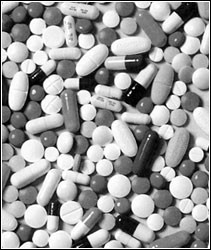 THE global pharmaceutical industry, which has its origin in the apothecaries of medieval Europe, has grown into a giant. Single brands of some of the drug products alone enjoy worldwide annual sales of $2-4 billion each.
And talking about the generic sector of the global pharmaceutical market which is estimated at $50 billion, is growing at a sound pace of 15-20 per cent per year.
Half of these revenues are generated in the United States alone rendering it the most fertile ground for generic marketing. Considering the 40 or so US patents expiring by the year 2009, there is every reason for a wide grin on the faces of the entrepreneurial generic manufacturers.
So, India has been successful in getting United States FDA approvals of 80 pharmaceutical establishments. What is the big deal? Of course it is a deal bigger than most could imagine, since United States aside, no other country in the world thus far could claim to have 80 US FDA approvals of pharmaceutical facilities!
And all this has happened in a mere decade or so, leading the industry watchers outside of India to comment that the national pharmaceutical industry of India seems to firmly believe in management by objective and appears to constitute a highly goal oriented cluster of manufacturers.
The doors to the $25 billion or so US generic market are now wide open to the approved Indian establishments who would find themselves rolling in profits for reasons of low cost of their raw materials and the low cost of manufacture. Those who may not have adequate facilities and systems in place to market their products in the United States would still have the potential of attracting the outsourced manufacturing business. Simply put, it is a win-win situation.
Comparing the mega achievements of the Indian pharmaceutical industry with that of Pakistan, one might perhaps say that it is unfair to compare apples with oranges since India was bestowed with established industries at the time of partition while Pakistan had virtually none.
But Pakistan has since come a long way, and currently has close to 375 licensed drug manufacturing units, believed to be generating an equivalent of $1.5 billion in revenues.
The country is also reported to have earned $50 million in foreign exchange from pharmaceuticals exports during the year 2004. By contrast, based on the March 2005 report of the Federation of Indian Chamber of Commerce and Industry, while the Indian pharmaceutical industry generated $8 billion in revenues (mind you, pharmaceuticals are significantly cheaper in India compared to Pakistan), exports between 2003 and 2004 made a healthy contribution of $3.13 billion.
Indian pharmaceutical industry’s progress is striking and its performance in the exports sector even more impressive. It is safe to assume that the large number of US FDA approvals had a significant role to play in the latter case.
Most countries around the world would be happy to provide fast access to their pharmaceutical markets if a foreign applicant would approach them with a seal of approval from the US FDA. And the Gulf Co-operation Council countries that are being targeted by the Pakistani industry with little or no success are no exception.
It is important to remember that for the great majority of Arabs it is no more a matter of survival on any brand of pharmaceutical product from any origin, since they have long before moved to higher levels of Maslow’s hierarchy of needs. They are affluent, and as a customer they have a wide variety of products and services to choose from.
On the other side of the coin, the Pakistani industry’s responsibility as a marketer is to properly identify its customers’ needs and then effectively meet those needs through appropriate offerings. Offerings that are able to meet the foreign customers’ needs from a regulatory perspective. Are the Pakistani manufacturers of drug products forgetting this basic lesson in marketing? I hope not!
Quality-wise, why is the national Pakistani pharmaceutical industry perceived as inferior? Does Pakistan not have a set of cGMPs to apply to the manufacturing operations? Of course, it does. These were officially introduced in May of 1998, covered by the Drugs Act 1976. Why then is the outside world reluctant to allow Pakistani pharmaceuticals to enter their markets? The difference is in the level of compliance to the cGMP regulations.
The industry obviously has the document, but lacks its implementation. And disappointingly, the Pakistani Regulatory Agency’s monitoring of the industry is way different from that of the US FDA or the like.
A root cause analysis would suggest that improving the knowledge of the ministry’s inspection staff in the areas of pharmaceutical manufacturing and quality science, as well as upgrading their inspection methodology to the required international standards is highly desirable.
It is only then that the Pakistani drug inspectors would be able to appropriately identify the GMP related deficiencies when performing an Establishment Inspection and then subjecting the inspected establishment through an adequately narrated deficiencies report to take timely corrective actions.
Such an inspection approach would meaningfully contribute towards improving the operational standards of the inspected pharmaceutical plant and gradually facilitate its progress towards the internationally acceptable levels of compliance.
Likewise, the industry needs to buy-in the concept of voluntary compliance. It needs to develop the capacity to identify the deficiencies with reference to the GMP requirements and proactively take corrective actions in order to continually maintain a state of self-imposed compliance. This sure would serve to pave the road to US FDA’s, or for that matter any developed country’s regulatory agency’s approval of the Pakistani manufacturer.
The writer is a pharmaceutical quality management consultant based in Ontario, Canada.






























