0
0

PESHAWAR, July 16: The government on Sunday announced setting up of an inter-tribal jirga to restore peace in the North Waziristan Agency.
An official statement said that the 45-member tribal jirga, comprising representatives of all seven tribal agencies and the Frontier Regions, would begin its work with a visit to North Waziristan’s regional headquarters Miramshah from July 20.
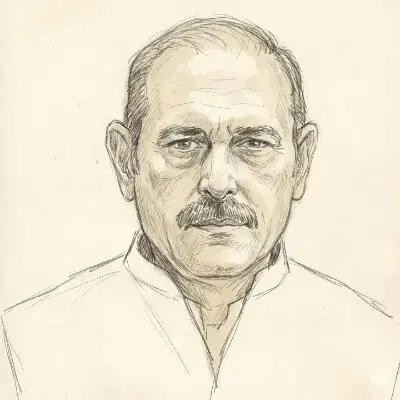
The visit to the volatile region would be preceded by the jirga’s meeting with Governor NWFP Lt-Gen (retd) Ali Mohammad Jan Aurakzai.
Officials, who did not say anything about the jirga’s composition or its mandate, said that it would be given “full authority to negotiate and settle matters with militants”.
The decision to form the grand jirga was made at President Pervez Musharraf’s meeting with tribal elders at the Governor’s House on April 26 but its formation was delayed when certain issues about its composition cropped up and also because of the change of the province’s governor. The extensive vetting by the security apparatus of the names proposed for the jirga and their subsequent approval by the Governor’s Fata Secretariat also contributed to the delay.
Officials, however, cautioned that results of the jirga’s efforts would largely depend on its composition and mandate.
“We don’t know what its composition would be. There are several issues involved here. For instance, who would be on the jirga and what would be its mandate,” said a senior official.
“Governor Aurakzai has been keeping his cards close to his chest,” the official said.
Governor Aurakzai, after spending two days in Nathiagali, asked the head of his media section to make the announcement.
The officials also cautioned about the presence of foreign militants in North Waziristan and the issue of infiltration by militants into Afghanistan and said that these issues had stymied previous peace efforts.
“Do we want to achieve peace for the sake of peace by sidestepping main issues, sweeping them under the carpet, or do we want to tackle these issues is something that will determine the durability of any settlement with militants,” one official said.
Analysts pointed out that the launching of the jirga marked the behind-the-scene talks between government and militants in North Waziristan.
It was preceded by the June 25 unilateral, but conditional, ceasefire by militants in North Waziristan and endorsed by the July 8 Taliban decree.
Dawn has in its possession a document issued by the self-proclaimed Emirate-i-Islami, a title still used by the Taliban despite being ousted from power in 2001, endorsing the ceasefire.
The hand-written statement, whose authenticity has been confirmed, was signed by, among others by a senior Taliban commander, Mallah Akhtar Mohammad Osmani, who was the corps commander of Kandahar until their ouster from power and Bakhta Jan, another Taliban commander.
“The policy of the Emirate-i-Islami (Islamic Emirate of Afghanistan) is that we do not want to fight Pakistan. All those, whether ansaars (locals) or mohajirs (refugees) who are (sympathetic) with the (cause of the) Emirate-i-Islami are hereby informed that they should stop fighting Pakistan because fighting Pakistan benefits Americans,” the document said.
Dawn has learnt on good authority that while the government had been engaged with militants for quite some time to help bring peace to the tribal region, Governor Aurakzai had been making personal efforts to reach out to militants. One of his main contacts for the purpose was Maulana Fazlur Rehman, although some officials warned that the JUI (F) leader had little or no influence over main commanders involved in the conflict.
One that has remained unresolved is the issue of release of militants held by security agencies. Militants demand that over 60 of their men in custody be released; the government on its part wants them to show some goodwill before it could decide the fate of the detainees.
“Just how much is the government willing to concede and where will it draw the line?,” said one official.
Analysts cautioned that total appeasement of militants for peace at ‘whatever cost’ could prove to be counter-productive and dangerous.