0
0

KARACHI, July 16: The public transport system in Karachi has been the most neglected sphere of civic life in this seventh largest city of the world. It continues to create mess most often as the bureaucrats concerned are yet to collect courage to challenge the ‘transport mafia’ responsible for the chaos.
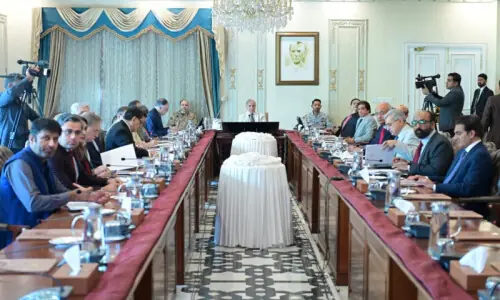
In the first week of September last year, the Director General of Mass Transit and EDO Transport Malik Zaheerul Islam gave a briefing to Adviser to the Chief Minister on Local Government Waseem Akhtar on inter-city bus termini project.
The adviser was told that transporters had set up some 200 illegal bus termini in various parts of the city, including Old Sabzi Mandi, Sohrab Goth, M. A. Jinnah Road, Cantonment Station, Lea Market, PIDC, Mauripur, Garden Road, Nishtar Road, Benaras Chowk, Orangi Town and North Nazimabad.
He was informed that around 226 buses were parked at the Cantonment Station, 217 at Pathan Colony, 217 at Old Sabzi Mandi, 125 at Taj Complex, 100 at Lea Market and 55 at Patel Para every day as a routine.
He was further informed that three inter-city bus termini, -- at Yousuf Goth, Baldia Town on RCD Highway; Razaqabad, Landhi, on the National Highway; and at Deh Bhatti Umeri, Scheme 33, on the Superhighway – were planned whereas 60 per cent work on the Yousuf Goth terminal had been completed.
According to the plan, all buses operated on Karachi-Balochistan routes will use the RCD Road terminal, those operated between Karachi and interior Sindh/Punjab/NWFP will use the Super Highway terminal, and those operated between Karachi and certain parts of Sindh will use the National Highway terminal.
At the meeting, officials were asked to remove bottlenecks in the implementation of the plan and execution of the project so that all illegal bus termini in the city could be removed and the traffic congestion on major arteries could be eased.
However, more than 11 months after the meeting, the ground realities are almost unchanged. All illegal bus termini are still operating in the city with complete impunity and there are no signs of their shifting in near future.
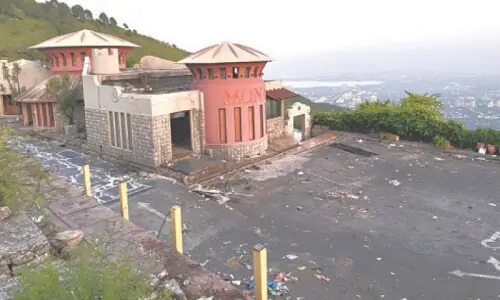
Interestingly, the construction of Baldia Town terminal has been completed and, according to sources, tenders for its operation, management and maintenance have already been invited in the last week of May last.
On January 19 this year, City Nazim Syed Mustafa Kamal while announcing a Rs24.78 billion foreign-funded mega project for the city, had announced that all termini handling the inter-city buses services between Karachi and Balochistan would be shifted outside the city by June 2006. However, it is mid-July now and the illegal bus termini are operating at the Old Sabzi Mandi and other areas as usual.
The situation arising out of the sorry state of the public transport system has not emerge in one day, rather it is the result of inaction, inertia and lack of courage on the part of bureaucracy for many years.
The running of more than 200 illegal bus termini in the largest city of the country for years needs no further comment. It shows a clear picture of the commitment of bureaucracy to resolve the chronic public transport issue and bring an end to the agonies of its millions of commuters.
All ambitious drives aimed at improving public transport system in Karachi, including introduction of the official yellow-white colour scheme for minibuses, allotment of route numbers to coaches and ensuring fitness of public transport vehicles, have failed to take off because of the failure of bureaucracy to translate its words into action.
The city government, in its budget for the current fiscal has tagged a hefty amount of Rs500 million for a detailed study of an environment-friendly public transport system under private-public partnership.
To give the city a modern, disciplined and efficient transport system certainly needs long-term studies on scientific lines but many aspects of the present public transport system needed quick action and not just studies.—PPI