



 0
0

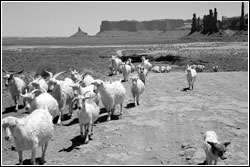 GOAT population has increased during 1991 to 2004 from 37 million to 54.7 million. The animal produces approximately two per cent of the world’s total annual milk and ranks third after cow and buffaloes’.
Farmers in Pakistan mix goat milk with that of buffalo and cow. There is no separate selling point of this milk. Goat is a main source of dairy and meat products for the rural people.
The nutritional and health benefits of goat milk are related to a number of medical problems, foremost being food allergies. There is a niche in dairy industry for goat milk because of the medical needs for which research is essential.
The milk has higher protein, fat and phosphate. Its composition varies with factors such as diet, breed, environment, and management. It differs from cow or human milk in higher digestibility, distinct alkalinity, higher buffering capacity, and certain therapeutic values in medicine and human nutrition.
It is also a substitute for those who suffer from cow milk allergy. Its products are source of protein, phosphate and calcium. The basic nutrient composition of goat milk resembles cow milk, where both milk contain substantially higher protein and ash, but lower lactose content.
The major constituents of goat milk are high in early lactation, decline rapidly, then remain low for a variable length of time, and increase again towards the end of lactation.
The gross composition of goat milk is higher than that in bovine milk, except for lactose which is low. Fat globules are smaller and probably one of the reasons for easy digestion of this milk. There are also differences in the fatty acid profile as goat milk has higher percentage of short and medium-chain (C6–C14) fatty acids.
These are used for the treatment of mal-absorption syndromes, intestinal disorders, coronary diseases, premature infant nutrition, and cystic fibrosis and because of its unique metabolic abilities in providing energy and at the same time lowering, inhibiting and dissolving cholesterol deposits.
Goat milk exceeds cow milk in monounsaturated, polyunsaturated fatty acids and medium chain triglycerides which are beneficial to human health, especially in cardiovascular condition. Biomedical superiority has not been promoted much in marketing goat milk, yoghurt and cheese.
Fatty acid composition of goat milk fat can be changed by feed supplementation, including change of forage concentrate ratio. Recently, a more beneficial fat, conjugated linoleic acid (CLA) has been identified as a potent anticarcinogen and is primarily provided to human diet but has not been studied in goat milk yet.
Human milk oligosaccharides are beneficial to infants with regard to their prebiotic and anti-infective properties. However, so far no milk from farm animals is considered a natural source of lactose-derived oligosaccharides for human nutrition but a large amount and variety of acidic and neutral oligosaccharides are found in goat milk. In addition, 15 new oligosaccharide structures were identified in caprine milk and is concluded that goat milk is a natural source of oligosaccharides for human nutrition due to its composition and concentration.
Goat milk proteins are similar to cows but differ in genetic polymorphisms and their frequencies in goat populations. The differences in genetic types are due to amino acid substitutions in the protein chains which are responsible for differences in digestibility, cheese making properties and flavours of products.
Peptides formed from goat milk casein tastes less bitter than those of cow milk casein. Average amino acid composition of goat and cow milk shows higher levels of six of the 10 essential amino acids: threonine, isoleucine, lysine, cystine, tyrosine, and valine. Mineral contents show higher Ca, P, K, Mg, and Cl, and lower Na and S levels than bovine milk. Mineral contents of goat milk yogurt have significant differences in the levels of Ca, Mg, P, Fe, Zn, and Al between different varieties. Mineral concentrations of 30 varieties of commercial goat milk cheeses produced in the US revealed that there were wide variations in concentrations of P, K, Ca, Na, Cl, Fe, Al, and Zn among and within varieties of the cheeses.
Milk and other dairy products obtained from cows interfere with the absorption of Fe from diet. Studies have shown that when goat milk is incorporated into the diet of rats, it produces a greater nutritive use of Fe and minimizes the possible interactions of Fe with other minerals such as Ca, P and Mg, in comparison with animals fed with cow milk.
Cow milk causes medical problems such as infantile eczema. Many hospitals and medical practitioners in the UK keep a list of sources of goat milk that they recommend to patients. The term universal foster mother was often used to describe the goat. Utilization of goat milk can be improved on the advice of medical practitioners for patients suffering from cardiovascular problems, for infant feeds, for nursing mothers and those allergic to cow milk.






























