



 0
0

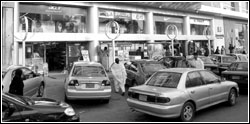 PAKISTAN’s retail sector has grown at an average annual rate of 7.2 per cent between 1999-2002. The trend is expected to continue, and may even accelerate as growing personal income enable consumers across all segments to spend more on goods other than basic necessities of life.
As a result gradual melting of rural and urban divide in consumer lifestyles, sales through supermarkets and other mixed large retail channels grew by about 30 per cent over the reviewed period and sales through supermarkets, though very small in numbers, increased by about 50 per cent. Their sales almost tripled over the period.
This high rate of growth in sales through modern retail avenues is expected to continue during the coming years, with rapid growth in the number of such outlets resulting from changing shopping trends, economies of scale, the consumer preferences The sector’s untapped growth potential will continue favouring supermarkets over other types of retail outlets. Supermarkets are expected to be almost doubled in number by 2008 and sales will be nearly tripled.
The largely populated province of Punjab which makes up 60 per cent of the total sales, experienced the highest growth rate due to improvements in infrastructure and easy credit terms for investment. It’s sales growth during the period averaged 8.5 per cent, whereas the national average for the same period was 7.2 per cent. Retailers’ share in the GDP is also growing. The trend is likely to continue.
But, as yet, the retail industry is fragmented and under-developed as demonstrated by a large number of retailers. The number of retail businesses totaled around 2.2 million in 2003, with the total number of outlets of around 2.4 million. This sector employs about 4.43 million people (on average two employees per business), and makes up around 11 per cent of total official employment.
Most retail businesses are family-owned and mostly run as general stores or small specialist shops. There is only a handful of large retailers, and even those tend to operate only at local level and that too in the form of of small kiosks and mobile units. However, starting from a small base, supermarkets are gaining a new popularity in the urban areas.
There is no restriction on foreign companies to own and operate retail outlets and moreover in 2005, Pakistan has made its first appearance on the Global Retail Development Index (GRDI) which helps retailers address the timing of international expansion by ranking emerging countries based on a set of 10 variables including economic and political risk, retail market attractiveness, retail saturation levels.
Pakistan’s high market saturation score reflects one of the least concentrated and untapped retail sectors in the world. In fact, the only identifiable chain is state-owned Utility Stores Corporation which holds just 0.3 per cent of the market. MNC retailers are now exploring retail store business. SHV Makro plans to open 30 stores; Metro’s Cash and Carry plans to build 21 outlets; Spinney expects to open 6-8 retail outlets and TabSan has a plan for opening four
Despite the government’s open policy, foreign companies prefer to enter the market through joint ventures with local firms. This emerging market is yet to be explored by our local entrepreneurs.
Supermarkets are cutting costs over the past five years, foraying into competition with and beat wet markets (fresh markets for produce) and small retail shops operated by a family. These chains are opening up other formats, such as hypermarkets with a focus on low prices and large volume and diverse product lines. They have also started franchise operations to spread more quickly in relatively poor areas embracing all strata of a society.



























