



 0
0

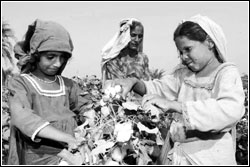 COTTON productivity has increased significantly but its potential yield has not yet realised fully. With existing technologies, the yield can be improved. The progressive farmers obtain yields two to three times more than the national average which is 570.99kg per hectare.
The gap between the national yield and that procured by progressive farmers represents the untapped reservoir. Priority should be given to bridge this gap by producing enough to meet future needs of fibre and edible oil.
The highest yields have proved that the adoption of appropriate technologies is both beneficial and economical.
A variety of factors such as climate and inputs affect cotton productivity, among which few are: biological factors which result in low adoption of new technology by farmers and thereby cause yield gap; there is lack of trained manpower, finance, proper marketing facilities besides high cost of agricultural inputs.
Cotton management in complex farming systems is influenced by time conflicts in the harvesting of preceding crops and the sowing of cotton, and interactions due to residual effects on the succeeding crops. It is estimated that timely availability of inputs such as seed, fertilizer, weedicides and pesticides could enhance crop productivity.
This article is based on primary data collected through a comprehensive questionnaire from 75 cotton growers of Sargodha district. Cotton growers were selected randomly from three villages. From each village, 25 farmers were interviewed for detailed information.
This study was designed to investigate the role of farmers’ management practices in achieving higher cotton productivity. The assessed factors include education, land preparation, seed, irrigation, plant protection measures, nitrogen and phosphorus. The effects of these factors on cotton yield were investigated through multiple regression analysis. The Cobb Douglas type production function was estimated using the ordinary least square (OLS) method.
The R2 value of 0.49 can be regarded as quite a good fit in view of the cross-sectional data involved in this study, since it implies that about 49 per cent variation in yield is explained by independent variables included in the model. The influence of independent variables on cotton yield are discussed in detail as follows.
Education: Education plays a vital role in the adoption of improved technology and attaining higher productivity level. The results of the study indicate that coefficient of schooling year was positive (0.150) and was statistically significant at five per cent probability level. This result indicates that one per cent increase in schooling year could enhance cotton yield by 0.1502 per cent. This increased yield would result due to better management practices and adoption of latest technologies in cotton cultivation.
Land preparation: Cotton is a deep-rooted and heavy feeding crop. It thus needs deeply tilled and well prepared soil for its tap root to penetrate deep into the soil and feeding roots to establish in the feeding zone. The result of production function shows that the number of tractor hours for land preparation had a positive coefficient (0.153); and it was statistically significant at 10 per cent probability level. The positive coefficient implies that well prepared land contributes significantly toward higher yield of cotton crop.
Seed rate: Given other factors, the seed rate determines the plant population in a field of certain crop and thus is an important factor in determining yield. The coefficient of seed rate was positive, however, it was statistically non-significant. It may be due to the fact that farmers were using seed according to recommended level.
Irrigation: Although statistically non-significant, the positive coefficient of number of irrigation implies that one per cent increase in number of irrigation could enhance 0.101 per cent higher yield of cotton crop. The reason for non-significance of number of irrigation was that the farmers were applying irrigation according to crop requirements.
Plant protection measures: Plant protection measures include weeding, hoeing and application of pesticide to control pest and disease on cotton crop. The incidence of weeds, pests and disease is a growing problem in all cotton-growing areas and adoption of chemical control methods are increasingly becoming popular.
Results of the production function reveal that the cost of plant protection measures had a positive coefficient (0.244) and it was statistically highly significant. This result indicates that the additional cost of plant protection measures increases yield significantly.
Fertilizer use: The recommendations regarding application of chemical fertilizers also emphasize the use of balance dose of N: P: K. Therefore, variables of P-nutrients and N-nutrients were included in the model. The coefficients of nitrogen nutrient and phosphorus nutrient were positive and were statistically significant at five per cent probability level.
Conclusion and suggestions: There are many factors that affect cotton productivity, namely socio-economic, biological, managerial and physical. In this study, some important factors were taken into account to determine their effect on productivity. These were schooling years of the respondent, land preparation, irrigation, seed rate, plant protection measures and fertilizer nutrients. All these contribute positively towards higher yield. However, the effects of schooling year, land preparation, fertilizer and plant protection measures were significant.
Reorientation of breeding research is required to evolve high yielding, and disease-resistant varieties. Moreover, extension systems should emphasize in training farmers to control weeds and disease and pest attack. Field visits and demonstration by extension staff could be the right steps in that direction.
There is a need to emphasize research and extension strategies. The provision of sufficient resources to research and extension systems is suggested for developing and promoting new technologies to combat disease and pest attack on cotton crop.
Timely availability of quality inputs such as seed, phosphatic fertilizer, weedicides and pesticides play the key role in productivity enhancement. The efforts of agencies and departments involved in the distribution and quality control of vital inputs need to be accentuated further. This would ensure timely availability and quality of these inputs to growers.






























