0
0

DEFENCE budget has always been a major portion of our public expenditure. Given the peculiar circumstances in which Pakistan found itself at the time of independence, keeping a strong military became number one priority.
During the last 50 years, successive governments, both military and democratic, have tried to keep the funds flowing to military whatever the state of the economy.
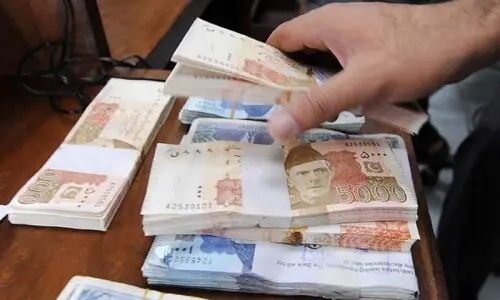
Keeping with the past trend, the recent budget has earmarked a record amount for defence. The allocation for defence has increased from less than Rs200 billion in 2004-05 to Rs223 billion in 2005-06 to Rs250 billion in the new budget. A more worrying trend is that the hefty increases each year have proven insufficient and revised estimates exceed the budget allocations.
Another tradition reinforced this year is a one-line insertion on budgeted defence spending presented to the national assembly. Nobody outside the defence establishment will know where all this money is going. For the sake of secrecy and risk to the armed forces personnel, the national assembly and the nation will again be asked to accept everything and not ask any questions.
Obviously, it is the procurement part of its budget that the military wants to hide. It has no problems sharing with us what it spends on pays, repairs, maintenance, hospitals etc. A major evidence of this avoidance of transparency came into light when military refused to submit itself to the Public Procurement Authority (PPRA) Ordinance 2002 and immediately sought exemptions from Public Procurement Rules, made under this ordinance, for all its branches.
This ordinance was promulgated to establish an organisation, PPRA, which will not only prescribe rules and regulations for improving the quality and transparency of public sector procurement but also monitor all procurements by public organisations.
During the last three years, PPRA has made commendable strides in achieving transparency and improving quality of public procurement. It has made it mandatory on public organisations to send major tender notices to PPRA for its launch on PPRA website.
But all these developments have slipped past by far the major component of our procurement. It is strange that the current military-dominated government, which has created such hype about its anti-corruption stance and its transparency, refuses to allow any transparency in its own backyard.
Military circles have come up with two reasons why they don’t need to submit themselves to public procurement rules. The first one is that military has its own rules which ensure proper procurement. But there have been many examples in the press where quality was probably not the top criteria in procurement and millions of rupees of kickbacks were allegedly received. A naval chief has the distinction of heading the biggest procurement scam in Pakistan’s history.
The second and more potent argument for not applying public procurement rules and thereby ensuring quality and transparency to defence procurement is the likely damage to national interest. Military procurement has to be kept a secret because if these details fall into enemy’s hands and it can benefit from it.
If we accept this argument then it is difficult to see how democratic states, some of which are supposedly under more threat than us, ensure their security while ensuring transparency and public accountability.
The US, the UK, France and other nations regularly seek permission for major procurements deals, publish their procurement accounts and even their future wish list. And this was standard operating procedure even at the height of Cold War.
Interestingly, it was USSR and its allies in Warsaw Pact, losers in the contest, which were shrouding their procurements and giving exactly the same arguments as Pakistan’s military. Even George Bush and his defence secretary Mr Rumsfeld, despite their ingenuity in legitimising abhorrent, inhuman and illegal activities, have not come up with any reason not to allow US Congress and media to seek information about defence deals.
More importantly, even if military tries, it is difficult to keep anything secret in this information age. Legislature wants to set the direction of defence procurement and give its input in major defence deals and these two are known to almost everyone. If military will not tell what it is buying, the selling companies and international defence journals like Jane Defence Weekly will tell the world about it through their reports.
Presenting detailed defence budget to the assembly and applying PPRA rules will not give any new information to the enemy. These measures will only increase quality and transparency, thereby saving lives of our service men as they will get the best, they can have.
An extract from the Times of India given below will show how much an Indian newspaper knows about our procurement, what to say of Indian military.
The increase in defence spending came up after Pakistan cabinet approved the purchase of air-borne radar systems called ‘AWACS’ from Sweden worth one billion dollars to counter Falcon airborne radars being acquired by Indian Air Force.
Pakistan has also approved purchase of 25 F-16 fighter jets from US and unspecified number of J-10 jet fighters being developed by China. Pakistan Navy has struck a 600 million dollars deal with China to acquire four naval frigates and a similar agreement with Greece to get four more naval frigates. These are in addition to a variety of missile systems being acquired, including the large stock of Harpoon missiles.
If secrecy in mega deal is unnecessary, trying to keep a lid on smaller deals is absurd. What can our enemy gain from knowing how many uniforms or spare tyres or pans Pakistani military uses in a year or what specific characteristics these things have?
Its about time people, who think that defence and security of the country is the most important task of the government, get together and press for an open and transparent defence procurement.