



 0
0

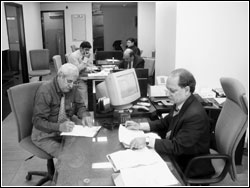 I HAVE retired from my job after 37 years of service. When I began my banking career, Pakistan still young and there was hope and determination to make a success of our national dreams. But things have changed contrary to our expectations to such an extent that what I am going to say might read like a tale.
When we became independent, our banking system, which was manned and owned by non-Muslims, almost collapsed but there were some people who had vision and the determination to build the industry from a scratch like other sectors.
Without being deterred by lack of resources and experience, they embarked on the tough task of giving the country a vibrant banking system, which within a few years became a source of pride not only nationally but also internationally.
Pakistani banking made a name for itself in a short period of time so much so that our bankers were in demand every where and were actually working successfully in banks at senior levels in various parts of the world.
As I said earlier, when we started our banking industry, we lacked expertise as well as resources. Every Friday used to be the day when the books were balanced. The whole process was carried out manually. Balances of all accounts were taken down in a register even if a thousand figures had to be written up. This work took hours after the day’s work had been completed. All this had had to be done without any mechanical help because even simple adding machines had not yet arrived.
Calculators and computers came much later. One small mistake in taking down the figures from the ledgers necessitated repeating the whole exercise all over again. When a mistake was detected the entire staff, which mostly consisted of young people, used to howl with pleasure. Quite often the process continued well passed midnight but nobody thought of leaving the office.
I remember that a young man who was a new entrant where I worked and was assigned the duty of preparing statement of accounts of the bank’s customers used to go about performing his duty like a machine. His responsibility was to prepare and send statement of accounts to customers on a weekly basis. As soon as a ledger was free he would take it over and start preparing statements of accounts until he had written them up for each customer.
Those days statements of accounts were sent to each customer on weekly basis and any account holder who did not receive his statement had a genuine reason for complaint and the employee concerned had a hard time to explain his failure before the management. Now when we have computerised banking, the customers get statements of their accounts once in three months, if at all.
Since such statements are computer-generated they bear no signature. The assumption is that computers do not tell lies.
I have deliberately selected a very minor banking operation to highlight the efficiency with which our banking system functioned in good old days.
The first 25 years of our existence as an independent country were the golden period of our banking system. With honest hard work, we built up a banking edifice. Our bankers were received with respect for their efficiency and integrity.
The nationalisation of banks brought about the rot in the banking system. What was built up with hard work began disintegrating swiftly and within a few years, the work of the pioneers lay in ruins.
After nationalisation we started paying lip service to the small man. For the first time we heard of bank loans for small businessman, small industries and small farmers.
The policy makers emphasised that banks should adopt egalitarian attitude towards the have-nots and as usual we followed this path. Banks were told to earmark a certain percentage of loans for priority sectors, which were defined as small business, agriculture and exports.
For the first time it was also realised that since agriculture contributed a major portion to our GDP, there was need to provide credit facilities to small farmers, who are the back-bone of our agriculture.
The regulatory authority started fixing mandatory targets for small loans to be achieved by commercial banks in each quarter, and imposed heavy penalties if the target was not achieved. In order to escape payment of penalties, banks fudged their figures of such loans in their returns to the central bank.
It was a laudable idea to help the small sector. But liberalisation of credit facilities at concessionary rates to small borrowers did not result in flow of credit in the desired directions. On the other hand, it led to great misuse of the facility. In agriculture sector, big landlords started borrowing from banks in the name of the people actually tilling their lands. Most of them were illiterate poor people and it was very easy to get them to put their thumb impressions on the application forms for obtaining bank loans.
The bank staff connived with the landlords because the former had to meet credit targets given to their head offices by the central bank. Since agricultural credit was extended through co-operative societies, fake societies were established to avail the facility. Such societies did not exist on the ground and disappeared as soon as credit was disbursed through them. The net result was that loans made to fake borrowers were never repaid and were ultimately written off. The loans made to small business and industry also met the same fate.
Even greater damage was done to the banking system in the case of export finance. As the country was in dire need of increasing its exports, the central bank started providing refinance to banks against credit facilities provided by them to exporters. This facility was given to the banks at a highly concessionary rate and they were required to pass on the benefit to the exporter as an incentive their foreign sales. At one time, the central bank was providing refinance to the banks at zero rate of interest and the banks were required not to charge interest at more than three per cent from the exporters.
This facility was misused by exporters even to a greater extent than what happened in the case of small loans extended to agriculture and business sectors.
Over a period of about two decades, the banking system was loaded with bad loans amounting to about Rs200 billion. The sad part of the story is that our export earnings increased only marginally despite the incentives provided to the exporters.
Our banks are now feverishly engaged in making advances, which in good old days they would not have touched even with a barge pole. The rage these days is to provide loans for purchase of consumer durable like cars, air conditioners and all kinds of appliances. The argument in favour of this kind of lending is that it will give a boost to productivity. But the negative aspect of providing easy loans to the borrowers is that everybody is tempted to buy luxury goods, which they cannot afford. In other words people start living beyond their means.
A rat race has started to own goods, which people do not need or cannot afford but which they must have only because their next-door neighbour possesses them. The rat race is endless and more and more people are getting caught in the net.
Our banks are also inviting serious trouble for themselves in extending credit facilities liberally for consumer financing. This is a bottomless pit and the regulatory authorities must take great care to ensure that our banks are allowed to undertake this business with great care and within sell-defined limits.
In promoting consumer financing, we are simply aping the West. We forget that life-style and banking environment in the West is completely different from ours. The income levels of the people in developed countries are also much better and the borrowers are in a better position to service their debts. When people borrow money from banks, they have every intention to repay their debts.
This cannot be said about many of our borrowers. Our banks have therefore to exercise extra vigilance while extending credit facilities for consumer financing. Our legal framework also needs to be strengthened to facilitate recovery of such loans when they get stuck up.
The writer is a former executive director of the SBP.






























