



 0
0

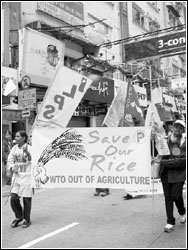 THE Doha Development Round of trade talks, struggling hard to survive missed deadlines since it took off in 2001, is poised to miss another, a crucial one, set for June 29-July 2, as there appears to be no climb down from the stated rigid positions by the United States and the European Union.
Commerce Minister Humayun Akhtar stated last month: “We have passed the phase of posturing and are now in a make-or-break phase. If we are not able to make substantial progress within the next few weeks or should I say, within a matter of days, it would be too late.”
There is a growing consensus that the Geneva talks have already passed the ‘make’ phase. Failure of this week’s meeting may take the Doha round into ‘break’ phase.
“If we do fail, as is becoming increasing likely,” Humayun Akhtar told the OECD ministerial conference in Paris, “we would have lost what is already on the table.”
Despite having traversed a long journey of hope and dismay, there is virtually little on the table. Too much resources have been invested and hundreds of meetings organised in Geneva, outside Geneva and on the sidelines of economic summits to move the Doha process forward. But at the end of the day, there is nothing to claim as tangible progress.
When the Doha development round was launched, the end of 2004 was the deadline for completing all the tasks. It was bypassed. Then came the Cancun ministerial conference. Prior to its taking place, an agreement was reached on allowing generic drugs to Aids patients in Africa which, however, did not work. The conference miserably failed and a new deadline was set — this time for the end of 2005. That, too, was missed.
And when the delegates prepared to leave Hong Kong after attending another failed ministerial meeting in December last, certain trade ministers came out with a pledge to make every possible effort to settle their differences by the end of April this year. In realising that pledge, they have failed so far.
Pascal Lamy, the director-general of the World Trade Organisation, has decided not to set a fresh deadline but has warned the negotiators of 149 member countries that unless they can get their act together by June-end, they might as well give up. In a sense, this is just another deadline.
However, the deadline that ultimately matters is June 30, 2007 when President George Bush’s fast-track trade negotiating powers expire and he loses the right to get a WTO deal passed from Congress on a take- it-or-leave-it basis.
Keeping in view the complexity of any deal under the Doha round, it will take time to draft the legislation, which means that the US trade negotiator would need to have a full text by the end of this year. And, of course, the WTO will take its own time to convert a draft agreement into an agreed full text.
West’s lack of will to cut one billion dollars a day farm subsidies is the sore point. The gaps in perception remain as wide as ever after occasionally narrowing for a while. Polarisation between the rich and non-rich nations refuses to budge a bit; it is widening, in fact. A kind of Cold War seems to have set in; the West tries to score a win by playing with the language of the agreed drafts.
But the Third World is no more too naive to be easily duped. Doha talks survive when the West makes a ‘solemn’ promise to be accommodate Third World’s basic concerns; these are stalled when it is discovered it was a ruse.
For keeping the trade talks stuck in limbo, those responsible are obviously the ‘usual suspects’— the United States and the EU which are accustomed to dictate and not be dictated. The whole process of decision-making here is based on consensus which makes the WTO a democratic body and this is the reason why this Geneva- based body, unlike the IMF and the World Bank, is finding it hard to serve the West’s neo-liberal agenda. And that is why the Doha round is collapsing.
The US has given no indication so far on cutting its massive agricultural subsidies more than what it offered in October 2005, while the EU has refused to compromise on giving greater agriculture market access. The US Congress will not support any proposal for major cuts in farm subsidies as amply made clear by chairman of the House committee on agriculture Bob Goodlatte last week after his discussions with WTO chief Pascal Lamy.
India, Brazil and other developing countries have also made it clear that there would be no trade-off on agriculture. Ironically, the US and EU insist on them to lower their tariffs on industrial goods to allow greater market access. Brazilian President Luiz Inacio Lula da Silva held a telephonic discussion with President Bush on June 19 in a bid to convince the latter for a major concession on farms subsidies but nothing of significance emerged.
A week earlier, Bush had asked Europe to resolve political differences among its member countries and lower its farm import tariffs and the G-20 group of developing countries, he said, must do the same in manufacturing sector.
How arrogant is the United States in its rigid stance was evident from the tone adopted by the US agriculture negotiator Jason Hafemeister. He said he “didn’t care whether it’s June or July”, the WTO has enough time to reach deals on farm trade after the June 30. He said he was simply waiting to hear from the European Union and the developing countries whether they agree to give more market access and make deeper cuts to their tariffs.
The US has offered to cut its farm subsidies by 60 per cent on conditions that other countries like India open up their markets too. Similarly, the European Union, led by France, has offered to cut subsidies but not to the extent to qualify for an agreement. The European Union says it will present counter-offers if the US cuts deeper into its own programmes first.
As a quid pro quo for reducing agricultural subsidies, the rich nations are now demanding that the developing countries open up their services sectors like legal, banking and chartered accountancy to their companies.
The two sides have been consuming the precious time after the ‘failed’ Hong Kong ministerial in reiterating their fixed positions. The best one could expect from June 29 meeting is an agreement to hold another high-level meeting at the end of July. But missing this deadline may mean missing the July deadline as well, for members are scheduled to hammer out an agreement on services by that time.
The indications are that if member countries fail to resolve their differences in the next few weeks, Pascal Lamy could himself offer a draft text based on his own assumptions of what could be a possible compromise on farm subsidies and market access.
In the past few weeks, certain member states have shown a declining interest in Doha talks’ success. For instance, President Bush appointed Rob Portman, his chief trade negotiator, as budget director. The move showed a shift in the US administration ‘s priorities — focus on internal matters rather than the conclusion of the Doha Round.
The European Commission took a hard line by refusing to make any further reforms in its common agriculture policy without substantive tariff reductions for industrial goods and market access for services in return.
Meanwhile, the World Bank has drastically reduced its estimates for potential gains from the Doha round over the last few years. Initial projections of $500 billion in 2003 have been now reduced to a mere $96 billion in 2005, with only $16 billion going to a few developing countries, such as China and Brazil, and the remaining $80 billion going to the developed world.
According to Larry Elliot of The Guardian, the Doha talks are now in serious trouble. There are now only two feasible outcomes: a Doha-lite deal that offers developing countries just enough to prevent them from walking away from the talks — or no deal at all. Many developing nations now believe that they stand to gain so little from the former option that they might just as well tough it out.
There will be a better chance of the Doha round being concluded were there more concessions on offer. In that case, countries will think twice before walking away from the negotiating table. At present, they stand to lose little by doing so. There has occurred a dilution in the ambition to see the Doha round meeting success.






























