



 0
0

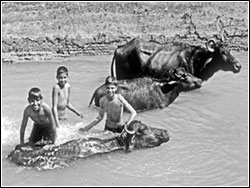 PAKISTAN is a top milk producing country with a huge population of cows and buffaloes. Despite this, the country has always been a net importer of dairy products and dry milk.
The recent surge in processed and packaged milk industry is not so significant as in most small towns and cities, the demand of milk still is fulfilled by the fresh product.
The last two years have seen a considerable rise in milk prices despite resentment among the consumers, labelling it to the greed of dairy farmers and to some cartels vying to earn extra money. Actually the price of milk went up and the trend is likely to continue due to some basic economic factors.
A dairy farmer is the weakest and most vulnerable member of the supply chain and hence cannot afford to have an unreasonable attitude. Unlike flour, sugar, cement and pulses, the milk due to its extremely perishable nature cannot be hoarded in godowns to create artificial shortage. What has caused the milk to become so expensive in the last few years? In the absence of raising cattle population, dairy animals are slaughtered regularly to meet the demand of large cities.
Unfortunately there is no formal industry for cattle farming – neither meat nor dairy specific. Farmers buy dairy animal from rural areas for lactation purpose which they sell, when the animal either produces little or no milk.
Retaining the animal through gestation period is an expensive proposition for them as it requires grazing which, to most farmers is non-existent. The lack of a formal breeding industry sends the animal to butcher whose interest is to strike a deal at half the price. Top breeds are disposed off to butchers much before their productive life is over.
A breeder has to wait for 10-12 months to reap the profit, in case of gestation, in which time the farmer also has to keep a vigil that his animal remains healthy and is not stolen. While a butcher gets the profit in 24 hours and hence is in a position to out-price the breeder. The top-bred calves of buffaloes, both male and female, are sold to butchers whose meat after slaughter is sold as of mutton to roadside hotels. This practice eliminates the possibility of promoting high yielding breeds of buffaloes.
The only way a dairy industry could grow and produce results is by promoting the cattle industry wherein meat would be supplied by the cattle industry and dairy animals will be used for milk production. Cattle breeding must be promoted to protect and promote top dairy and meat specific breeds.
The demand of input items such as cotton seed cake, crushed wheat, wheat straw etc. has increased which are necessary ingredients of the every day diet of dairy cattle.
The price of input items has moved up for dairy farmers. The average price of cotton seed cake in 2003 was around Rs350 per maund; now is at around Rs650; crushed wheat at Rs350 per maund has risen to Rs500; wheat straw at Rs90 per maund has risen to Rs130. Top-bred buffalo which was for Rs30,000 is presently available for Rs45,000.
During off-breeding season, farmers are forced to buy animals for as high as Rs60,000 just to keep production at a minimum acceptable level. Average salary for farm labour has gone up to Rs3,500 per month from Rs2,800.
A ban should be enforced on the sale of buffalo calves (at least female calves) for slaughtering purposes which should, under no circumstances, be relaxed. If we fail in stopping this trend we will lose our competitive edge in yet another industry. Cattle farming must be promoted on large-scale and on modern lines. The present informal way of producing meat-animals will damage our dairy industry badly.
The milk gets adulterated by the time it reaches the consumer. Our farmer generally produces what is expected of him. He cannot decrease the quality of his produce too much as wholesalers or paikars buy milk from dairy farmers on certain quality standards. The industry has its own yardsticks for quality.
Generally accepted barometers envisage 40 litres of milk to produce four pounds of cream or 9.5 to 10kg khoia. This requirement is met only with buffalo milk which has higher fat content and is at least one and a half times more expensive than of cow’s.
Even if a dairy farmer reduces the quality of animal feed, the fat contents are affected thus putting him in a difficult position. At the most he can mix two to three litres of cow milk in about 40 litres of buffalo’s. However, the consumer gets milk that is probably not even 50 per cent of the quality what a farmer produces in his dairy shed.






























