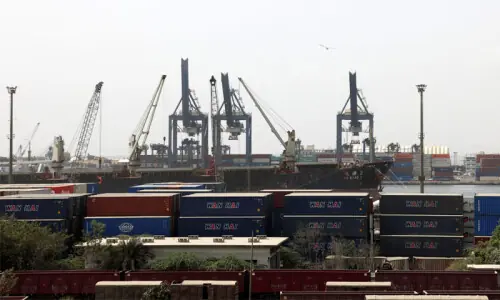
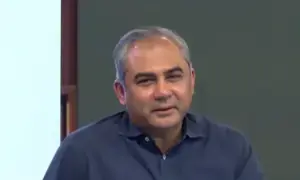
WASHINGTON, June 23: Pakistan needs to take immediate steps to meet, what some speakers at a seminar in Washington on Friday described as a “looming energy crisis,” but the focus has to be on developing sustainable sources of energy, said Mukhtar Ahmed, energy adviser to the prime minister.
The first session of this day-long seminar on ‘Fuelling the Future: Meeting Pakistan's Energy Needs in the 21st Century” focused on defining the challenges confronting the country.
Mr Ahmed set the agenda for the discussion with a thought-provoking, 30-minute presentation, in which he acknowledged that the country was facing an energy crisis but the government was already taking steps to deal with it.
“Not to react to the crisis situation will be imprudent, but we are also looking at energy sector development on a sustainable basis,” he said.
In the new strategy, he said, the government looks after the policy, the regulatory commission oversees regulation while the private sector is involved in implementation.
Mr Ahmed is in Washington for energy talks with the US administration which begin on Monday. Energy Secretary Samuel Bodman will lead the US side in the talks that follow an initiative announced during President Bush’s visit to Pakistan in March this year.
Responding to a suggestion from one of the speakers at Washington’s Woodrow Wilson Centre, Mr Ahmed said although the country has the world’s 8th largest reserve of coal, most of it was in inaccessible areas and cannot be utilised in the near future, he said.
He said that Pakistan also had the potential to produce hydro energy at a large-scale but political and technical constraints were delaying this as well.
While the country develops these sustainable sources of energy, “there has to be an infusion of imported energy to meet immediate needs,” he added.
Mr Ahmed said that Pakistan was already negotiating various projects with countries like Iran, Turkmenistan and Qatar to import gas and was also looking at the possibility of importing electricity from Central Asia.
The country, he said, was spending a disproportionate amount on importing oil, and “cannot afford to have millions and millions of cars floating around the country.”
Mr Ahmed said that although environmentally benign technology for the production of energy was 20 to 30pc more expensive than regular technology, Pakistan was “actively thinking of going for environment friendly options.”
To ensure transparency, he said, energy sector projects will be run by independent board of directors who would be required to implement transparency mechanism.
Pakistan, he said, was developing wind, bio and solar energy sources and had an active programme for producing wind-powered energy in Sindh.
Shahid Javed Burki, a former finance minister and World Bank official, said he was not sure if the investment needed to implement these projects was available. “With relatively low-level of investment, it will not be possible to generate the kind of resources needed to produce the kind of energy we want to,” he said.
Mr Burki said the government was putting out a passive approach, reacting to the demands generated by a rapidly restructuring economy” rather than working on a sustainable, long-term approach.
Robert Looney of the US Naval Postgraduate School spoke on ‘alternative energy and development scenarios in Pakistan to the year 2035, stressing the importance of scenario planning.
Bikash Pandey of Winrock International spoke on clean energy options for rural Pakistan: Lessons from South Asia, noting that half the country was not linked to the national grid. He underscored the need for developing renewable energy for the rural areas, and urged the government to ensure “equity in access.”