



 0
0

 AMID warnings of “overheating” of economy by the international lenders, the next year’s budget will have a tilt towards populist sentiment ahead of general elections in 2007.
While energy and food security, infrastructure development, employment creation and expansion of overall economy would be top priorities for the next year, the current year is likely to close with over $5 billion current account deficit, $10 billion trade deficit, about 4.2-4.5 per cent fiscal deficit and a continuing high inflation rate.
The budget makers will have to design their balance sheet in a manner so as to make it politically suitable in an election year and acceptable to a new system of governance that has to emerge through second generation reforms.
The CBR’s revenue collection still remains less than 9.4 per cent of the GDP and needs much more will and effort to match the growth and development needs.
There are still a number of booming sectors which either do not pay taxes at all or pay much less than what the other sectors contribute. Travel agents, doctors, dentists, lawyers, chartered accounts, advertising, beauty parlours, sweat makers, departmental stores and restaurants are a few examples.
The Central Board of Revenue has been asked to finalise procedures for bringing in real estate, capital market and more services sectors in the tax net.
Major addition in revenue generation can come from services sector that currently contributes only 20 per cent to the revenue against in 52 per cent share in the GDP. Compared to this, the industry which has only 18 per cent share in GDP contributes about 62 per cent to the country’s revenue.
The next budget is also likely to be a budget of transition from two perspectives. First, with the next fiscal year, the process of transition from the military to civilian rule, started with general elections in 2002, is expected to be completed with 2007 general and presidential elections.
Second, the next year would see the introduction of second generation reforms and macroeconomic policies that would change the focus from stability to sustainability but would largely depend on comparatively diluted strength of ownership that the nation is likely to see with President Musharraf’s civilian role as head of state.
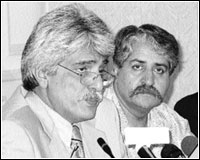
Advisor to the prime minister on Finance and Revenue Dr Salman Shah told Dawn in an interview that next year’s fiscal measures would broadly focus on simplification of procedures, improvement of self-assessment scheme, relief to the low-income groups, reduction in tax rates and increase in exemption levels and streamlining of tax regime for export industries.
The foreign trade sector which is passing through a major transition and in about five years the gap between imports and exports would be bridged and export growth would overtake import growth.
Dwelling on the budget strategy Dr Shah said the second generation reforms, capacity building and modernisation of the government, improvement of safety nets and provision of essential food items at reasonable prices or subsidised rates would be priority areas for the government.
Shah said the fiscal deficit for the current year was targeted at 3.8 per cent of GDP and next year again it would be in the range of 3.5-4 per cent. This target would depend a lot on revenue growth and hence a substantial increase in revenue would be a must.
The government would try to further improve the debt-to-GDP ratio as required under the fiscal responsibility and debt management law. It means the revenue growth should be substantially higher than nominal GDP growth and inflation.
Currently, an exercise is underway to look at key sectors of economy for further tariff rationalisation so as to provide domestic industry an even- playing field.
Dr Shah said priority industries would get incentives for employment creation and the tax base would be broadened by bringing into tax net those segments which were not paying taxes and hence the withholding tax would be expanded and made more adjustable.
While the size of the public sector development programme would be enhanced to four per cent of GDP in a phased manner, he added, additional resources worth another 3.5-4 per cent of GDP would be mobilised through public-private partnership in the next couple of years.
The medium term objective of the government is to ensure economic growth with equity and create conditions to make this objective sustainable. The government would, thus, take measures to spur economic growth with incentives and transfer benefits of this growth to common people.
On the revenue side, re-alignment of incentives would be done to take benefit of country’s competitive advantage for employment generation, enhance output, increase supply of essential commodities to control prices and inflation.
On the expenditure side the major hurdles to economic development are human skills and its mismatch with industrial and economic needs. There is excess supply of skills which the economy does not need and there is shortage of skills which the industry requires.
So, the government would focus on filling this skill gap through proper education and vocational training and gradually increase allocations for these areas to at least four per cent of GDP in the next couple of years.
Second, the economy was loosing a lot of productive labour and hence the health sector would be another area of focus to cut health-based losses. These would be done both at the federal as well as at provincial level.
The third area of government’s focus would be infrastructure development including water, power, gas, agricultural linkages and physical infrastructure like roads, highways, rail, ports and airports and other logistic chain which if not addressed, results in increase in the cost of doing business.
Mr Shah said the development of major cities and rural communities through farm- to- market roads and creation of farm and non-farm employment needs comprehensive focus.































