



 0
0

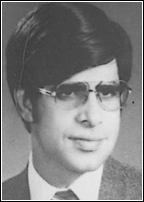 KARACHI: Leading political parties favour broadening of tax net. They are for evolving a tax culture that ensures voluntary compliance. This, however, is difficult if the government is not perceived to be responsive to people’s needs and aspirations. As long as people see the government as a self-serving institution, they will not be inclined to pay their tax dues honestly.
The leaders felt that income should be taxed irrespective of its source to evenly distribute the burden amongst segments and areas and exemptions should be gradually withdrawn for increasing the number of taxpayers and boosting revenues.
Taj Haider of the Pakistan People’s Party, talking to Dawn, said that in a country where more than 50 per cent people were living below the poverty line, the number of existing taxpayers should be considered enough, adding that without reducing unemployment and raising the income of masses, the tax net could not be expanded.
He said that the government was claiming of achieving 22 per cent increase in revenue during the current financial year and if it was true then the rates of power, gas and other utilities should have been curtailed to give relief to the majority.
“The government is fudging with figures as it has different GDPs for calculating budget deficit and tax ratio. This can easily establish how reliable data it has for proving its claims of economic turnaround,” he said.
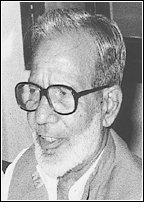 He pointed out that the government was generating about 87 per cent of the revenue from the poor of the country in the shape of indirect taxes. He maintained that the elite class was getting better off at the cost of the poor. “Welfare for the masses is imperative for any government if it wants to build trust and promote voluntary compliance towards the country’s development by paying taxes willingly.”
About taxing the agriculture sector, he said it was a PPP government which had introduced tax on agriculture income for the first time. He said that during the past few years the cost of inputs used in the agriculture sector had gone up sharply because of poor administrative control on price movements, resulting in curtailed margins for farmers and growers while the middlemen were earning fortunes without paying any tax.
He suggested that the only way to boost revenue generation, alleviate poverty and create jobs was heavy industrialisation both in the private and public sectors.
Pakistan Muslim League (N) senior vice-president Mamnoon Hussain said that in 1999 the Nawaz government had introduced a ‘development tax’ at the rate of 0.75 per cent of the total sales of small traders and after paying this tax they were not required to pay any other taxes. He said the measure would have increased the number of taxpayers and revenue. “Unfortunately, army seized power and a majority of reforms, including tax measures, were stopped by the new rulers,” he said.
About the low tax-to-GDP ratio, he said lack of confidence in the taxation system, cumbersome procedures, corruption and the ever rising dearness were some of the reasons that did not encourage potential taxpayers to get themselves registered with the authorities.
He said that for creating a tax culture the government had to show sincerity towards the welfare of the masses by taxing them according to their ability.
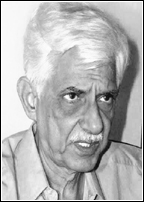 He suggested that the salaried class should be given some relief as it did not evade taxes.
Giving reasons for not creating a tax-friendly culture in the country, he said interference in the affairs of the political government by the army never allowed completion of reforms, particularly taxation reforms, and the result was that people were not willing to pay taxes.
“Bringing the agriculture sector under the tax net had been one of the major tasks of the PML-N government and gradually we were moving ahead on the issue but again our government was thrown out by the army,” he said.
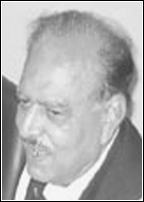 He said the farm sector should be taxed and the exemptions to selected areas and sectors should gradually be withdrawn as this would mould the thinking of potential taxpayers, thus increasing the revenue.
Muttahida Majlis-i-Amal leader Prof Ghafoor Ahmed said the number of 1.5 million taxpayers was very low in view of huge potential taxpayers who were still not enrolled. Radical changes needed to be introduced in the prevailing system to bring them under the tax net, he said.
People did not get proper facilities despite paying taxes and duties, he said. It meant that the state had become ineffective as it had failed to do anything for welfare of the masses, he said.
“The gap between the haves and the have-nots is increasing due to inequality of distribution of income and that has pushed up the rate of suicides in the country,” he said.
He said that because of the widening gap the middle class was vanishing. He said people did not take the budgets seriously since they were not getting any real relief. “The rulers do not know what is happening to the ordinary people and they are busy in selling state assets to keep funding their extravaganza.”
MNA Kanwar Khalid Younus of the Muttahida Qaumi Movement said the country’s lowest tax-to-GDP ratio in the region of around nine per cent was putting additional burden on the areas and sectors which were already contributing to the exchequer, which resulted in tax evasion.
He pointed out that the agriculture sector and areas like Fata were enjoying full exemption from the obligation of paying taxes and said this had been the prime factor that had hindered growth in the number of taxpayers.
He said Quetta generated more revenue than Faisalabad, the fastest growing industrial city of the country, Peshawar contributed more than Rawalpindi and Karachi region paid more than what Lahore and Faisalabad contributed together to the national kitty.
He said that keeping in view the rampant culture of tax evasion with only 1.5 million taxpayers in a country of 145 million people, the imposition of indirect taxes was found to be the only way that ensured maximum revenue for running development projects and government affairs.
He strongly recommended that the agriculture sector as a whole and cash crops in particular should be taxed to broaden the tax base and lessen the burden on other sectors. India should be taken as a role model for this exercise, he said.





























