



 0
0

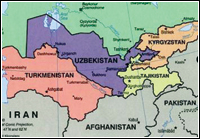 THE United States is set to achieve its major policy objective of encouraging exports of electricity and gas from the Central Asia to South Asia through Afghanistan.
With the prospect of peace returning to Afghanistan sooner or later, the US is eying oil and gas reserves of the Caspian Sea region with considerable interest.
While contributing to the reconstruction of Afghanistan, the US is also seeking to create safer and cheaper routes to exploit the Caspian sea wealth to its own advantage. And Pakistan is to serve as the main bridgehead.
The World Bank has started persuading Pakistan to import 4,000-mw electricity from Tajikistan and Kyrgyzstan through war-ravaged Afghanistan, to attract maximum international financial support: perhaps as an alternate both to nuclear energy and a gas pipeline from Iran.
Besides, the regional energy network, is to provide substantial finances to Karzai Administration for reconstruction through the transit trade fees to be paid by energy end-users. It is also to create Pakistan’s stakes in central Asian countries and to go an extra-mile to ensure peace and stability in Afghanistan.
At the very outset of this move, AES Corporation of the US has been involved in the project along with Russian giant Rao-UES. The two firms are likely to set up a joint venture to pursue the $1billion project based on inside information. The two firms enjoy good working relationship in many parts of the world.
AES has recently opened its offices in Dushanbe. It has a couple of power plants in Pakistan and Kazakhstan and generates about 30 per cent of electricity in Asia on a whole.
Similarly, the US firm UNOCAL engaged Taliban government in Afghanistan to lay Turkmenistan to Pakistan gas pipeline via Afghanistan in the early 1990s. It put together a consortium of companies and even signed a gas sales agreement with Islamabad but later left the consortium, expressing concerns over security situation.
Richard Darman, the former director of the Office of Management and Budget in President George H. W. Bush senior government, is now the chairman of the AES Corporation. He also remained associated with Washington based Carlyle Group as senior advisor on whose board of directors Bush Senior and former British Prime Minister John Major remained members for a long time.
The officials representing the USAid and the US embassy in Islamabad said early this week that the US State Department had already allocated funds and staff to promote electricity sales from central Asian states to Pakistan and Afghanistan as the project would ensure jobs and investments for its people and companies and bring peace and stability in the region.
“This kind of project goes a long way for helping us achieve policy goals, to help Pakistan achieve its energy goals and I think it is a win-win situation for everyone involved”, said Deputy Economic Counsellor of the US embassy in Islamabad, Christian DeAngelis.
He said the project “fits very well with US foreign policy which is to help build regional integration particularly between South and Central Asia”. According to Robyn McGuckin of the USAid, the Agency has a regional programme “set-up by the State Department with precisely the mandate of promoting regional energy trade.” “We stand ready to assist directly,” she told the energy ministers from the four countries.
The USAID draws revenues from the US tax-payers to promote the objectives of democracy and peace. It has, in collaboration with the US Energy Agency (USEA), already launched an aggressive campaign “South Asia Regional Initiatives (SARI)” to promote regional energy cooperation.
A lot of funds have already been invested through this initiative to bring closer the energy sector regulators, officials and media persons in the South Asian region including Pakistan and get support for the initiative.
Under active persuasion of the US agencies, the energy ministers from Tajikistan, Kyrgyzstan, Afghanistan and Pakistan and lenders like the World Bank, Asian Development Bank, Islamic Development Bank, Japan Bank for International Cooperation and International Finance Corporation agreed last week to lay a 650- km power transmission line through Kabul.
They also constituted the Central Asia-South Asia (CASA) working group on electricity to institutionalise further progress on political, legal, technical and financial aspects of the transmission line from Central Asian States to Pakistan and Afghanistan. The World Bank had been authorised to hire a consultant for the project to identify various studies and prepare project structure for implementation.
The international financial institutions and the USAID also expressed their strong desire to support the project through either through direct financing or guarantees and other risk management instruments including insurance coverage.
Pakistan had proposed that Iran be invited to participate in the conference given its importance in the energy resources but was opposed. Some of the influential IFIs are convincing Pakistan that it may attract western criticism for pursuing a major gas import project with Iran and lack financial support in a risky investment owing to US opposition.
The US has organised a similar conference in Istanbul next month to promote the idea of regional energy cooperation among the Asian countries.
The World Bank is not ready, however, to support another regional energy cooperation project i.e. Iran to Pakistan or Iran to India gas pipeline. “We don’t have an official position on the (IPI gas) pipeline”, Vladislav Vucetic, the World Bank’s lead energy specialist for South Asia Energy and Infrastructure.
Given the availability of vast but yet to be developed hydro energy resources in Tajikistan and Kyrgyzstan and rising demand in Pakistan and India, which may adopt the concept at a later stage, the international financial support would be forthcoming.. The United States had declined to provide any support to Pakistan for nuclear energy and opposed gas import from Iran but had promised to assist Islamabad in alternate sources of energy to meet its growing energy needs.
An alternate energy supply chain from central Asian region would also be seen as a positive move to encourage land-locked central Asian states to start trade through Pakistani ports as Islamabad presents its under-construction Gwadar Port as trans-shipment and energy port. This, on one hand, could provide energy corridor to India through Pakistan and make Afghanistan as transit trade and energy corridor to central Asian states, on the other.
Pakistan, on the other hand, has failed so far to tap over 40,000-mw of its own hydro resources due to bureaucratic and political wrangling and is now looking at importing hydropower from central Asia.
It has virtually blocked development of hydro power projects by insisting tariffs which were economically never viable and in violation of its own power policies that forced many companies to wind up their offices even before starting business.
Instead of promoting hydro power projects in a planned and phased manner, it waited and waited until power shut downs and load shedding re-emerged after about a decade. Now, once again, it has been forced to develop additional power generation capacity in an emergency situation through costly oil based projects.
The average power tariff for gas based projects has now increased to eight cents, fuel oil to 10 cents and diesel projects to 13 cents against 4.7 cents of hydro power.
Wapda has stopped setting up hydro projects on its own due to lack of finances and there has been no hydro project in the last 10 years. The government has now partially revived the 1994 power policy, with an upfront tariff for new thermal independent power producers (IPPs) ranging between 5.9 and 13.8 cents per unit to develop up to 1400-mw electricity on emergent basis.
The 1994 power policy remained under criticism for over a decade mainly because of an upfront tariff that led to installation of thermal power projects in excess of required capacity and higher consumer tariffs. The 1994 policy was based on 7-8 per cent economic growth rate which could not be sustained in the subsequent years. The upfront tariff now is based again on 7-8 per cent GDP growth.
While the government plans to tap all possible energy resources including nuclear, coal, hydro, oil and gas and wind under the energy security plan, it is time it should look back and hold accountable those who blocked tapping of natural resources over the last decade.




























