0
0

On with police reforms
THE Punjab government has finally taken the initiative to implement a police reforms programme as envisaged under the amended Police Order of 2002, which replaced the outdated Police Act of 1861. Immediate measures announced by the provincial government focus on improving policing in the five big cities — Lahore, Faisalabad, Rawalpindi, Multan and Gujranwala, where crime and complaints against corruption in police ranks have registered a sharp increase. Other measures relate to improving the working and living conditions of the police personnel in the province. These include the start of a double shift in urban police stations to stagger the existing workload among officials on duty, setting up of an additional 225 public facilitation centres for the registration of first investigation reports (FIRs), a series of long overdue infrastructure-building measures, an increase in the number of superintendents of police in big cities from the existing eight to 23, a raise to the tune of Rs 15,000 per month in the allowances of station house officers (SHOs), performance-based incentives for policemen and putting in place of mechanisms for increased accountability of the force. A decision has also been taken to recruit an additional 10,000 personnel up to the level of sub-inspectors to curb the rising crime wave and incidents of lawlessness in Punjab.
If implemented properly, it is expected that these measures will help restore the public confidence in the police, curtail crime, check corruption in the rank and file of the force, and have an overall humanising effect on the image of the police among the people. As for the big cities, the measures still fall short of creating a better trained and more efficient metropolitan police cadre, but this is a good beginning towards that end. Also, no mention has been made of setting up public safety commissions to check police excesses, as promised under the devolution of power plan of which police reforms were an integral part. But because law and order and policing are provincial subjects, the measures announced by the Punjab government do not strictly mirror the reform mechanisms laid out in the Police Order, 2002, even though they do capture the spirit behind the framing of the PO. Instead of the public safety commissions, which were supposed to comprise elected representatives, police officials and noted citizens, the Punjab government’s new reform programme seeks to create accountability of the force from within the ranks of the police. Senior officers have been given the task to ensure swift redressing of public complaints vis-à-vis the working of the force. Inbuilt systems of accountability have seldom functioned to the satisfaction of the citizens; that is why the public safety commissions were proposed in the first place.
Big money is involved in carrying out the reform programme. The Punjab government seemingly has the required funds, as it has not asked Islamabad for any additional grants for the purpose. It is time the other three provinces also followed the lead provided by Punjab in effecting police reforms. If the former do not have the funds to carry out a similar programme, the federal government should be expected to provide the required money. Crime and policing are matters of national concern, and fixing the problem in one province alone will not achieve the desired goal.
A case of violent ejectment
IN the Karachi city government’s latest anti-encroachment drive operation — this time in Sohrab Goth on Friday — violence broke out between the encroachers and the police in which one person died and 20 others were injured. The episode brings to mind, once again, the human cost of such demolition drives and the tragedy that ensues as a result of forcible ejectment, many cases of which often go unnoticed. This can be seen in the resettlement problem of the Lyari Expressway in which thousands of families have been displaced and little consideration given to their compensation or resettlement. More recently the demolition of Jumma Goth last month turned into a highly politicised affair with vested interests arguing that the MQM-dominated city administration’s action was discriminatory as the area was largely occupied by Sindhis. It seems that these issues do not matter as the purpose is to rid the city of squatters’ colonies and make way for big development schemes. But in its effort to reach this goal, the administration, like so many of its predecessors, is not taking into account several things, namely that thousands of poor people who migrate to Karachi every month and start living in these squatters’ colonies had no choice but to live there and have no other place to go. There are departments that are in a position to monitor every katchi abadi from the moment it comes up so that the problem can be solved right there and then, rather than ignored until it develops into a squatter colony to be demolished.
At the heart of the matter is the government’s lack of a strong will to take on the land mafia that controls much of the illegally occupied lands. These land grabbers may enjoy the support of influential political elements but the government needs to ruthlessly dismantle their power if it wants to solve the problem. Better town planning is needed and surveys carried out regularly to determine the extent of the problem and viable solutions worked out for housing rural migrants. In any case, forcible ejectment of poor people should be avoided as far as possible.
Toxic waste death
GIVEN the low priority attached to environmental safety, it is unlikely that the FIR registered by the Sindh Environmental Protection Agency against unidentified polluters in Karachi’s SITE area will yield positive results. The FIR was lodged after one child died (some reports say two) of chemical burns and 14 others were injured as a result of playing in an open area used as a dumping ground for toxic industrial waste. The Sindh governor has ordered an inquiry into the incident and one hopes that his instructions are followed so that legal action can be taken against the polluters.
But the question remains: with only three per cent of Karachi’s industries complying with international standards of effluent treatment, can action against only a handful of polluting agencies deter the rest? The enforcers of the environmental protection laws are ineffective when it comes to dealing with the industrial polluters and generally overlook the dangers caused by large-scale pollution. The few industries that abide by environmental rules do so because of the pressure exerted on them by international markets that are increasingly importing goods produced under environmentally-friendly conditions. What these and errant industrial units must realise is that, besides the economic aspect of the matter, the human dimension matters as well. Pollution has a negative impact on human health, and the industrial effluents that contaminate air, water and soil, are responsible for a growing number of diseases among the people. This results not only in human suffering but also low productivity — on account of ill-health and frequent absences from work — that has an adverse effect on the economy. An environment free from industrial waste should be a collective responsibility, and factories would do well to combine their waste treatment resources for shared use. At the same time, the environment protection agencies must not allow polluters to go scot-free.
Access to N-technology: right vs reality
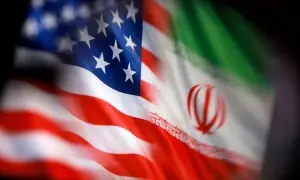
I WRITE this analysis with some reluctance since much has been written in these columns on Iran’s nuclear programme. The preponderance of opinion has tended to uphold Iran’s right to acquire and employ nuclear technology for power generation while enjoining against the use of force with the aim to scuttle that country’s nascent nuclear industry.
Nobody can take exception to these postulates. Iran’s adherence to the Non Proliferation Treaty clearly entitles it to pursue a safeguarded peaceful nuclear programme. Military action against Iranian installations, without specific Security Council authorisation, would be an illegal act of aggression and an outright breach of the Charter of the United Nations. Since the IAEA has referred the Iranian dossier to the council it must be allowed to give future direction on the issue.
At the NPT extension conference in 2000, the non-nuclear states parties to the treaty virtually agreed to its one sided implementation by giving their approval to its unlimited extension. They deprived themselves of the limited leverage still at their disposal to ensure some focus on the disarmament and technical cooperation provisions of the NPT. Resultantly, the subsequent review conferences ended in failure. The collective weakness displayed by the non nuclear states paved the way for the distorted interpretation of the treaty of which Iran is today a victim. Its important disarmament provisions and the key articles pertaining to the fostering of international cooperation for the development of nuclear technology for peaceful purposes are considered as falling outside the ambit of the treaty.
Just recently, Iran’s supreme leader Ayatollah Khamenei announced: “if international institutions respect our legitimate rights we will respect their decisions. We will not regard these decisions as valid if they are intended to deny us our rights.” Brave words from a revered leader of a proud and self respecting nation. The multilateral system mirrors the power realities of our time and its decisions are but a reflection of those realities.
The revolutionary Iranian state, steeled in adversity and facing multiple threats from within its immediate neighbourhood and beyond, should elicit sympathy in its resolve to secure a right granted to it by treaty law and which is sought to be cancelled by the compulsions of power politics. The principle, unquestionably, is on Iran’s side.
In statecraft, however, as we in Pakistan know only too well, a right cannot be exercised in conditions of isolation, divorced from the political and strategic framework within which a claimant is placed. No right is more fundamental than that of self-determination. Despite a clear Security Council ruling in favour of a plebiscite, the Kashmiris are further removed from securing that right than ever before. The most precious of all rights had to be adjusted to the demands of realism.
Also, the manner in which a right is sought to be exercised impinges upon the quantum of its realisation. In Iran’s specific case its nuclear programme was shrouded in secrecy till a dissident group blew the whistle. Given the ideological moorings of that state and its proclaimed policy of erasing Israel from the map of the world, the international community, led by the United States, harboured grave reservations about the avowed peaceful nature of Iran’s nuclear programme. The physical features of some of its nuclear installations added to these misgivings.
Iran’s known nuclear infrastructure comprises four key facilities; the power plant at Bushehr, the uranium conversion facility in Isfahan, the enrichment plant at Natanz and the heavy water factory in Arak.The first is a declared facility and would on completion be placed under the requisite IAEA safeguards. This installation is the product of a fully transparent arrangement and should not cause any apprehension. The following two should, in principle, have been notified by Iran to the IAEA but some benefit of the doubt can be given since the agency’s regulations prescribe breach only when a nuclear reaction actually takes place in a given facility. Iran had not engaged in any nuclear activity by the time its infrastructure was detected. Technically, therefore, Iran had not deviated from its NPT obligations, even though it could be faulted for being politically remiss.
Quite obviously, the international community has a major problem on its hands. In terms of its legal obligations Iran has not, so far, violated the NPT, yet its nuclear infrastructure, kept hidden from the world for nearly two decades, points towards a weapons programme. Since nuclear material has not been used in any of its facilities, apart from the few grams which Iran claims to have enriched recently, it has not forfeited its right to acquire and apply nuclear technology for peaceful purposes.
At the same time, in the absence of full disclosure and foolproof monitoring the international community would be justified in its distrust of Iran’s real intent. Iran has publicly stated its resolve to expand the Natanz enrichment facility to allow industrial production of enriched uranium with the ultimate objective of installing 50,000 centrifuges. Such an extensive enrichment infrastructure can easily be put to military usage. The challenge lies in finding a solution which enables Iran to at least partially exercise its right to the peaceful applications of nuclear energy while ensuring that even rudimentary steps towards weaponisation are disallowed through stringent controls. Iran’s modest nuclear capability, as it stands today, leaves some promise for a negotiated agreement. These negotiations cannot be entrusted solely to the European Union as Iran would have little incentive to make vital concessions to an organisation or its constituent states from whom it faces no real threat. A negotiating format similar to the one set up to address the North Korean issue would be appropriate and effective. It should include Russia, China, United States, Iran and the European Union to explore a solution within the following parameters;
— Full Iranian disclosure of the true extent of its nuclear programme. In the absence of this initial information serious negotiations would be aborted. For instance Iran would have to divulge, amongst others, complete details of its centrifuge manufacturing capability including the P-2 which possesses enhanced enrichment features. Satisfactory responses are also due in respect of the possible development of laser enrichment technology and conversion of gas into metal.
— Following full disclosure to the satisfaction of the IAEA, a credible undertaking renouncing the use of force in the resolution of the crisis.
— Complete dismantlement of the Arak heavy water plant which has no function in power generation.
— The Natanz facility to be frozen at its present production level. The existing 164 centrifuges cannot but produce small quantities of low enriched uranium which has no military value. .
— The Isfahan uranium conversion plant to produce such quantity of hexafluoride as is necessary to feed the 164 centrifuges at Natanz. Access capacity to be placed under IAEA seals.
— The fuel needed for the Bushehr power plant to be supplied by the Russian Federation and used along with the small amount produced at Natanz. The spent fuel to be taken back to Russia.
— All Iranian nuclear installations to be placed under the enhanced monitoring regime as prescribed by the Additional Protocol devised by the IAEA some years ago.
— The agreement to be reviewed after an agreed period of time, and subject to IAEA certification of compliance in good faith, consideration be given to allow increased production at Natanz for use at the Bushehr power plant.
— Smooth implementation of the agreement to open the door for negotiations on larger issues of normalisation of relations between Iran and the West, particularly, the United States including cooperation in bringing stability to war-ravaged Iraq.
These provisions when agreed should be ratified by the Security Council under Chapter 7 of the charter to ensure strict compliance.The current thinking amongst the major western powers which prohibits enrichment of any kind, leaves Iran with no other option except defiance. Iran should not be totally denuded of its national pride.
The recent statements by the Iranian leadership are seen to be deliberately provocative in content and excessively defiant in tone. However, the claim that Iran has mastered enrichment technology by producing minor amounts of low enriched uranium, a meagre 3.5 per cent, can also be seen in the context of preparation for possible future negotiations.
The subsequent announcement that Iran was ready to share its nuclear technology with neighbouring countries triggered widespread alarm but might, equally, constitute a negotiating tactic. After all, which government would be prepared to seek out Iran’s nuclear technology in the current situation? This sabre rattling can be ascribed to the time-tested practice of presaging the onset of hard bargaining with tough posturing.
The formula elaborated above or a variant thereof, which grants limited production rights to Iran while completely foreclosing the nuclear weapons option can provide the basis for a mutually acceptable settlement. Needless to say that this approach is premised on two assumptions: first that Iran is genuinely committed to the pursuit of peaceful nuclear applications to the complete exclusion of the military option.
The second, equally relevant, encompasses the belief that the United States’ objectives in Iran are limited to denying that country a nuclear weapons capability and do not include wider interests such as regime change or the erosion of Iran’s military or industrial infrastructure. If either of these assumptions turns out to be invalid then this already volatile region should brace itself for an extended period of intense upheaval in which there would be no winners, only losers.
The writer is a former ambassador.