0
0

A good decision all the same
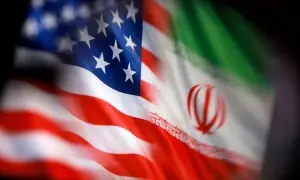
DESPITE opposition from Washington, Pakistan and Iran have agreed to go ahead with a bilateral pipeline project bringing gas from Iran. The US is vehemently opposed to any country in the region buying gas from Iran. India is taking too long to make up its mind, obviously under pressure from the US, whether or not to join what was originally meant to be a trilateral project. Pakistan too has to cope with the US pressure. But it seems to have decided to take the plunge, come what may, in its self-interest. Iran, on the other hand, is being threatened with more sanctions. But Tehran seems to believe that the US would not take the risk of pushing up the world oil prices still further by applying sanctions affecting the flows of oil and gas as well from that country. Pakistan’s gas deposits are depleting very fast as a result of a rapid increase in demand induced by an accelerated pace of economic growth in recent years The current availability of gas is expected to increase by 50 per cent in the next five years. Much of this will come from new fields like Sawa, Zamzama and Bhit Shah. However, it is estimated that by 2009 the country will face a shortfall of 600 mmcfd of natural gas despite the recent gas discoveries. To meet this widening gap between demand and supply, Pakistan has been looking for some time at three projects: the Turkmenistan-gas pipeline (TAP), the Qatar-Pakistan (QP) underwater gas pipeline and a pipeline coming from Iran and going to India via Pakistan (IPI).
Because Afghanistan is still not very safe for a gas pipeline to pass through it and because the one going underwater was too costly, Islamabad was naturally inclined towards the IPI. Besides, there was the possibility that Pakistan would earn about $500 million a year by way of transit fee if the Iranian gas was piped to India through its territory. On the other hand, as the pipeline could be extended at some future date to China via Bangladesh and Myanmar, Iran stood to gain a vast market for its gas which it had in plenty. Clearly, the pipeline project has the potential to yield immense political and economic benefits to the countries of the region by promoting interdependence and reducing the massive trust deficit from which all of them suffer at the moment. Pakistan also saw the prospect of the proposed pipeline for stabilising its relations with Iran and reducing tensions with India. New Delhi’s dependence on Pakistan to meet its energy requirements was to have persuaded it to maintain good relations with Islamabad and desist from harbouring any hostile designs against its smaller neighbour. But American pressure seems to be working on India.
All the benefits that would have accrued to the region if the IPI had gone through may now have to wait for some positive turn in world affairs. Meanwhile, the change of the trilateral project into a bilateral one is seen to have reduced the wider prospects of the gas pipeline project. Therefore, in the bilateral arrangement Tehran is said to be asking for a price higher than the one it had proposed for the trilateral pipeline. One hopes that the two sides would agree on a price that is both realistic and affordable.
An act of terrorism
THE murder of 22 Hindus in a village in Indian-occupied Kashmir on Sunday is a despicable act of terrorism and deserves unqualified condemnation. No one has claimed responsibility for the crime at Thava, a village 105 miles northeast of Jammu, but the police said it was a terrorist attack and implied that Muslim separatist militants could be behind the gruesome murder. Earlier, the police found the bodies of four shepherds who were kidnapped over the weekend and killed in a village near Basantgarh in Udhampur district. The murder of Hindu civilians came three days before Indian Prime Minister Manmohan Singh was to meet the Mirwaiz faction of the All Parties’ Hurriyet Conference. The attack could therefore be an attempt to sabotage the talks beginning tomorrow and prevent the beginning of what could possibly be an opportunity for the Indian government to show its sincerity to the cause of a peaceful settlement of the Kashmir dispute.
Sources said the APHC leaders’ decision to meet the Indian prime minister is a bold move in that Dr Singh had disappointed them last year by not honouring his commitments. During their last meeting on Sept 5 last year, the Indian prime minister had promised to release political prisoners and to check human rights abuses by Indian security forces in the occupied territory. That the Mirwaiz faction of the APHC should still agree to meet him goes to show the Kashmiri leaders’ desire not to abandon the path of peace. The APHC has not yet decided whether it will attend the all parties’ roundtable conference scheduled to begin in Srinagar on May 25. A lot depends on the outcome of tomorrow’s meeting in New Delhi, where the APHC is likely to present a roadmap for peace to the Indian prime minister. In the meantime, the militants who killed the Hindu civilians should know that they have not advanced Kashmir’s cause. The insurgency that began in occupied Kashmir in 1989 put new life into the Kashmir question and aroused the world’s conscience to what was going on in the valley. However, crimes like that in Thava on Sunday cast the Kashmiris’ struggle in a bad light and hinder rather than help the cause of the Kashmiris.
Price of the Wapda-KESC row
AS the rift between the KESC and Wapda continues, with each side accusing the other over the level of power supply and tariff rates, it is the common consumer, along with the commercial and industrial sectors, who suffers the worst of frequent power failures. Despite its explanation last week — in which the KESC said that the problem was due partly to its efforts to ‘upgrade’ the system which required power supply to some areas to be switched off so that engineers could work on it — load-shedding continues unabated. Things took a worse turn on Friday when the KESC said that the reason for the day’s load-shedding was because it was facing a shortfall of electricity from Wapda, which Wapda denies. The row intensified when Wapda claimed that the KESC owed it huge outstanding dues, a claim that the latter denies, saying that it is being over-charged without any valid reason. The KESC took the issue of Wapda’s tariff increase to Nepra on March 6 and is awaiting a decision on the matter. At any rate, this hide-and-seek game between Wapda and the KESC over frequent power outages affecting large parts of Karachi must come to an end and the citizens spared the agony and inconvenience of power failures in the midst of summer. If need be the government should step in to resolve the differences between the KESC and Wapda and ensure a steady supply of power.
The matter was also brought up in the National Assembly on Saturday, with some members adding a regional twist to the row, saying that the smaller provinces are being victimised by Wapda. It hardly helps matters when elected leaders begin to see problems in a parochial light. The matter demands the government’s immediate attention. In the meantime, there should be no delay in any upgrading work that the KESC says it is carrying out to improve the power system.
Sorrows of the quake victims
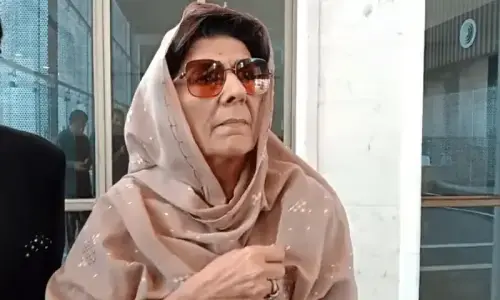
ACCORDING to a news report, more than 100 earthquake survivors clashed with the police recently in Mujohi, a village near Muzaffarabad, over new rules regarding compensation for quake-damaged homes, leaving a few people injured. Similar protests in several other quake-affected towns and cities were also held, and in Muzaffarabad, about 400 people staged a peaceful demonstration, denouncing the government and the earthquake rehabilitation and reconstruction agency Erra.
The protesters said that they were demonstrating because the government had announced compensation only for those whose land had been registered in their names. The government has announced it will give Rs 75,000 to people whose homes were partially damaged in the quake, and Rs 175,000 to those whose homes were destroyed.
Six months and six billion dollars after the earthquake and the massive response, both national and international, to the plight of about 3.5 million survivors, the ineptitude of the government’s top-down relief and reconstruction strategy is coming home to roost. Thousands of victims, in whose name it has amassed a fortune half the size of its exchange reserves, are at their wits end about what to do after their virtually forced return from the temporary shelters where they were lodged in the aftermath of the earthquake.
As many as 30,000 families have not yet received even the initial payment of Rs 25,000 which was promised right at the beginning of the relief operation. The government has made the procedure of receiving compensation for rebuilding houses increasingly complex and full of hassles. The resulting unrest reported in the media against the government in general and Erra in particular needs to be seen in this context.
There are several reasons why the government’s plans are not working and why it is facing a mini-revolt in the quake-hit zone. Some of these include the lack of transparency in the measures undertaken, frequent changes in arbitrary decisions, poor coordination among the various actors involved in relief and rehabilitation, inadequate dissemination of information to affected people and their almost total exclusion from any process of consultation and involvement in rehabilitation.
The government’s fundamental mistake in dealing with the Oct 8 disaster was to arrogate almost entirely to itself and principally to its military arm the overall responsibility for the management of relief and rehabilitation, without involving parliament and the civilian administration at the local and provincial levels in decision-making. While no one could begrudge the military for its lead role in rescue and relief efforts, which were highly commendable, the management and coordination as well as handling of large-scale humanitarian problems should have been recognised as not being its forte.
Regrettably, the government gave precedence to its own narrow political objective of survival and asserting the supremacy of the military over the goal of ensuring the welfare and rehabilitation of the survivors through efficient and effective planning. Although the UN and other international organisations and NGOs were involved almost from the beginning and the public groundswell for the earthquake victims became a veritable emotional tsunami, the government failed to galvanise this unprecedented human and financial accumulation of resources, which was capable of providing much more than emergency relief and longer-term rehabilitation and reconstruction efforts. It could have been used, for example, to change the national mind-set about dealing with the larger problems of alleviating poverty and eliminating vainglorious lifestyles
The government appointed two senior army generals as the custodians of the relief and reconstruction programmes, with vast plenipotentiary powers exercised without adequate consultation with parliament or other state agencies nor with donor agencies and NGOs. The general who was assigned to head the reconstruction agency, Erra, gave up his job two months before the reconstruction phase was to begin, without any explanation, although there were rumours of his non-cooperative behaviour towards donors. He was succeeded by a civilian, with strong political links with the regime and considerable business interests, although an army general continues to be in effective control of Erra. The Federal Relief Commission has been wound up and its residual activities have been assigned to a “transition relief cell” which has been merged with ERRA.
The mechanisms of coordination among various organisations participating in the relief effort were generally very weak and often resulted in the duplication and wastage of resources. While the UN and other agencies set up a system of cluster meetings in about 10 different substantive areas, such as protection, shelter and livelihoods, chaired by one or more agencies in Islamabad, Mansehra, Bagh and Muzaffarabad, the purpose was generally to collect and disseminate information rather than task-sharing.
There was generally a high rate of turnover of participants, which made these meetings formalistic with little effort to formulate new positions or persuade the government to adopt feasible and equitable strategies. More than 400 foreign experts were involved in the monitoring and implementation of relief programmes, an excessively large number, yet full advantage of their expertise was not taken. Perceptions of foreign and domestic experts often differed widely and resulted in contradictory positions.
Among the controversial issues that have surfaced in the last six months and which have greatly agitated the earthquake-affected population, four need to be highlighted.
The first issue refers to the way in which relief supplies were accessed by the weak and the vulnerable and the residents of remote and inaccessible areas. This was indeed a difficult task in which the role of the army and NGOs was extremely critical and helpful. However, the lack of mobilisation of local governments and representatives of earthquake affectees made the process rather bureaucratic and insensitive to the needs of different groups, often leading to the sidelining of the weaker ones among them.
The second issue concerns the running of the relief camps in locations away from the affectees’ homes. The population of these camps, estimated to be 300,000 in March, were run by NGOs with minimum help from the government. The NGOs in turn depended on their donors, both domestic and international, for the extent and quality of services provided which varied greatly among them. No common minimum standard seem to have been observed in the facilities provided.
A common feature of many of these camps was the lack of attention to providing assistance or incentive to adult males to find employment near the camps. In some cases, employed adults left jobs to look after their families in the camps. This often led to the “dependency syndrome”.
Third, the management of the process of return of earthquake refugees from the relief camps to their places of origin needs comment. This was perhaps one of the major areas where sensitivity on the part of the government was conspicuous by its absence. The government did not carefully think through the process of return and had vainly hoped that the internally displaced persons would return to their homes, like migrant birds, with the onset of spring.
Moreover, the sleight of hand used to close the camps without consulting or taking into account the will of the inmates or offering them alternatives deserves to be strongly censured. A UN document on the framework of return of the displaced clearly lays down the manner in which the views of these people especially of women and children, would be integrated “in the planning and management of the return or resettlement process”, ensuring that “the principle of voluntary, safe and dignified return” enjoined by international protocols were observed. Unfortunately, these stipulations were totally breached and neither the UN nor the NGOs raised any voice against their violations.
Fourth, what must also be scrutinised are the modalities of compensation for deaths, injuries, destruction and damage of the houses in the earthquake affected areas and the monthly compensation for households in the transitional phase. The difficulties experienced by the recipients have been amply aired by the media. They require intensive investigations. The question of the adequacy of the amounts and the modality of payments also needs to be reviewed.
Finally, there is a total lack of a credible game plan, which needs to be evolved in consultation with the affected people, civil society, think tanks and domestic and international experts.
If the government remains as insensitive on these issues as it has been and continues not to respond positively to the needs of the affected, then it will only have itself to blame for creating yet another trouble spot in the country, one that could stir a countrywide movement against the current military-led regime and intensify demands for early elections and regime change.
Email: m_naseem@hotmail.com