



 0
0

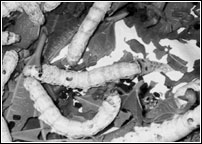 Silkworm Bombyx mori L. was selected for comprehensive research studies as rearing of this insect for production of natural silk is labour-intensive, welfare-oriented, village-based cottage industry, capable of stemming the migration of people from villages to cities. It provides employment and helps in ameliorating the socio-economic status of rural folks.
The history of silk is as old as the mankind. The technology originated from China nearly 5,000 years back. Greeks and Romans called China as “SERES”, the country of silk. The Chinese kept the sericulture technology secret for about 3,000 years after which it began to spread, though secretly.
The sericulture now is practiced in more than 50 countries. China, India, Japan, Korea, Brazil, Turkey and the Central Asian states excel in this technology. Natural silk, a dry salivary secretion is produced when a full grown silkworm larva spins its cocoon during pre-pupation. It is known as the Golden Fibre of the Golden Queen of textile, and is admired for its sleek and lust. Its products are light and soft but strong and smooth, and are accepted by world’s top fashion designers for elegance, colours dyeing affinity, thermo tolerance and water absorbance.
In addition to making clothes and garments which are harmonious to human skin and comfortable to wear, it is utilized in making fishing lines, tyre lining, parachute, components, elastic webs, electrical instruments, in surgery for making artificial blood vessels. Its pupae are utilized in making soaps and oil extraction having vitamins E and K. The excrements of this insect are utilized in making fish, poultry and livestock feed.
The annual world production of raw silk is about 60,000 tons with China producing half of the supply followed by India, Korea and Japan. The worldwide demand for raw silk during 1960-70 rose by 2.5 per cent per annum which later increased by five per cent per annum.
Although, 46.5 per cent of world demand is met by artificial silk, the demand for natural silk is on the rise and the global supply is increasing day by day due to its superiority. Sericulture was introduced in the sub-continent through the Silk Road during the Christian era. It was introduced in Azad Jummu and Kashmir in 1951, in the NWFP in 1952, in Balochistan in 1959, and in Sindh in 1976. There are two rearing season i.e., spring and autumn in Pakistan, only one-third of the demand is met through local production with a bigger quantity through annual imports.
Sericulture in Pakistan is still an industry of nomads which could not expand on large scale due to a number of reasons among which lack of research and trained personnel is a major factor.
During investigations, the selected mulberry plants Mours laevigata L., were treated in the field with three different methods (stem injection, foliar spray and soil application) with selected doses of nine macro and micro nutrients viz., N, P, K, Ca, Mg, Zn, Cu as well as Fe and Mn in various combination.
The eggs of silkworm were hatched in an incubator. The newly hatched larvae were fed on treated mulberry leaves five times a day during 1st and 2nd instars and three times a day in later instars. The impact of these nutritional sources were recorded on a total of 25 parameters, comprising developmental aspects, productive potentials, quality characters of silk filament and bionomics of the silkworm.
On the basis of these studies, it was concluded that out of a lot of 25 characters of silkworm larvae, all were found to have been significantly affected not only by the nutritional packages but also by the method of their administration to the mulberry plants, except the gravid cocoon recovery percentage.
The nutritional package comprising optimum doses of nine different macro and micro elements was found to have been the best of the tested package lots as it gave significantly more silk produce compared with other nutritional packages and untreated check.
The five macro-nutrients N 0.2 per cent + P 0.1 per cent + K 0.3 per cent + Ca 0.1 per cent + Mg 0.1 per cent and four micro nutrients Zn 0.15 per cent + Cu 0.05 per cent + Fe 0.1 per cent + Mn 0.15 per cent proved most effective not only to improve the quality and quantity of natural silk, but also the bionomics of the Bombyx mori L. and called Mineral Supplement Packet.
It may be recommended that the silkworm larval should be raised on mulberry plants by treating them with the nutrients preferably including five macro and four micro nutrients which gives maximum yield, particularly by using the foliar spray-most probably due to the ready availability of mineral material at the real site of action, i.e., the leaves which are to be fed to larvae compared with the stem injection and soil treatment.






























