0
0

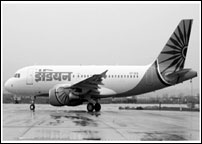 SOARING oil prices — with the rate having topped the $75 a barrel mark, before falling back a little — have unsettled the budgets of both airlines and passengers during the peak summer vacation.
Millions of Indians travel during the summer vacations in May, when schools and colleges stay closed. A majority of them travel to their hometowns, but an increasing number these days also visit hill-stations, beach resorts and other popular destinations. And a surprisingly large number of Indians – estimated to be around 7.5 million – travel abroad.
With the opening up of the civil aviation sector, which saw the entry of over a dozen private airlines, airfares have fallen dramatically in recent years, encouraging millions of Indians to take to travel by air. Domestic airlines flew an estimated 25 million passengers last year.
According to the Centre for Asia Pacific Aviation, the figure is likely to jump to 60 million in about five years. With the expected improvement in civil aviation infrastructure – as scores of new airports are built, and existing ones are upgraded – the figure is expected to top the 100 million-mark a few years later.
But for domestic airlines, the twin impact - of sharply reducing fares, and a spurt in the price of aviation fuel – has come as a nasty blow. Collectively, the domestic civil aviation industry is believed to have notched up losses of about $250 million last year. With aviation fuel costs soaring, this is expected to cross the $300 million mark in the current year.
The industry is of course growing at breakneck pace, with 25—30 per cent rise in passenger traffic every year. New airlines are also taking to the skies, offering phenomenal discounts to attract passengers. State-owned Indian (formerly known as Indian Airlines), which was a monopoly for several decades, has lost its premier position.
India’s largest domestic carrier, Jet Airways, and Indian are also rapidly losing their share to spiffy, low-cost newcomers such as Spice Jet, Go Air, and even older no-frills airlines like Air Deccan. Others are also entering the fray, including Indigo Air and Jagsons. Jet, which is acquiring Air Sahara for about $500 million, has also been forced to offer hefty discounts to its passengers, to protect its market share.
Jet (with a market share of over 36 per cent), last week announced the imposition of a Rs300 fuel surcharge on all tickets effective today. This would hopefully help it cut down losses suffered on account of increased fuel costs.
But its rival, state-owned Indian, is trying to lure additional passengers, by slashing rates for the peak summer season. Last week, Indian announced a massive discount scheme – ranging from 10 to 35 per cent – for those flying between May 1 and June 15. The new ‘x-ray’ class of tickets would enable a passenger to fly between Mumbai and Delhi for a little under Rs3,000.
The availability of ‘x-ray’ class of tickets is automatically linked to the system; as more tickets are booked on a flight, there are less of these special fares going around. Indian has lost about five per cent market share over the last six months, and today accounts for 23 per cent in the domestic market.
 International airlines, including United Airlines, Delta, Lufthansa, and Singapore Airlines also announced the imposition of additional fuel surcharges. The surcharge ranges from $15 to $60, and on a round-trip to the US can work out to a hefty $250. For the hundreds of thousands of Indians heading to Europe and the US this month on summer vacations, this come as a rude shock.
Outbound travel from India has been growing in recent years, thanks to the availability of low-cost tickets. Tour operators have been splashing newspapers and magazines with full-page ads, offering attractively priced summer packages.
The imposition of additional fuel surcharge by airlines has sent the budgets of price-conscious travellers for a toss. But tour operators do not expect a lot of cancellations. Airlines operating to South East Asia, including Singapore Airlines and Malayasian Airlines, have been offering attractive deals to Indian tourists in recent weeks.
Both airlines have slashed fares by as much as 60 per cent, offering tickets at around Rs8,000 to Rs.9,000 for a return ticket to Singapore/Kuala Lumpur from India. This is cheaper than regular fares from Delhi to other major cities, including Mumbai, Kolkata, Bangalore and Chennai. Singapore Airlines is also offering up to 50 per cent discount on fares to Australia.
Competition on international routes is growing, resulting in lower fares. Domestic operators, including Jet and Indian, also operate international flights. Jet plans to include many international destinations to its network over the coming months.
Kingfisher Airlines, which recently signed a deal for the acquisition of five Airbus A340-500s, is also planning to launch international operations. Though Kingfisher was established just a year back by Vijay Mallya, the liquor baron from Bangalore, the airline is eager to start services to Europe and the US.
Under existing rules, a domestic airline has to operate for at least five years, before it is allowed to fly abroad. Mallya said here last week that this was an absurd rule, as a foreign airline, set up just a week earlier anywhere in the world, can operate flights to India.
The non-resident Indian entrepreneur now plans to do just that. He will either set up an airline abroad, or enter into a strategic alliance with another international airline, and operate flights to India from the US under the ‘Kingfisher’ brand.
The ultra long-haul A340-500s would enable Kingfisher to operate non-stop services between India and the US in about two years. State-owned Air India plans to launch non-stop flights from India to the USA next year, following the induction of ultra long-range, Boeing 777 aircraft.
BESIDES eating into the share of established airlines like Jet and Indian, the new low-cost carriers in India have also grown the market organically, by successfully wooing upper-class railway passengers. Indian Railways, which had never in its history toyed with concepts like flexi-pricing, is now doing just that. Railway Minister Lalu Prasad Yadav, worried over the low fares being offered by many airlines – which are not only cheaper than first-class rail fares, but even match second-air-conditioned train tickets – came out with a new plan to tackle this problem. Dubbed ‘AC Garib Raths’ (poor man’s air-conditioned trains), the new service to be launched in September will entice low-cost airline fliers by offering tickets at a rock bottom prices. For instance, on the Mumbai-Delhi route, the new fare on these special trains would be half of the existing ones, and cheaper than the no-frills airlines.
The ‘AC Garib Raths’ would be Lalu’s version of no-frills train service, as Indian Railways plans to cut down on unnecessary luxuries. The trains would be longer, and each coach would have more seats.
The railways have also been automatically upgrading wait-listed passengers on to the next higher category – if seats are available – to ensure that it does not lose customers to airlines.
But the railways face competition not just from the air. The network of new expressways and highways that are being built in India, linking important cities, is also threatening the railways. The Mumbai-Pune expressway, for instance, has eaten into a significant chunk of the passenger rail traffic.
Private and state-owned bus operators have bought a fleet of Volvo buses that speed at over 100 km an hour on the expressway. A bus passenger can travel from Mumbai to Pune in under three hours, as against almost four hours by train.
Many of the private operators have introduced Internet booking of seats, and passengers can take printouts of their bookings and produce it at the counter, saving them much time. Indian Railways too has introduced Internet booking, which has proved to be extremely popular. But unlike the private operators, it levies a fee on the transaction, and also charges passengers for couriering the tickets.
Of course, on some routes it has started accepting printouts in lieu of tickets. Though the former Bihar chief minister was earlier projecting himself as a rustic, neo-Luddite socialist, as railway minister he has encouraged modernisation and quickly adapted himself to changed circumstances.