



 0
0

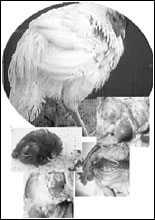 THE governments and livestock producers around the world are planning to respond to the potentially devastating outbreak of the H5N1 strain of Avian Influenza. Such outbreaks can impact human, animal and crop health. This highly pathogenic virus is now confirmed in France and threatening the livelihood of European poultry farmers. The veterinary bio-security experts are providing advice on how to protect the valuable flocks from this infection.
Farmers and poultry producers must remember that the virus can survive for a considerable length of time outside the infected birds. This means that apart from the obvious bird to bird method of transmission the virus can also be transmitted via mechanical vectors such as vehicles, equipment and farm staff.
As a first step, poultry producers must establish a secure bio-security perimeter to ensure that the farm is limited to one combined entrance and exit. A means of contact between the site entrance and the farm house/office e.g., a bell or whistle for essential callers should be provided and the number of visitors minimized.
Where possible visitors should be provided with the “farm-only” boots and overalls and a shower-in policy should be in place, along with hand-washing facilities.
Disinfectant foot dips also play an important role in the prevention of bio-security programmes designed to minimize the transmission of Avian Influenza. Foot dips not only cleanse and disinfect the footwear of farmers entering poultry houses, but they also act as a highly visible sign to farm visitors that bio-security and disease prevention are seriously taken care of.
Key rules for use of foot dips:
• Always clean boots and remove visible soiling first by using a hose or a brush on entering or leaving the poultry farm.
• Choose a disinfectant that is broad spectrum with independently proven efficacy against the virus, is fast-acting, since foot dips necessarily have limited contact time, are effective at low concentration, since any disinfectant chosen needs to be used at higher than usual concentration to withstand possible dilution by rainfall.
• Replace the disinfectant solution at least every four days or when obviously soiled.
. All vehicles must be cleaned and disinfected prior to arrival on site with only essential should be allowed to enter. All other cars (staff, service vehicles etc.,) should be kept outside the bio-security perimeter. Adjacent loading bays, paths and roadways should also be disinfected.
When cleaning and disinfecting poultry houses and farm buildings in accordance with a terminal bio-security programme, personnel must be provided protective equipment comprising respirator face mask, eye protection, overalls, heavy-duty rubber gloves and rubber or polyurethane boots.
The global veterinary bio-security experts are currently working with the governments and independent organizations to help prevent and control the emergency spread of highly pathogenic H5N1 virus.
In the first few hours of an emergency disease outbreak, huge quantities of disinfectant will be required and large amounts of emergency stock will be needed in the following days and weeks.
Personal protection: The persons working in the infected area may also get the infection for which personal protective equipment should be used as it:
• Prevents the spread of the disease in non-contaminated areas;
• Avoids contamination and infection of workers or visitors in infected areas;
• Addresses health and safety issues in the application of cleaning and disinfection.
The choice of clothing depends on the type of work.
Routine inspection of poultry: During the routine inspection of poultry it is important to protect workers and visitors from dust - as this may carry the virus particles. Many overalls may allow dust to enter, particularly through the seams which are clearly inappropriate. Particle-tight garments, including particle-tight seams and closures are recommended.
Contact with faecal material: If there is a risk of contact with the potentially infected faeces or body fluids at high pressure then liquid impervious garments are recommended. These suits should also be worn when applying cleaning and disinfecting chemicals. These garments should have liquid tight seams and closures which are liquid tight during the entire working time.
Disinfection of contaminated garments: It is a good bio-security practice to disinfect garments after use and many countries have set special regulations following the garment use. These include the wet-decontamination of a whole suit to reduce the spread of avian influenza viruses and to protect the wearer of garments against any type of cross-contamination.





























