Better investment prospects
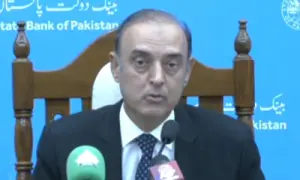
PAKISTAN has reportedly sold 10-year and 30-year bonds worth $800 million in the international market. The sale’s immediate impact was to boost the value of the rupee by seven to eight paisa against the dollar on Friday. It is the third bond to have been floated since Pakistan returned to the international market in 2004. The first issue of $500 million Euro bond was launched in 2004 followed by $600 million Islamic bond in 2005. These debts are being raised from diverse markets. The annual launch of sovereign bonds indicates that Pakistan is now on the radar screen of global investors. It has been just included by Economist, London, in the list of 27 emerging markets whose data is published as weekly update for investors whose interest in Pakistan has been revived since GDP has risen from about $65 billion to $125 billion over the past six years, both on account of the economy’s growth and a better mode of accurate national accounting. But many foreigners make their own independent assessment of GDP on the basis of purchasing power parity rather than the exchange rate. It raises Pakistan’s GDP to $421 billion and the per capita income from $708 to $2400. And more significantly, the economy is growing at six to eight per cent per annum, opening up opportunities for investment in a wide range of business activities, made more attractive by a sharp rise in corporate profits of companies listed on the stock exchange as a result of economic reforms.
The market response to the third bond also reflects the buoyancy of the external sector of the economy marked by hefty capital inflows, including bilateral and multilateral assistance. In the past eight months, there has been record foreign direct investment and remittances of two billion dollars each and record exports of $10.6 billion. Foreign exchange reserves were at $11.4 billion on March 16 despite an unprecedented trade deficit of over eight billion dollars. The debts raised by bonds from international markets at costs higher than the much cheaper conditionalities —inked multilateral loans do tend to help execute national strategies with greater flexibility but carry the risks of the volatile global currency markets, specially if the domestic market is closely integrated. So, the policy-makers have to take care of the pitfalls.
Although the long- term outlook for the economy has much improved since 2001, the environment remains clouded because of heavy dependence on foreign lending and imports of basic commodities. The need for borrowings by the government for improving much needed overhaul of the infrastructure is necessary to keep the momentum of investment. It is also a source of concern in a situation where the delivery system in the public sector projects is weak. This raises the question of how productive are the borrowed funds used in projects to yield returns to pay off the debts. In the past the inefficient and imprudent use of the foreign funds have led to a debt trap which must be avoided at all costs. The external debt was stabilized at $33 billion in mid-2003 but it rose to $38 billion in 2005, though such debt is one-third of the GDP now — down from more than one-half in 2000. Accessing the global financial markets with any weakening of the economic fundamentals, particularly the external sector, would result in creating debts at unaffordable rates or a return to the IMF for a bail-out.
Whither speedy justice?
PRIME Minister Shaukat Aziz was right in asking the superior courts to introduce corrective measures to dispense speedy justice but he fell short of suggesting viable solutions in this regard. One is all too familiar with the reasons courts have a difficult time meting out speedy justice. There are not enough judges or judicial officers at various levels to handle the large number of cases before the courts, hence the backlog of cases involving inordinate delays in their disposal. This needs to be seriously tackled. For years the issue has been treated as merely a talking point with no serious steps taken to address the problem. There are legal aspects too that need to be reviewed and where possible, certain law reforms initiated to ease the problem of delays. The prosecution and defence lawyers too need to play their roles more responsibly and ensure that their clients’ cases are decided in time, with no room for incessant delays in hearings that prolong a defendant’s agony. The number of under-trial prisoners is not only indicative of just how sloppy a trial can be, but it also poses problems for jail authorities who cannot cope with the swelling number of under-trials. History is replete with examples of cases that have either never been solved or where the government has failed to implement the court’s decisions. These factors have all contributed to the public’s poor perception of the the system and also explain why so many turn to jirgas and panchayats to solve disputes, despite bans on them.
The government has to work in collaboration with judges and lawyers to strengthen the judiciary so that it is seen as an independent body that delivers justice speedily. The ADB sponsored “Access to Justice” programme, which began in 1999, and was publicized as a method to ensure speedy justice, does not seem to have met with much success. Mr Aziz claims otherwise but it has been difficult to ascertain what, if any, of its proposals were put in place and what were the results of those implemented. If implemented in letter and spirit, the programme could indeed make the dispensation of justice expeditious.
Sui tribesmen’s return
THE return of more than 1,500 tribesmen to their original home in the Sui area deserves to be welcomed. Led by Mir Hamadan Bugti, one of Mr Akbar Bugti’s rival and belonging to the Rahija clan of the Bugti tribe, these men, women and children were forced to leave their hearths and homes because of internecine tribal fighting. The fact that their convoys were provided security by the government shows that they do not feel safe while returning from Punjab to their home in Balochistan. They would now need the government’s continued protection because of the lawlessness which has been there for years. This reflects poorly on the successive governments’ capacity to ensure peace in the Sui area, which provides the bulk of gas supplies to the country. Enmity among different tribes is nothing unusual, but in Pakistan it has been worsened by the availability of weapons ranging from pistols and rifles to machine-guns and rockets. Tribesmen in Balochistan have always kept arms, but there has been a qualitative and quantitative increase in the availability of arms because of the Afghan war. This has also made gas installations insecure, because during the fighting in Sui last year tribesmen fired hundreds of rockets at the gas installations.
Apart from checking the supply of arms to the tribesmen, the greater task before the government is the rehabilitation of the returning tribesmen. Cultivable land is available in the Sui area, but the returnees will need water, electricity, agricultural inputs and tractors. More important, the returnees would need security against violence and harassment by the powerful sardars, who treat all tribesmen as their bondsmen. In case a tribesman disobeys, retribution is swift in the form of eviction from land, imprisonment in private jails or even murder. Not only the Sui area but Balochistan as a whole needs education, farms, factories and a modern economic infrastructure to create a politically conscious middle class that could break the hold of the sardars on Baloch society.
Alliances: rhetoric and reality
THERE is a growing tendency in the world to describe a friendly relationship as a “strategic alliance”. So far as the role of language is concerned, the use of the word “strategic” implies that basic considerations of mutual and regional security figure in the ties between countries.
The major powers, and the US in particular seem to find it useful to describe their ties with a country or alliance as strategic. By contrast, ties of limited value or duration get described as “tactical”, i.e. of restricted value or relevance to vital national interests.
The expression “strategic alliance” has acquired special significance in South Asia, where India and Pakistan joined opposing sides in the Cold War that had succeeded the Second World War barely three years later. As Moscow successfully subverted Czechoslovakia in 1948, as part of its campaign to spread the Marxist system to other lands, it virtually compelled the western powers led by the US, to establish the North Atlantic Treaty Organization (Nato) in 1949, to prevent the communist countries, led by the Soviet Union, from overthrowing capitalist-democratic regimes by a combination of subversion and force.
Pakistan’s entry into Seato and Baghdad Pact, though motivated by a desire to have western military and economic aid, did involve a “strategic alliance”, that evoked a hostile reaction from the Soviet Union which extended assistance and support to countries hostile to Pakistan, namely India and Afghanistan. However, when India provoked a border conflict with China, the US and UK rushed weapons to India, without consulting Pakistan.
This led Pakistan to mend fences with China and Russia, though the latter was already friendly to India in the context of the Cold War. Moscow helped India to dismember Pakistan in 1971, but when it invaded Afghanistan in pursuit of the Brezhnev doctrine, in 1979, Pakistan played the leading role in supporting the Afghans, and in mobilizing global opinion against Soviet intervention.
The prolonged Afghan war, in which both the US and China also supported the Afghan freedom struggle, led ultimately to Moscow’s defeat in the Cold War in 1989, followed by the disintegration of the Soviet Union in 1991. US perceptions underwent a radical transformation, as after the defeat of communism, it saw Islamic fundamentalism as the new threat to its security, together with nuclear proliferation. As Pakistan was supposedly guilty on both counts, it was now subjected to sanctions, while India was viewed in a more friendly light, notably over the threat from resurgent Islam.
As India had been identified with the Soviet bloc during the Cold War, and had sought to turn the Non-Aligned Movement into an anti-Western bloc, the process of the US swing to a totally partisan attitude took some time. It was China’s steady and peaceful rise in the last two decades of the 20th century that led to its being perceived as a potential rival for the US after 1990. Though involved in mutually profitable “engagement” in the economic sphere, the US strategic plans increasingly saw China as a long term threat, specially as economic projections by western economists saw China overtake the US in terms of its overall GDP, by the 2040s, so that by 2050, it would account for 23 per cent of the global GDP, followed by the US with 21 per cent and India with 13 per cent.
Even though China displayed no ambition to play the role of a superpower, its economic clout, combined with its identification with the developing world, would endow it with the role of a challenger. The US National Security Doctrine adopted in September 2002, declared that the US could not allow any power to challenge its hegemonic status. This is the raw foundation of the global strategic reality, and since the US considers safeguarding its global hegemony as the sine qua non of its security, its view of a strategic partner or ally is based on its perception of how far a particular power is a strategic ally or partner.
Other great or medium powers also rate a relationship as strategic if it is vital to their security and survival. Pakistan, facing a constant threat from India, sought to reinforce its security by joining military pacts with the western powers, which, however, linked their support to the threat originating from communist powers. In other words, the military alliances served only the western aim of containing communist expansionism, without catering to threats from other regional hegemons.
Since the end of the Cold War, many alliances arising out of that War ended. Pakistan had withdrawn from Seato in1972, after the separation of East Pakistan, while Cento ceased to exist after the Islamic revolution in Iran in 1979. However, many relationships are still claimed to be strategic in character, to justify enhanced military and economic assistance from major powers, and the US in particular, justifies substantial aid on the basis of shared strategic concerns, which, since 9/11, is linked to the war against terrorism.
Over the last five years, both governments and the media continue to make a distinction between “strategic” and “tactical” alliances. As already stated, strategic alliances cater to the basic political and security interests of the allies and such a relationship provides the foundation for economic and cultural cooperation. Tactical alliances, on the other hand, cover specific shared goals while the parties may have reservations about building up a multidimensional or comprehensive relationship.
With the role of the UN weakened, and the US asserting its authority on the basis of its military and technological superiority, a new kind of insecurity prevails in the world, with Washington itself claiming the right to take pre-emptive action against any country or movement that is seen to pose a threat to it. The policy of pre-emption, already enforced in Iraq, and being invoked against Iran, gives the impression of being Muslim-centric. The two powers that have taken full advantage of their “strategic alliance” with the US by suppressing liberation movements in Palestine and Kashmir are Israel and India respectively.
Pakistan, which joined the coalition against terror following the 9/11 attacks on the US, has won recognition for effective action against terrorism, and has caught over 700 terrorists, many of them those who were escaping from Afghanistan into its territory. Yet, scholars and political leaders in the West are pointing out that though the US under President Bush may find it expedient to describe the relationship with Pakistan as “strategic”, the current alliance centres on a single issue, namely terrorism. A former Cold War adversary, India, shares aims of long-term importance, such as the security of Israel and the containment of China, which has been Pakistan’s most reliable friend.
Pakistan’s war against terrorism is justified by its own concerns, that have compelled it to place 80,000 troops along its border with Afghanistan, Despite the resumption of the composite dialogue between New Delhi and Islamabad, India maintains pressure on Pakistan by continuing repression in occupied Kashmir, and using its many consulates in Afghanistan to foster agitation and even insurgency in its provinces bordering Afghanistan.
One needs to see relations among half a dozen major players in the post 9/11 period to see the different ways in which strategic alliances are described to paper over long-standing problems and contradictions. There are hardly any signs that the boundary problem between India and China will be resolved, since while they have agreed to place it on the back burner, India is not amenable to a settlement on the basis of the status quo, even though it is a favourable option. The two largest countries of Asia are natural rivals, economically and politically. Yet they, together with Russia, claim to have established a strategic alliance in favour of a multilateral order. Another much-touted strategic alliance is that between China and Russia whose presidents met recently in Beijing, to underline their shared goal of opposing US hegemony, and promoting a multilateral world order. But, in practice, Russia is trying to revive its status as a superpower, on the basis of its role as a major source of oil and gas and its large stockpile of nuclear weapons. Even Japan, which has the world’s second biggest economy, is being encouraged to claim its rightful role in the containment of China, and to contravene its commitment to a one-China policy, by encouraging Taiwanese separatism.
If one were to go deeper into the current trend of glorifying bilateral relationships as “strategic”, the rhetoric is a response to insecurity in an age when the UN has been marginalized. If the lessons of the two world wars are recalled, and the growing need for an effective world forum to resolve challenges that confront mankind, ranging from diseases to poverty, and terrorism to drugs to be addressed, the UN must be reformed and revived.
If all the measures and policy goals already enacted by it were to be implemented, the world could pull back from the economic and political abyss that looms for mankind, and use technology, cooperation and shared values to restore faith in a peaceful and prosperous future.
The writer is a former ambassador.