



 0
0

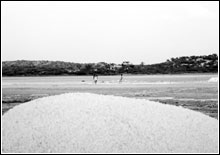 THE difficult, unyielding terrain of the Thar desert may have driven its loyal people into the darkest depths of poverty but beneath its tough surface lies a treasure trove of nature’s richest wonders. The district of Tharparkar is home to everything from coal deposits to reservoirs of granite, mines of china clay and abundant natural salt lakes.
The problem: development of these natural resources has typically been at the cost of, rather than to the aid of the local people.
They’ve suffered the environmental and displacement effects of insensitive development and the scant income-earning opportunities they’ve been thrown in return, have been nothing but harsh, exploitative labour replete with risks and health hazards of their own.
Thar coal: Take, for one, the Thar coalfield. According to the Sindh Coal Authority, the coalfield is spread over 9,100 square kilometres and has measured deposits of around 11 billion tons, of which some three billion lie in the four surveyed blocks around Islamkot town.
The coal could provide raw material for as many as six power plants of 1000MW capacity. According to a report published by Thardeep Rural Development Progoram in 2003 entitled Socio-economic and Environmental Aspects of Coal Mining in Tharparkar District, a total of 52 villages around the town of Islamkot in the Mithi region will be affected by the coal project.
The effects will range from health concerns to environmental problems and re-location issues. One of these villages is Thario Halepoto, some four km from China Camp where some 30 Chinese engineers await orders for further exploration activity.
It’s a small village of 200 households and a population of 1,000. Most of the houses are mud huts, and despite being so close to the coalfield, the village remains without road access. As the Chinese wait for instructions, the villagers dread the resumption of exploration.
The bitter memories and tangible losses from previous exercises are still fresh in their minds. As a community deriving 80 per cent of their income from livestock and 20 per cent from agriculture, they cannot afford either to be hurt. But the last time the Chinese got to work in three years ago, the villagers saw their income wiped out.
Trees were felled by the dozens and each villager lost up to five animals, all poisoned by the environmental damage to the bushes and shrubs they fed on. Millet and bean plantations were trampled by the heavy machinery used in the measurement process and this resulted in a loss of Rs400,000 in seed investments. Privacy was disturbed and social traditions broken as exploration teams entered private households in pursuit of the coal.
While coping with the negative fallout, the village has yet to see any developmental work benefit them either. Thario Halepoto remains without access to sweet water, electricity or roads. “There is an electricity connection one kilometer from here but we don’t get any and there is a water line one kilometer from here and we all drink salty water from a dug well,” says Abbas Ali, a young primary school teacher.
“If this black gold is on our land, do we not even have the right to get water and electricity? We are ready to sacrifice our land and animals for the sake of national progress but we should at least get these basics in return.”
So far, the only benefit the locals have seen is casual, temporary labour for about ten villager who get Rs150 per day. One estimate is that in the first phase till 2010, some 10,000 jobs would be created through the development of Thar coalfield and the installation of independent power plants.
Half those workers will be semi-skilled and unskilled while in the long term, over 58,000 workers will be needed. The report proposes giving preference to local labour and Thari youth but the locals have little hope that this will happen. “We are being pushed further back in the name of development,” says Mohammed Khan, a village elder. “We have got no gains from this, just a whole lot of pains.”
And a lot more is yet to come. They anticipate having to lose their homes as work on the coalfield progresses. Thardeep estimates that compensation for the 52 villages will amount to Rs2.7 billion including the cost of relocation. But the question remains as to how the government plans to handle development in a humane way keeping in view the impact on the indigenous people.
Salt lakes: Further west, deep into the taluka of Diplo, some 20 kilometres south of the town is Saran, one of several natural salt lakes in the district. The drive to the lake is rough, through desert track and the salt lake comes into view suddenly, almost shockingly in the midst of the barren desert.
The edge of the lake is a pale yellow-pink and on the banks lie mounds of rock salt ready to be picked up by the trucks that will pass through to take the salt to refining factories in Karachi and elsewhere.
The huge expanse of white is dotted with workers, barefoot, their feet covered in salt up to the ankles. The workers are bent deeply at the waist, heaving with their pick-axes and shovelling vigorously to wash the salt in the water below before piling the small white rocks onto the heap before them.
Allah Bachayo is one of the 15 odd workers, all from a village behind the lake. He has been working this salt lake for ten years and warns us to be careful of the gravitational forces at the edge of the lake that occasionally cause villagers to lose animals.
He himself skips casually over the salt. He works in a grey shalwar kameez, drenched to the knees with the water. He swings his pick-axe over his shoulder and lifts a foot to show me the deep cuts on his feet. “The cuts never heal because we’re always in the salt,” he says, smiling and cracking a joke about throwing salt on an old wound.
“Our seth has never talked about that,” he replies with bewilderment when asked about using protective clothing or shoes.
Allah Bachayo, his younger brother and other salt workers each get Rs40 per day for eight hours of digging, raking and loading salt. “We can barely survive but we do it out of desperation,” says the father of seven.
“Some families go away to the barrage areas but going away means leaving home so we do this work although its harder than other labour and pays less.”
He laughs a lot, shrugs when asked about the dangers in this work and tells us about the earthquake in 2001 when “the whole salt lake shook like a swing.”
The 30-foot deep lake is one of many in Tharparkar but no salt refining facilities have been set up here. Instead, the salt is carted to the big cities where the boon of this natural wonder is swallowed by others, leaving the locals with but a pittance for their treacherous labour.
China clay mines: Much further east, hidden deep within the desert, way past the coalfields in the south eastern Taluka of Nagarparkar, three kilometers south of Virawah lies a deep mine of china clay.
This is one of about a dozen such mines in the taluka of Nagarparkar from where china clay is extracted, then processed at nearby open-air workshops and sent onto crockery factories in Karachi.
The approach to the mine looks fairly harmless. Mounds of white powdery clay block the entrance. But at the mouth of the mine, all its horrors become exposed. A steep, rocky climb some 20 feet below the ground and you’re in the first chamber in the mine. Cross through it and there’s an entire labyrinth of clay chambers, held up by pillars of the white stone the clay comes from.
Workers are littered all through the mine in the deepest, darkest corners where even the white rock they must dig at is barely visible. They work barefoot, bare-headed, bare-handed. A young boy, probably in his late teens hoists a pick-axe over his shoulder and goes at the white rock. It splays, large pieces of the rock come tumbling down over his shoulders and the white dust he’s after settles on the ground. He must smash his pick-axe into the wall enough times to generate enough of that white powder to fill one truck per day.
A few moments inside the mine make visitors like us nauseous and claustrophobic. For workers like Ghulam Rasool, this is everyday life. “My eyes hurt all the time from the dust, my respiratory system feels clogged, my hands and feet hurt from the rock,” he says. “We get five rupees for every two maunds of clay we extract and that comes to about Rs125 per day. We are driven to this because of the drought.”
Not far from the site of the mine is the open air workshop where the china clay is processed. One corner lies occupied by several mounds of the china clay powder. Next to it a large cement tank was filled with water into which the clay was submerged.
At the foot of the tank is a rack on which the china clay is dried after being taken out of the water and pressed into large round cakes. Once the discs are fully dried, they’re transported to factories around Karachi.
The workers get Rs80 for an eleven-hour day. Both the mines and the workshops are contracted out by the government. The local people can’t afford the contracts and content themselves with the tough labour that pays little and harms their health.






























