0
0

Pakistan’s energy needs
US energy secretary Samuel Bodman is to visit Pakistan in the near future to discuss the country’s energy needs. Mr Bodman will be coming to Pakistan following President Bush’s visit when he was asked by Pakistan to provide assistance to meet the country’s growing energy needs. Shortly after Mr Bush’s departure, Prime Minister Shaukat Aziz was quoted as telling the head of a major foreign oil exploration company who met him in Islamabad that the country’s energy needs were growing at the rate of 10-12 per cent a year. According to data kept by the US department of energy itself, Pakistan’s energy consumption has nearly tripled in the last two decades.
However, with substantial economic growth over the last couple of years, and more predicted for this and next year, the increase in its energy needs may well become greater. Pakistan’s case to the US for the latter to help it with its energy needs by providing nuclear energy technology as well — something already offered to India — is made stronger when one looks at the per capita energy consumption which is about the same as in India. However, since Washington has more or less ruled out any nuclear-specific deal of the kind offered to New Delhi, Islamabad should consider the possibility of seeking assistance in exploring all sources of energy, especially hydroelectricity, natural gas, coal and solar energy. The country’s large potential for hydropower remains underutilized mainly because of the cost of transmitting the power generated in the mountainous north — where most likely hydropower sites are located — to the urban centres down south. Here, perhaps the US could help with regard to both funding and transfer of technology. As for exploration of its sizable gas reserves, Pakistan will need assistance in expanding its current reserves, especially with the growing popularity of CNG as a motor fuel. The option of aid for harnessing solar energy must also be considered, given Pakistan’s climate which is well-suited for this purpose.
Another area where Pakistan will need backing from the developed world is the efficient production and transmission of energy, particularly electricity. Much of the electricity generated, barring the independent power producers, suffers from a high level of inefficiency and line losses. On this count, even the army’s management of major power plants such as Wapda and the KESC for a number of years did not help matters much. As things stand, the cost of producing energy and delivering it to the end user — commercial, industrial and domestic — is excessively high. In addition, a significant percentage of the energy is lost because the transmission and distribution networks are obsolete and in urgent need of a complete overhaul. Here, perhaps assistance could be sought from the US in the form of low-interest loans to pay for upgrading the networks and equipment.
Another problem is that of rampant power thefts and here too, despite various claims and promises, no progress has been made to check theft. The result is that less energy is available at the consumer’s end than transmitted. As a consequence, consumers who pay their bills are burdened with rising tariffs, power cuts are frequent affecting industrial production, and then the government goes to foreign governments for help with its energy needs. At least in the matter of preventing power theft and line losses, the government does not need any foreign help and must be able to catch the power thieves on its own.
Justice for women
LAST week saw a spate of conferences and seminars on women’s issues all over the country to commemorate international women’s day. What was most striking about all these meetings was that they unanimously called for a repeal of laws discriminatory to women. At the top of the list were the Hudood Ordinances that have been misused to penalise women in Pakistan for over 25 years. Ever since General Ziaul Haq promulgated these laws without any parliamentary endorsement, the establishment and the religious lobbies have resisted any changes in them, claiming Islamic sanction for the laws. But many religious scholars also have questioned the validity of these laws that have so many loopholes that they can be easily misused and result in gross miscarriage of justice against women.
Numerous cases of women victimized under the Hudood laws have been cited on various occasions. In fact, it is said that most of the women — mainly poor and illiterate — who are in prison have been charged under the Hudood Ordinances. According to a former chief justice of Pakistan, most of these charges cannot be proved under normal laws. The experts committee appointed by the National Commission on the Status of Women when Justice Majida Rizvi was its chairperson studied the laws carefully and strongly recommended their repeal. It is a pity that over a year has elapsed when this demand was made. It has been reiterated by the present chairperson of the commission but nothing has come of it. Only recently, some People’s Party MNAs introduced a bill in the National Assembly calling for the repeal of the Hudood laws. But given the parliament’s past performance on similar issues, one cannot be sure that the bill will be taken up in the near future. Hence the compulsion to mobilise public opinion in support of repeal. Here it may be added that the Hudood laws are not the only discriminatory laws on Pakistan’s statute book. The law of evidence and the qisas and diyat ordinance too downgrade the status of women and do not accord them an equal status in the eye of the law. This can result in great injustice to women as has been happening and it is time something was done about it.
The spirit of Basant
DESPITE the Punjab ban on kite-flying, the party goes on. ‘Kite-flying is dead; long live the spirit of Basant’, seems to be the popular mood at least in Lahore. The rest of the activities planned as part of the Basant festival are very much there. The city wears a festive look, with the main arteries and parks decorated to welcome the season of flowers. Music concerts, theatrical performances, flower shows, food galas and fun fairs being held at many public places are attracting huge crowds, with youngsters dancing to the beat of drums and girls sporting traditional mustard-coloured and green outfits, tailor-made for the occasion. The canal bank drive, the pride of the city, has been tastefully lit, with fountains and floats attracting merrymakers of all ages.
The decision to go ahead with the festivities has led to a sigh of relief from hoteliers and restaurateurs who, as in previous years, have made heavy investment in the city’s solitary popular festival. Thousands of kites which were meant to be flown and grace the city’s sky before the ban was imposed late on Thursday night have found their place on roadside poles, adding to the colour of miles upon miles of festive banners hanging along major thoroughfares. Trust the fun-loving Lahoris to make the best of what may be legally allowed. Kites are an integral part of the Basant celebrations and their presence, even if on poles and on the ceilings and walls of business establishments, is something not to be given up for nothing. That, perhaps, is the true spirit of Basant, of whose popularity the 15th century classical Punjabi poet Shah Husain sang with abandon, saying “on a string of nine senses, I hit the sky.”
Bush visit: not just a stopover
INVIDIOUS comparison is virtually built into an American president’s visit to the subcontinent. So it has been again, as President Bush has come and gone. As a foreign journalist put it, India got a hug, Pakistan a pat on the back.
I think a more meaningful comparison should be with the reluctant visit made by a censorious president Clinton not so long ago. The scolding Pakistan received on that occasion shows the long way Pakistan has come since General Musharraf’s prompt response to America’s ‘with us or against us’ ultimatum.
Of course the visit to Pakistan was (like all previous presidential visits) an appendix to the India visit. This does not necessarily detract from its importance. Media-wise, the India visit was perhaps over-sold, the Pakistan visit under-sold. That Bush came at all despite the existing turmoil in the country and the bomb attack in Karachi shows that he meant what he said about the importance of visiting Pakistan. However, in doing so he also defined it in a restrictive way: Pakistan was important to America because it was an ‘indispensable’ ally in the war against terror. As everyone knows the ‘indispensability’ lies in geography, rather than in a national commitment to this war. This was evident also in the president’s emphasis on the personal role of General Musharraf as a friend and ally.
In both countries, Bush spoke of developing a ‘strategic relationship’. These are diplomatic buzzwords that can be given whatever meaning one wishes to. In India they are taken as recognition of India’s global status and Americans have used the phrase for some years, in the words of an American commentator, to flatter India’s self-esteem. The nuclear agreement (and the offer to sell it hi-tech military equipment) is the first concrete step in America’s promise to help India achieve the status of a global power. America has sympathized with this Indian ambition since the time of John Kennedy who saw India as offering an alternative, democratic model of development in contrast to China. Bush praised India as a pluralistic democracy and free-market economy which fully merited American admiration, support and investment.
There is a hard-line view that sees China as threatening or challenging America’s status as the sole superpower. In this view, India can be a counterweight to the Chinese challenge. How exactly this might work for America is not clear. India is developing its relations with China and will be careful not to enter into overt rivalry with China (dooming thereby its chance for a permanent Security Council seat). On the other hand, allowing India to strengthen its nuclear weapons capacity is more likely to destabilize the military equilibrium in the region than to counter-balance China. An incidental consequence would be a closer alignment between Chinese and Pakistani policies in the region.
The nuclear agreement is also a concrete expression of the ‘dehyphenation’ of US policy in the subcontinent. This fancy word means that in pursuing a certain policy towards one country the United States will disregard the objections or interests of the other. This is by no means a new policy. The US paid no heed to Indian protestations in agreeing to arm Pakistan in the ‘50s. In the nuclear field, when India exploded its first nuclear device, the US ignored Pakistan’s efforts to restrain the Indian nuclear programme (e.g. by not supporting our nuclear free zone resolution) and instead put Pakistan under heavy pressure and sanctions.
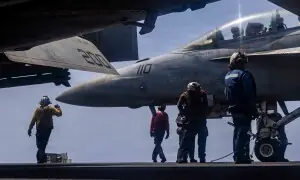
Does the nuclear agreement threaten Pakistan’s security? General Musharraf says that there is nothing to worry about and no doubt in military terms the agreement does not put Pakistan at a disadvantage. As for energy, we are looking to China to help in the nuclear field and Bush promised help in the non-nuclear field. The US is committed to a fairly large amount as military aid over several years and has agreed to sell Pakistan F-16 aircraft. If Pakistan is not taking up the offer because of lack of money, so much the better. It was refreshing to hear the army chief say that Pakistan must cut its defence coat according to its cloth. Hitherto this logic had not prevailed in this field.
There was some media speculation, provoked by the minimalist airport reception, strained smiles, an edgy press conference, that all may not be well between Pakistan and the United States. This has been denied on both sides but was lent substance when Bush said that he had come to reassess General Musharraf’s commitment to the war against terror. While Bush said that he was satisfied on that score, testy exchanges between Musharraf and Afghan leaders appear to be taking the two countries back to the tensions of the early years.
The general’s irritation at Afghan carping is understandable for Pakistan has done a great deal against Al Qaeda and the Taliban, killed or captured their adherents in large numbers, and lost lives. But he admitted that slippages may have occurred in the implementation of agreed measures; considering the hold that the Taliban credo has on the minds of sections of our political, administrative and military establishment, it cannot be ruled out that the deficiency in implementation may be deliberate.
The real problem in Afghanistan is the war on terror itself. The Taliban/Al Qaeda ethos exists in the minds of men; it cannot be eradicated by cluster bombs and bunker-busters or only by killing or caging in Guantanamo its followers. Not many objective observers believe that the war in Afghanistan (or in Iraq) is being won or democracy is replacing the rule of warlords. As things stand both wars look like going on for a very long time and it is far from certain whether the United States has the political stamina to stick it out.
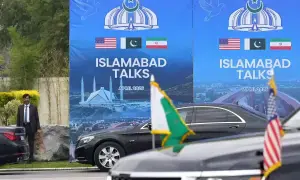
What will be the shape and substance of the Pakistan-US relationship after the US ceases to need Pakistan as an ally in Afghanistan? Past experience may justify some scepticism on this score but the past is the past and the future is in ones hands. The Islamabad joint statement outlines the basis of a strategic partnership between the two countries: ‘building a stable and sustainable democracy, promoting peace and security, stability, prosperity and democracy in South Asia and across the globe.’
In more specific terms the statement visualized a significant expansion of trade and investment, a role for Pakistan as a land bridge between the economic potentials of South Asia and Central Asia. Education, health, energy, science and technology were specified as fields for cooperation. In regard to all this the ball is in Pakistan’s court and it is mainly up to Pakistan to give substance to these promises. This is the only valid basis on which a long-term, mutually beneficial relationship can be sustained with the United States and not in seeking its support in our rivalry with India. This is indeed the thrust of the policy President Musharraf has been trying to follow since he found himself in the president’s seat six odd years ago. The fact that he has chosen to do so without the needed popular support is no doubt the reason why the policy is not making much headway.
The writer is a former ambassador.