0
0

 KARACHI: With the start of Muharram, majalis are again being held in imambargahs and mosques daily. The oldest of the city’s imambargahs are situated in District South. According to residents of the area, Bishu Imambargah, Baghdadi, is the oldest as it was established in 1806.
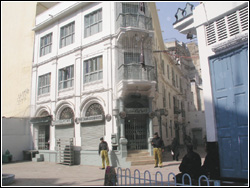
Another very old imambargah in the district is Bara Imambara Kharadar. “This imambargah was established in 1868,” says Anwar Hussain, an old resident of the area and manager of the Khoja Shia Asna Asheri Jama Masjid, Kharadar.
The imambargah is situated two streets away from Wazir Mansion, the birthplace of Quaid-i-Azam Mohammad Ali Jinnah.
According to Mr Hussain, the Bara Imambara was built by the Khoja Asna-i-Ashri (Pirhai) group. With the passage of time, two floors were added to the building besides renovating the older one in order to accommodate more people in the majalis.
The first floor of the imambargah is exclusively reserved for women attending majalis and other religious functions.
The most important imambargah of District South is Hussainiya Iranian, as it has the privilege of playing host to thousands of participants of all big Muharram processions of the city.
It was built in 1948 by Pakistanis of Iranian origin whose forefathers came and settled in the area before partition in 1947. The imambargah is looked after and run by the Anjuman-i-Hussainiya.
Also in District South at Nishtar is Bara Imambargah, about half-a-kilometre from the Civil Hospital. It consists of five small imambargahs — Safina-i-Najaf, Chowki Hazrat Abbas, Aal-i-Muhammad, Mai Jameela and a ladies’ imambargah.
According to Master Mohammad Shafi, the imambargah was established in 1917 by Chaudhry Allah Ditta. The place, besides holding majalis, was also providing hostel facilities to pilgrims coming from upcountry and going to Saudi Arabia, Iraq, Iran and Syria for Umra, Haj or Ziaraat by ship in the past.
From here, three processions are taken out which after passing through Napier Road merge at Denso Hall in the central procession coming from Nishtar Park. These processions are taken out on 9th Muharram, Ashura, and 21st Ramazan marking the martyrdom of Hazrat Ali (AS).
Another old imambargah is Mehfil-i-Shah-i-Khurasan, situated near the mausoleum of Quaid-i-Azam. Since its establishment in 1948, it has been hosting one of the biggest majalis every year.
Among other important imambargahs and mosques where thousands of mourners attend majalis during the month of Muharram are Rizvia Society mosque and Imambargah; Imambargah-i-Shah-i-Najaf, Martin Quarters; Markazi Imambargah, Liaquatabad; Islamic Research Centre, Ayesha Manzil; Masjid-i-Babul Ilm and Imambargah Shuhda-i-Karbala, Ancholee.
There are hundreds of other small and big imambargahs in Korangi, Malir, Landhi, Quaidabad, Gulistan-i-Jauhar, Gulshan-i-Iqbal, Golimar, Buffer Zone, North Karachi, New Karachi, Surjani and other parts of the mega city.