0
0

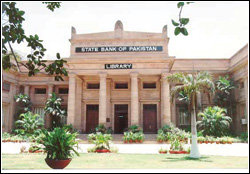 SBP’s latest monetary policy statement gave rise to controversies, not all of them fairly warranted, though this reaction was wasn’t wholly unexpected; earlier comments from the new governor of the SBP about remedying some of the distortions had built hopes that weren’t met as fully as the market players expected.
The policy quite rightly expressed its concern over the flattening of the term structure of interest rates due to the fact that, for quite a while, neither government nor the private sector had floated term debt paper. The realization that the negative real interest rates being paid to depositors needed to be rationalized was the other positive aspect, a concern that the new governor had expressed earlier too.
The policy stance is commendable for pin pointing a serious shortcoming – lack of yardstick long-term interest rates to give both savers and investors a sense of direction about the future trend of funding costs and their likely impact on future revenues. In fact, in the absence of long-term interest rates no one can undertake long-term planning. Such an environment inculcates a pervasive culture of short-termism, which is bad for any economy.
This distortion is primarily the creation of the government that is planning long-term development effort without assembling matching resources at a price it can manage in the long run. How the government will manage the financing cost of the mega projects it plans to undertake without borrowing on long-term basis remains a secret. Governments can’t operate on short-term borrowings. While businesses following a short-termist approach can afford to fail, governments can’t.
The other crucial aspect the policy highlights is the sustained trend of high negative real returns on savings. It is another serious distortion that has been caused by accepting FBS estimates of inflation without questioning their validity. Saver perception about the inaccuracy of official inflation estimates is highlighted by the fact that savings growth decelerated to 3.2 per cent in FY 04 and recorded a decline of 4.5 per cent in FY 05. This trend is probably the most disturbing of all developments.
Accuracy of the FBS-complied statistics is questioned by many. Addressing the members of SITE Association of Industry and KCCI last week, even Salman Shah advisor to the prime minister on Finance admitted that this function should be performed by an independent authority to establish the credibility of the statistics. When will this happen is anybody’s guess, but it points to the need for using FBS statistics with care while basing on them the monetary policy stance.
On the whole, however, the policy was not very convincing. The first disappointment was the continued rhetoric about monetary ‘tightening’ that has remained ellusive in practical terms in recent years. This belied the concern expressed in the policy about the current levels of conventional and core inflation. Then there was a surprising degree of satisfaction with the discomforting level of credit expansion and the rise in money supply.
The hope that credit expansion would slowdown (without regulatory intervention) since lending rates had risen above the level of inflation, is overoptimistic. The fact is that in spite of this phenomenon, credit expansion in the last six months has exceeded its level in the corresponding period of FY 05. Atop all this was the muted concern expressed by SBP over the balance of payments deficit and the exchange rate policy.
The real disappointment has been the satisfaction expressed by SBP about its overall policy conduct. In recent years, SBP has been content with the assumption that commentators know almost nothing about monetary management and therefore SBP shouldn’t worry about what they say. Relying on such assumptions carries the risk of committing errors of judgment that SBP may eventually find hard to rectify without incurring a heavy cost.
The overall impression has been that the policy is too soft on speculators who have thrived in a prolonged environment of easy credit availability, and unrealistically low interest and exchange rates. It would be hard for anyone to win an argument against this view because SBP statistics support this perception. It would be wise to accept that none of us knows everything about everything and there is always the need for appreciating the points of view expressed by various stakeholders before reaching any conclusions.
No commentator would make sense while opposing rational deregulation, credit expansion, stability in interest and exchange rates, and all of these trends together contributing to economic growth. It is only when such trends begin to render the playing field uneven for the market players that commentators fault the monetary policy. That the playing field has been rendered uneven is undeniable.
Take the case of rupee-dollar parity. In the name of stability it has been kept virtually frozen around Rs59.90/$ through continued market intervention by SBP at a substantial cost to the exchequer giving unfair advantage to importers at the expense of every other market player. There is merit in the argument that the Rupee is over-valued, even by FBS’s persistently under-estimated inflation.
That this policy was flawed has amply been proved by the baffling rise in the trade deficit. At $5.6 billion, it is almost half the size of the current level of foreign exchange reserves. Taking satisfaction from the fact that the trade deficit was squeezed to $3.8 billion by inflows on account of privatization proceeds, aid inflows and fresh borrowings, amounts to self-deception. Selling the family silver to finance over-spending is bad policy.
Also, the assumption that current foreign exchange reserves are adequate, borders on over optimism. Pressure on reserves could mount significantly if regional the political situation takes a turn for the worse sending oil prices sky-high while we continue to import food items to fill the gap caused by a drop in domestic agricultural produce. This is a strong possibility of a wholly unjust combined Western retaliation against Iran.
This, however, doesn’t call for taking drastic steps to contain all imports. A mechanism has to be found whereby imports that have a marginal positive or a straight negative impact on domestic industry should be discouraged. The fact that even consumer items continue to be imported under the garb of capital goods suggests the need for such a policy initiative to make bankers realize that misuse of de-regulation can invite re-regulation.
On the other hand, we need to bolster the competitive edge of exporters if we are to bridge the widening trade gap. The current exchange rate policy hasn’t done much in this context. The sooner we accept the reality that in not too distant future the crutches of export subsidies will have to go, the better. What we must exercise are options that augment exporters’ competitive edge without subsidies. An exchange rate policy that provides them part of this competitive edge is the answer.
There is visible reluctance to rein in banks running loan-to-deposit ratios close to 80 per cent. In fact, the banking sector as a whole is currently maintaining this ratio around 76 per cent. To allow banks to continue lending to this extent is simply inadvisable. In recent years, by all standards, credit expansion has been excessive reflecting shades of imprudent lending. Banks have on their books inadvisable levels of weak assets. In a scenario of rising interest rates and low savings growth, these assets could cause serious liquidity problems.
The baffling rise in credit expansion should not be misunderstood to portray a sudden increase in the economy’s capacity to employ borrowed funds efficiently and profitably. It is more an indication of over-exuberance that is rooted in easy availability of credit. It has been suggested before, and with good reason, that it may be the time to re-examine, for a start, the adequacy of statutory reserves as the route to curbing excessive credit expansion.