



 0
0

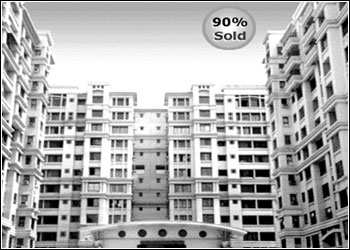 INDIA’S financial and commercial capital generally does not suffer from any shortages. If the rest of the state of Maharashtra – of which it is the capital – suffers an acute power shortage, Mumbai has enough electricity to ensure that thousands of neon bulbs glow away all night.
There’s an abundance of water – nearly 3,000 million litres of water is piped daily to its residents from the lakes – a surfeit of money, an excess of entertainment, and plenty of goods in the shopping malls and stores. But one commodity that is perennially in short supply in the island-metropolis is land.
Much of the 600 sq km city’s business district is in the narrow southern tip, while most of the 15 million-odd residents live in the north. Every morning, more than six million residents travel in over-crowded trains and buses, and in thousands of cars to the southern business district, reversing the flow of commuting in the evenings.
The state government in the 1950s and 1960s developed Nariman Point in the south as another business district, adding to the city’s woes. However, in the 1980s, the government decided to develop the Bandra-Kurla complex (BKC) in central Mumbai. It has taken nearly a quarter of a century for this new business district to come of age.
Last week, a 7.5-hectare plot at the complex, reserved for development of a convention and exhibition centre, fetched the state government a whopping Rs11.04 billion. The Mumbai Metropolitan Region Development Authority (MMRDA), which has been developing BKC, auctioned the plot, keeping a reserve price of Rs4.8 billion.
Mukesh Ambani-controlled Reliance Industries bagged the plot, outbidding not just his younger – and now-estranged – brother Anil Ambani’s group, but also other top developers from India and abroad. India’s largest developer, DLF group of Delhi, had bid Rs10.5 billion, while Gammon India, another construction major, had bid Rs10.11 billion.
Dubai-based Emaar Properties, which has tied-up with Delhi’s MGF group (and plans to inject $500 million into the Indian property sector over the coming months) quoted the lowest at Rs9.11 billion.
The successful bid means that the Mukesh Ambani group is paying a whopping Rs18,000 for a sq ft of land at the BKC, way above the prevailing price of Rs15,000 at Nariman Point for one sq ft of built-up space. Ambani would be able to exploit 65,000 sq metres of commercial space at the plot. Besides the convention centre, it will also put up exhibition halls, offices, malls, restaurants, entertainment centres and even a multiplex.
This is the single biggest development in BKC, ever since it was established. Many financial services sector giants – both private and state-owned – have already shifted their operations to the BKC.
MMRDA, which is executing several mega projects in Mumbai, raised Rs11.9 billion earlier this month, when it auctioned nine other plots in the complex. Successful bidders included Jet Airways – which bagged a 2.5-acre plot for Rs339 million – and the Chatterjee group of Kolkata.
MUMBAI’S property sector has been ablaze for the past 12 months, with record deals being signed. Last month, a chartered accountant paid a mind-boggling Rs120 million for a 3,000 sq ft apartment at Cuffe Parade, also in south Mumbai. This is the highest amount paid – (Rs40,000 a sq ft) – for a flat in India, and has sent the property business here into a tizzy.
Earlier in the year, several developers paid large sums for acquiring prime plots of land in central Mumbai, owned by textile mills, after the state-owned National Textile Corporation (NTC) auctioned the land. However, an NGO took the matter to the Supreme Court and has got a stay order against NTC handing over the land to private developers.
Developers are also promoting sprawling townships, shopping malls, software parks and office complexes across the city, as the insatiable hunger for real estate grows. Amazingly, despite the buoyant real estate scenario in Mumbai, the state government continues with some antiquated land laws.
Most other states in India have scrapped the regressive Urban Land Ceiling Act, which had hampered planned development of cities, while providing incentives for the land mafia to encroach on government land and put up shantytowns. But the act – derided by economists, developers and even federal ministers – continues to be applicable in Mumbai, as the state government refuses to scrap it.
There are vast tracts of land in north-east and north-west Mumbai that remain undeveloped, as the government is reluctant to release it. In fact, BKC is one of the first major real estate developments occurring in Mumbai in recent years.
The artificial scarcity of land, caused mainly because of the ULC, has hampered healthy growth of the property market in India. The Indian government last year allowed 100 per cent foreign direct investment (FDI) in the real estate sector, but none of the major international players have made a foray into the city.
Leading international developers from the US, Canada, the Gulf, Australia, Singapore and Malaysia have unveiled plans for major projects in cities including Hyderabad, Bangalore, Cochin and Delhi, but the exorbitant prices prevailing in Mumbai, and the outdated laws have resulted in their ignoring the metropolis.
The state government is also developing a satellite city – Navi Mumbai – across the harbour. It is seeking federal clearances for a new international airport, a special economic zone, and other facilities in the twin city.
Government agencies like the MMRDA and Cidco are also involved in executing multi-billion-rupee projects in both the cities, including flyovers, freeways, and elevated roads. But as a recent World Bank report pointed out, 54 per cent of the city’s population of 15 million, live in slums.
Hutments have mushroomed all over the city, and many of the public projects get delayed, as the agencies have to ensure the rehabilitation of slum-dwellers. Many of the residents who get free flats either sell off their new homes, or rent them out, simultaneously shifting to other slum colonies.
A decade back the Maharashtra government had an ambitious slum relocation project, but the sheer magnitude of the problem has resulted in its being shelved. Meanwhile, slumlords continue to encroach into the national park on the outskirts of the city, even building colonies on hill-slopes.
Several legislators from the city are opposed to the removal or relocation of slums, as they fear erosion in their vote bank. Maharashtra chief minister Vilasrao Deshmukh, who had launched a major slum demolition drive last year, was forced to cancel it, after lawmakers from his Congress party brought pressure on the high command in Delhi.
DESHMUKH’S government was also at the receiving end of a lashing from the Bombay High Court earlier this month, over the demolition of 850-odd illegal buildings in the refugee township of Ulhasnagar, about 50 kms north-east of Mumbai.
After thousands of Sindhis migrated to India following the Partition in 1947, the Indian government decided to resettle many of them in Ulhasnagar. But over the years, the transit camps – which were meant to be temporary – were regularized.
And in recent years, unscrupulous builders – in league with local politicians – began ‘developing’ these transit camps, putting up multi-storied buildings. All without getting the requisite permission from the local civic body.
In April last year, after a citizen filed a public interest litigation, the Bombay High Court ordered the demolition of 850 buildings that were found to have been built without getting any approvals. Thousands of people had paid large sums – ranging from Rs100,000 to Rs500,000 for flats in these buildings.
Last month, the court took a serious view of the delaying tactics adopted by the Ulhasnagar Municipal Corporation – which is dominated by elected representatives, most of whom were found guilty by a government committee of helping the builders in their illegal activities – and warned the state government of severe action.
But Ulhasnagar’s politicians are a powerful lot. Led by Papu Kalani, a man arrested in the past on serious charges of murder – and who has served several years in jail – the local politicos brought pressure on the Deshmukh government. Kalani is also an elected legislator from Ulhasnagar, while his wife is the mayor of the city.
Incidentally, all the four major political parties in Maharashtra have a presence in Ulhasnagar, and none of them want to alienate their local leaders. So the state government decided to issue an ordinance to overcome the high court’s demolition order.
The state governor, however, refused to sign the ordinance initially. The government persisted – under the Indian constitution a governor cannot refuse to sign an ordinance the second time – and got him to sign it.
However, the court took a serious view of the government’s move to subvert the legal process, and warned it that issuing an ordinance would be tantamount to contempt of court.
The Maharashtra government has apparently decided to brazen it out and is preparing for a battle with the judiciary. As in other parts of Mumbai, elected representatives are worried that if the demolitions go ahead, they would lose future elections. So Deshmukh has got the full backing of political parties in this battle with the courts.






























