



 0
0

On the going this day of Manto, Askari, Sehgal
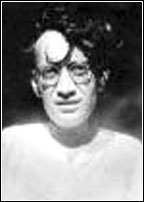 Each day of the Lord is significant as the universe moves towards its cosmic destiny. We transient beings lording over on a galactic speck have our own calendar of important days that in the boundless ocean of time and space could be immeasurably insignificant. Yet we must to give meanings to our existence celebrate all that we hold to be bright in the passing show of our daily grind. January the 18th we observe as the death anniversary of three great men — singer K.L. Sehgal and writers Saadat Hassan Manto and Mohammad Hassan Askari. This early date of the new year was chosen for their passing to leave us the remaining 11 months to assess our loss.
Fifty years on since his death in 1955 in Lahore, Saadat Hasan Manto is increasingly being seen as Urdu’s greatest writer of short fiction, the influence of whose work in the shaping of modern trends in South Asian literature is no more a subject of dispute. He is undoubtedly the most widely read author in the South Asian Subcontinent and abroad, among writers from this part of the world, the most highly regarded name in fiction. A controversial literary figure in his time, he emerges as the authentic voice of his era. In a writing career of over 20 years his magnum opus is of course the large body of his short stories but his biographical sketches, essays, radio plays and film scripts point to the broad and varied scope of his creative spectrum.
Manto was a prodigious writer. He produced 22 collections of short stories, one novel, five collections of radio plays, three collections of personal sketches and over a dozen scripts for feature films.
 Manto’s brash realism and commitment to truth muffled his critics on both sides of the intellectual divide that was prevalent in his days between progressive writers of the Left and the more conservative adherents of the literary tradition. And though he remained a controversial literary figure to the end of his life, the vitality of his work survived the criticism and today he is regarded as not only Urdu language’s but South Asia’s most eminent writer of short fiction who could pick stunning tales from the humdrum stuff of common life and tell them with a directness devoid of laboured stylicisms, that was at once honest, fresh and authentic. In fact the raw energy of his diction and natural flow of his narrative come from the spontaneity and ease of his expression. He was a trend setter in whose following many have floundered for want of insight into human nature and the sheer novelty and variety of his themes. They reveal a sensitive man whose understanding is non-judgmental and whose compassion for human frailties is free of didactic notions.
Manto is a great believer of man’s freedom from man’s oppression and a liberal humanist who was above all creeds and distinctions of race, religion and colour. He was devastated by the depth of degradation and depravity to which quite ordinary and sane people could sink in frenzied times such as witnessed in the wake of Partition. Bombay, where he had spent the happiest days of his life, he left as a dejected man; Lahore, where he settled down to a hard life, saw his genius flower to produce the best work of his life.
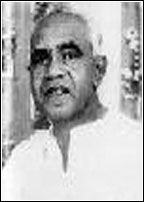
Honest to God and sincere to his core with whatever he thought to be right, Muhammad Hasan Askari, short-story writer and critic, had a simple man hidden somewhere within him. You find that in his politics. As far back as 1944 he believed Muslim League’s Pakistan would be a people’s Socialist republic without giving a thought to its elite structure for like the common following of the party he too probably looked up only to the Quaid’s dominating figure who, it is believed, had some such thing in mind. The evolution of his thought and the transformations that he underwent intellectually and in the nature of his belief has this intrinsic simple-mindedness leading him. So his stiff opposition to the progressive writers does not clash with his Socialist preference but is based in the priority he attaches to Pakistan as the nucleus of his intellectual concern. He opposed what was happening in the Soviet Union in the realm of literature and how the arts were being harnessed there to ideological needs. This was anathema to his concept of creativity. So he stood up in Manto’s defence who wanted his work to remain free of ideological moorings. And yet, according to Dr Aftab Ahmad, he believed Russia’s socialism to be a great experiment in human history and so the Pakistan of his expectations was not very different from any progressive intellectual’s imagination. There was nothing unique in that as in times historic the same romanticism fires the imagination of all sections of society. We see that again in his rejection of capitalism and the capitalist society and its norms in general.
Now for anyone with his moorings in the wellspring of national thought it is easy transition to religion. But we see in Askari’s predilection towards the mystic way the common preference we find in our mass culture that tends to be pantheistic rather than strictly puritanical. So Askari comes under the influence of Rene Guenon, Ibne Arabi and Ashraf Ali Thanvi seeking the deeper meaning of spirituality and rejecting Maudoodi and his creed of Islam. Politically this translated into his sympathy for Bhutto and the PPP as opposed to the Jamaat.
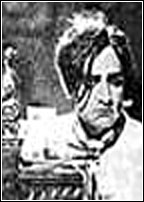 Literature to Askari was a symbol of a peoples civilization. Urdu literature was the cultural quintessence of Muslim India though he did not believe in its purification from Hindu influences which he regarded as a source of enrichment. The new Askari that emerged from the defeat of his romantic love and his political ideal was a man totally absorbed in spiritual pursuits trying to unravel the mystic bond that united man with God. This was typical of him as of any sincere, honest person. For this reason his word carried weight and to this day him alone his opponents regard with respect.
There is nothing odd in remembering Sehgal with writers and intellectuals as he was part of that composite culture in his day that brought writers, poets, musicians, singers and actors together in the multi-splendoured world of cinema that flourished in Bombay until the end of the golden sixties. Not only Manto but a host of literary stars were part of that cultural galaxy. Manto’s most colourful work belonged to that period. Film songs written by poets like Hasrat Jaipuri, Shakeel Badayuni, Kaifi Azmi, Sahir Ludhianvi, Tanweer Naqvi, Jan Nisar Akhtar and others were not pointless ditties like today’s group dance numbers that are staged to expose the female form. They were illustrative of situations and expressive of moods and thoughts and sentiment. And when Sehgal was singing, the geet was not just a love song but a poetic comment on the nature of passion — Preet mein hay yoon jeevan jokhhon, jaise kolhu mein sarson — and love is a murakh balak in whose hands the lover is a toy. In addition to geets, Sehgal also immortalized in his golden voice many famous ghazals of the masters: Ghalib’s Nukta cheen hai ghame dil and Ustad Zauq’s Laee hayat aaee qaza lai chali chaley. His ghazal renditions popularized this genre and has since kept the tradition alive. He also gave ghazal singing not only a new style but also respectability by bringing it down from the upper chambers (kothas) of the courtesans. In the pathos and richness of his melodious voice it was not just the words of a song or ghazal that found expression but the very soul of the subcontinent’s culture. In his death a dimension of this culture wilted while poetry lost a voice that sang the song in the verse.
More crime and accidents
THE National Highway Authority and Motorway Police are making efforts to increase revenue by issuing challan tickets to vehicle owners over minor mistakes and humiliating them, besides recovering heavy fine from them instantly.
This was revealed by a survey report conducted by this correspondent from Kharian to Lahore on GT Road the other day. Dacoities and robberies at night as well as road accidents are on the rise for lack of hard patrolling. Many passengers have been deprived of cash and valuables, including vehicles, during the last few months.
Reportedly, as many as 23 naib Nazims of the Aroop union council and ARD leaders were deprived of cash, jewellery and mobile phones by highwaymen on the motorway near the Kala Shah Kaku inter-exchange last December. Similarly, the loss of life was alarming on GT Road owing to speeding and wrong U-turns in populated areas. The NHA has failed to repair the road or revamp the track. The road users have appeal to the motorway police IG and high-ups of the National Highway Authority to take steps for their safety.
Crime in the city and its suburbs is at its worst as the police have failed to check dacoities and robberies and killing of innocent people during such incidents. As many as 15,508 criminal cases were registered during the year 2005, including 306 murder cases, 1,158 cases of dacoity and robbery and 3,064 of illegal arms. Outlaws looted cash, jewellery and other valuables worth millions and cattle worth Rs40 million. At least 742 vehicles, including 152 cars and 313 motorcycles, were robbed or snatched by bandits. Dozens of innocent people, including women, were killed by outlaws during dacoity and robbery bids.
The beginning of the new year was also not good as five people were killed and many others injured by dacoits in the city and its suburbs.
The people are feeling insecure and have demand the chief minister and IGP to adopt solid steps to check dacoities and robberies. On the other hand, DPO Dr Arif Mushtaq claims to have arrested as many as 1,264 POs, besides 432 members of 95 gangs of dacoits and robbers and recovered a huge quantity of illegal arms and looted goods worth Rs90 million from their possession during the previous year. He said around a dozen POs and seven police officials were killed during encounters.


























