0
0

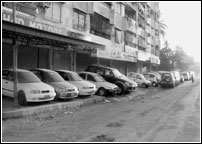 AFTER a brisk performance in 2005, a stage is set for another year of buoyant business for local car makers in 2006, triggered by lease financing and growth in incomes. The July-November sales show an increase of 28 per cent to 58,859 units from 46,047 units in the same period of last fiscal.
Taking the lead with 79 per cent rise in sales is Honda Atlas followed by 31 per cent by Pak Suzuki, nine per cent by Indus Motors and five per cent by Dewan Farooqui Motors.
As there is no new investment in manufacturing in sight for 2006, existing car makers may end up with sales touching over 150,000 units from last fiscal of 127,309 units with lingering issues of demand and supply gap of 15,000-20,000 units— premiums being charged on new cars and time lag in delivery of vehicles ranging from two to six months.
Manufacturers have expanded their production capacities with investment of billion of rupees in the last one to two years to cope with the demand but its impact is yet to be felt in the market as issues like late delivery and premiums still persist.
These two most pressing issues are likely to persist in 2006 as consumers still appear too impatient to have a new car no matter if they wait for months or having them quick by paying hefty premiums.
Assemblers have already stopped booking cars directly from individuals on cash basis. They prefer to deliver their product through car leasing companies and banks or catering directly to the corporate sector clients.
To bridge the demand and supply gap – the government in 2005-2006 budget has reduced the import duties on imported cars to a level of 50 per cent for new vehicles, up to 1,500cc under transfer of residence scheme, gift and baggage.
Besides, the depreciation allowance for a 24 month old small car have gone up to two per cent from one per cent per month.
It was presumed that the budgetary measures would help consumers in shifting towards the used and new cars from the locally assembled cars in order to control the demand and supply gap besides tackling premiums and late delivery issues. The budgetary steps have so far failed to make any negative impact on the sale pattern of auto assemblers.
However, the import of used cars is picking up after the 2005-06 budget and the trade policy incentives, thus slightly easing out the demand for locally assembled cars and bringing down premiums on these vehicles.
As many as 8,000 used cars of 650cc to 3700cc, including jeeps, vans, pick ups, and sports utility vehicles under transfer of residence, personal baggage and gift schemes landed during July-November 2005, which is much higher as compared to a total of 8,700 cars and other vehicles imported during the whole of 2004-05.
Over 4,000 more cars under same schemes have arrived in December 2005. Importers and dealers of used cars claim that there is no problem of spare parts and after sales service. Many consumers have purchased used Toyota Vitx, Toyota Plats etc and more luxurious cars are seen on the roads.
Suzuki Cultus, Suzuki Alto and Hyundai Santro may face tough time in 2006 as buyers have shifted towards various used Toyota car models, available at almost same price range of locally made cars.
Some auto makers had anticipated that import of used and new cars would erode the market share of local assemblers by at least 25 per cent but surprisingly consumers, whose wallets and accounts appear to have filled with enough liquidity, have shifted their focus— both ways by continuing placing new booking orders towards local assemblers as well as going for new and used cars also.
Import of new and used cars has risen sharply after the budget, thus giving an impression of buyers’ shifting focus but the booming production and sales figures and the advance booking orders for next few months indicate the existing preference of locally made cars among the prospective buyers.
Parts availability, re-sale value, after sales service and technical know-how among the local car mechanics are some of the key tools for making the locally assembled cars a hot selling item in the market.
On the contrary, used cars lack these four prerequisites thus making buyers reluctant to take risk. In case these facilities become available in near future – car makers will find themselves in hot waters.
Buyers are slowly becoming crazy for used cars because of attractive designs, quality, durability and colours which the local assemblers lag behind to some extent. It is not clear how buyers of used cars will manage parts in case some faults develop in the engine and other parts.
Riding high on the government’s full support in yesteryears, assemblers currently shiver owing to liberal policies adopted by the government for the last two years in cutting import duties on used and new cars.
They think that the way the existing policy on used cars was liberalised by doing away with the requirement for Pakistanis transferring residence from overseas back to their country to have owned and registered their vehicle under their own names, traders will fully utilize the situation by misusing the facility by effectively importing the used cars commercially.
General Manager Marketing, Pak Suzuki Motor Company (PSMC), Ashfaq Hussain thinks that the used cars import is a potential threat to the financial viability of the local industry and employment. He said, commercial importers are misusing the government facility and it could be gauged from the rising import of used cars.
He urged the government to provide a road map and remain consistent on its policies, otherwise the industry will face the dire consequence of the liberal import of used cars.
He says that Pak Suzuki is introducing Liana in the local assembly in mainly 1,300cc and later on 1,600cc from the first quarter of this year to replace Baleno. The company has already imported Liana in CBU condition besides Vitara Jeep, Gemini and other LCVs.
The company aims to roll out over 100,000 cars and LCVs in 2006 after assembling 85,000 units in 2005 and 65,000 units in 2004, he adds.
Ashfaq says that cars are still in high demand as 60 per cent orders received through leasing companies on the back of orders from individual, corporate sector and the public sector.
He claims premiums have fallen while delivery period has shortened due to ample supplies of cars from assemblers. “I think premiums and delivery period will further be narrowed in July 2006 as assemblers have further geared up massive capacity enhancement plans,.”
Indus Motors plans to roll out 190 cars per day by June 2006 from the current 180 cars while it was assembling 130 in 2004, rising to 144 in middle of 2005. The company looks forward to achieve production of over 50,000 units in 2006 from 35,874 units in 2005.
Honda Atlas Motors is eyeing for 50,000 units production by 2007. The plant has now the annual capacity of 30,000 units, up from 12,000 units in 2004.
The government has also opened a new business avenue for the auto assemblers by cutting import duties in the budget on new cars. All the assemblers are now importing new cars which they do not produce here thus reaping the benefit of import duty cut and demand and supply gap.
Atlas Honda has brought in Honda Accord followed by introduction of Toyota Camry and 4x4 Hilux by Indus Motors, launching of Liana 1,600cc and a commercial van by Pak Suzuki Motor Company and Dewan Farooqui’s Hyundai Sonata and Coupe in passenger segment and Terracan in SUV segment after suspending production of KIA brand vehicles.
Nexus Motors has introduced Chevrolet Joy meant for the local assembly which was previously available as Exclusive in CBU condition. Adam Motors has been struggling hard to carve a niche with its Chinese technology car Revo while Pakistan Cherry Automobile has been striving to steal the heart of consumers with its imported Chery QQ which the company plans to roll out in a local plant this year. Transmission Motor Company (TMC) has made a strange venture by introducing 200cc cars which give mileage of 25km to a litre of petrol.
TMC is a wholly owned subsidiary of Transmission Engineering Industries Limited (TEIL), which is a listed company in Karachi and Lahore stock exchanges. TEIL has invested Rs40 million in TMC which enjoys technical collaborations with Chinese companies.
TMC says that the vehicle has been endurance tested for 20,000km on Karachi roads with rated payload of 300kg (or four passengers). The vehicle has a top speed of 75 km/hour. It has the highest starting indigenization percentage of 67 per cent.
The plant has an installed capacity of 5000 vehicles per annum on an eight hour single shift basis. The engine and transmission are the only sub-assemblies imported from China in case of Adam Motor’s Revo. Starting deletion level is 67.5 per cent.
A number of foreign car makers are eyeing Pakistan to first test their cars in CBU and then decide the future course of action after watching its response.
German’s Porsche is planning to introduce its various brands this year instead of setting up a plant. However, investment in manufacturing by any new company seems a remote possibility.
As there is still a huge demand and supply gap, the government should encourage some Chinese investment in car assembly on the pattern of encouraging investment in Chinese motorcycles which have changed the market situation in favour of consumers who are now getting cheap bikes.