



 0
0

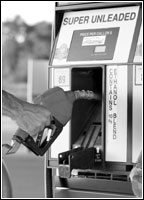 WITH the advent of high crude oil prices in the global market, dependence on ethanol is on the increase and major sugar-producing countries like Brazil, China, India and Thailand have embarked on fuel ethanol programmes as the rationale is very strong. The prime objective is to reduce the cost of fuel, which has increased manifold thereby directly affecting the cost of production the world over.
Brazil has, in fact, been a pioneer in the optimum utilization of this substitute fuel ethanol programme. They have introduced flex fuel cars, which can run on any mixture of gasoline and alcohol. About 850,000 cars are equipped with flex fuel engines and about 2.5 million cars run on pure alcohol.
According to recent reports, the number of vehicles fitted with engines designed to run on natural gas is about one million which will continue to increase in the next couple of years and to support the domestic needs. The existing requirement of 16 billion litres would rise to 22 billion litres by 2010.
The duty structure on domestic sales in also being rationalized which will make the use of alcohol more viable. The measures adopted would benefit Brazil in terms of minimal dependence on expensive oil apart from earning a huge foreign exchange and as a consequence Brazilian Real has already appreciated by almost 20 per cent. The introduction of flex-fuel cars is by itself a success story of the fuel ethanol programme.
India is also determined to implement fuel ethanol in their country which was, in fact, initiated in 2003. A plan to blend five per cent ethanol with gasoline,E5, was to be sold in nine states and four union territories which included Andhra Pradesh, Gujrat, Haryana, Karnataka, Mahrashtra, Punjab, Tamil Nadu, Uttar Pardesh, Goa and Union territories are, Daman&Diu, Dadra and Nagar Haveli,Chandigarh and Pondicherry. Sky high oil prices and good recovery of sugar cane would perhaps be an incentive to implement the proposed scheme.
The government of India may legislate five per cent blending which would require five million tons of sugar cane annually. At present about 1.5 billion litres of alcohol is being derived from sugar and sugar by-products and is being utilized for industrial and food purposes. However, the poor harvest of sugar cane in the preceding year adversely affected the fuel ethanol programme.
According to an estimate, collectively all these states need about 352 million litres of ethanol for E5 blending. Under an agreement the oil industry will purchase 434 million litres of ethanol from Indian Sugar Mills Association members at Indian Rs19 per litre. The forecast for overall annual output in 2005/06 is 1.7 billion litres approximately, out of which about 1.2 billion litres will be used for beverage and chemicals and the remaining quantity of 500 million litres will be available for blending.
Thailand is promoting plantation of palm, cassava and tapioca- the other substitutes to produce ethanol apart from sugar cane and has announced its programme in 2001. The waiver of excise duty on fuel ethanol has encouraged setting up of new plants. It is forecast that ethanol consumption is likely to be about one million litres a day by the year 2006 which will eventually increase by three million litres per day as envisaged in the year 2011.
A decision has already been made to replace MTBE by both India and Thailand by the year 2006 in the light of a successful Brazilian experience.
Recently the government of South Dakota in the United States in a bid to be self- sufficient in energy requirement is introducing E85 a type of motor fuel which is a blend of 85 per cent ethanol and 15 per cent gasoline and has recently ordered 251 flex fuel vehicles for the state fleet to promote interest in alternative energy sources. Phillipines is also introducing legislation of E10 blending for fuel cost reduction.
The corollary of the above models necessitates that Pakistan should not delay the decision making to channelise its resources to curtail its oil imports given the potential of the sugar industry and the distilleries set up to produce ethanol as fuel which can be substituted for MTBE. It can only be achieved if a legislation in line with India and others for ethanol blending to begin with is introduced to safeguard colossal investments as until now Pakistan has been a major exporter of molasses.
Under the EU’s trade policy, Pakistan gained the status of a ‘Drug Country’ to develop alternative sectors and was therefore granted a duty free access for some of its products. The list included ethanol and as a result major investments were made in the distilling sector which would manage to export about 900,000 hl in 2005/06.
As per WTO requirements and trade preference EU amended its policy and removed the ‘Drug Country’ status with effect from July 1, 2005. Consequently, ethanol exports from Pakistan are subject to 85 per cent of the full tariff of euro 19.20 per hl which comes to euro 16.32.For denatured alcohol euro 8.67 as against full tariff rate of euro 10.20 and with effect from January 1, 2006, ethanol imports would be levied duty at the full tariff rate.
Distillers are going to face difficulty and serious repercussions when a lucrative market would be lost. They are reportedly having a massive inventory of alcohol for want of disposal and as per new regulations the prospects for quantum export are rather bleak in view of the tariff structural changes.
The local petrol consumption is around 1.3 million tons per annum which will increase to 1.6 million by 2005/06.The blending basis of 10 per cent E10 would only consume 160,000 tons of ethanol compared to the estimated capacity of about 400,000 tons based on 1:5 ratio derived from about two million tons of molasses.
Sugar industry would still be left with a surplus ethanol of 240,000 tons which should also be considered for blending in oil additionally similar to Brazil model and encourage manufacturing of flex fuel cars in the country. This would minimize environmental hazards apart from savings on foreign exchange.
It is now also the responsibility of local automobile manufacturers to gear up for flex fuel vehicles to meet the challenges of future and to harness the resources available with sugar industry for the ultimate fuel economy.
The immense importance of ethanol to be used at present as fuel should be looked at carefully by the policy makers and the committee concerned should not rule out this proposal in the national interest. We must have an independent and pragmatic approach as most of the major sugar economies have taken steps for their survival and to mitigate imports.
(The writer is ex-chairman, Pakistan Sugar Mills Association, Punjab)






























