0
0

KABUL, Dec 18: Heavy security is in place for the inauguration on Monday of Afghanistan’s first parliament in more than 30 years, to be attended by US Vice President Dick Cheney and other foreign guests, officials said. Concern that remnants of the Taliban regime toppled in a US-led invasion four years ago could try to disrupt the ceremony were heightened after a suicide attack near the parliament building on Friday, a defence ministry official said on Sunday.
The bomber was killed and two people were wounded in the suicide blast, claimed by a spokesman for the Taliban movement waging an anti-government insurgency that has left 1,500 people dead this year.
Police and troops were deployed days before the opening to secure the parliament complex, while a 50-man security team has been monitoring the area, including through surveillance cameras, officials said.
Intelligence agents have also been watching the movement of people around the compound and in adjoining areas, according to officials who requested anonymity.
The main road in front of the complex has been closed and a helipad marked out, “perhaps” to bring VIPs such as President Hamid Karzai and Cheney to the building.
The ceremony is due to begin at about 8:00 am (0330 GMT) with the raising of the flag, after which the 351 new parliamentarians — many of them are warlords responsible for years of conflict — will be sworn in by Karzai who will deliver the main speech.
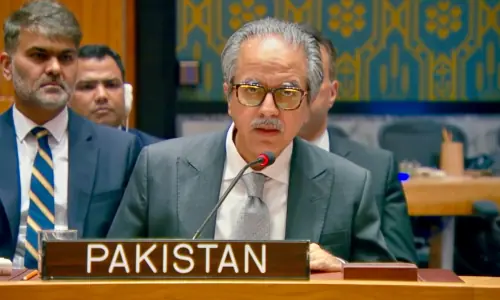
Other guests expected at the ceremony are the UN official in charge of peackeeping operations, Jean Marie Guehenno, a delegation from the Pakistan parliament and Kabul-based diplomats, foreign ministry spokesman Naved Ahmad Moez said.
Karzai has declared Monday a national holiday for the opening of the parliament, which was elected in September in the first general legislative vote since 1969. A national parliament last sat in Afghanistan in 1973, before a coup ended centuries of rule by the monarchy.
The then president, Mohammad Daud, had plans to form a new parliament but his regime was toppled by a communist coup in 1978 in which he was assassinated.
A Soviet invasion the following year sparked a fierce resistance that descended into civil war after the Russians left in 1989.
The sitting of the parliament is the final step in an internationally agreed transition to democracy for Afghanistan after the fall of the Taliban.
There are nearly 30,000 foreign troops and hundreds of international organisations in the destitute nation, trying to help it stabilise and rebuild.
—AFP