A political minefield
NORMALLY, we would not have returned to the subject so soon after having commented on the need for developing a national consensus on the Kalabagh dam in our editorial of Dec 15. But meanwhile, more KBD-related developments have taken place, especially in Sindh, the province which remains very strongly opposed to the project. On Friday, rallies were taken out in a number of cities and towns in Sindh, where speakers used strong language to denounce the move to construct the dam. Rallies were held in Hyderabad, Sindh’s second biggest town, besides demonstrations in Sukkur, Khairpur, Naushahro Feroze and other places. The parties which organized the rallies seemed to represent a broad spectrum of political opinions in Sindh and included the Sindh National Party, the PPP, JUI-F, JSQM and the Sindhi Hari Committee, while the activists of the Awami Tehrik staged a sit-in on the National Highway and the SNP blocked a bridge. More strikes and rallies are planned for the next week. All this at a time when the dam is still a proposal; one can well imagine what Sindh’s reaction will be if the government goes ahead with the dam’s construction. More surprisingly, Dr Arbab Ghulam Rahim must be the happiest man, for the Sindh chief minister was never so popular with his people. As our correspondent reported from a number of places, speakers at rallies called Dr Rahim “a hero” and congratulated him for opposing the Kalabagh dam.
Meanwhile, the results of the visits to Karachi of the president and prime minister remain to be known. But, as our correspondent points out, the ruling coalition has made it clear to President Pervez Musharraf and Prime Minister Shaukat Aziz that the Sindh government will not launch a pro-dam campaign. Going public on the issue was Mr Abdul Sattar Farooq, the Muttahida’s parliamentary leader, who said his party would continue to oppose the construction of the KBD, even if this meant that Muttahida would have to quit the government. On Friday also, Muttahida leader Altaf Hussain made his support to Sindh clear. Even though he was speaking with reference to what happened in East Pakistan on Dec 16 more than three decades ago, he said the Muttahida would side with the people of Sindh if there were another emergency of that sort. With the ruling coalition in the province against the dam, no wonder the World Bank should agree to fund the dam only if there is a consensus on the issue.
Without questioning the need for a dam or dams, and broadly agreeing with the view that doing nothing to meet the water crisis is not an option, building multi-billion-dollar controversial projects without overcoming the existing mistrust would amount to taking a walk through a political minefield. Even though its opponents have not outlined the technical grounds for their opposition to the dam and have often indulged in political rhetoric, let us accept that the proposed Kalabagh dam has become a political issue. Three smaller provinces have already rejected it, and the views expressed by PPP leader Makhdoom Amin Fahim give an indication of what a mainstream national party thinks about it. What effect the Kalabagh dam issue will have on the PPP’s party unity is something that cannot be predicted at the moment. But going by the way things are shaping up, the Kalabagh dam issue will have severe political repercussions in the country, unless the government goes slow on the issue. So far, consensus-seeking efforts have not succeeded. That the government will succeed in that task in the near future also seems highly doubtful.
Renewing Lankan peace talks
HOPES are once again high in Sri Lanka that the fragile Norwegian-backed truce between the government and the Tamil Tiger rebels may be salvaged after all, thus warding off a possible bloodbath. On Friday, the Sri Lankan government, moving away from its earlier stance of holding peace negotiations within the country, agreed to the Tiger demand that talks be held outside Sri Lanka, although the venue has not yet been decided. What is also laudable is that President Mahinda Rajapakse consulted opposition leader and former prime minister Ranil Wickremesinghe, the architect of the 2002 peace agreement, on the government move. One of the main reasons for Sri Lanka’s failure to reach a permanent solution to the two-decade ethnic conflict that has killed over 65,000 people can be attributed to squabbling among political parties in parliament and their reluctance to unite even on an issue that threatens the integrity of the island-state. The danger of fresh violence has increased in the past several months, especially with the assassination of Foreign Minister Lakshman Kadirgamar last August by suspected rebels and renewed clashes with the military.
Moreover, last month Tiger chief Velupillai Prabhakaran said that unless Tamil grievances were addressed, he would step up the fight for an independent homeland — a demand he had previously renounced for greater autonomy within the federal structure. However, Mr Prabhakaran should realize that recent troubles within his own organization have weakened his position. Last year, a group of fighters under a previously trusted Tiger commander broke away from the rebel organization and it is believed to be fighting Prabhakaran’s forces with the aid of the Sri Lankan military. On another front, the Tamil Tigers also appear to be losing support among the local population, whose submission to rebel diktats stems more from fear than loyalty. At this point, it would be advisable for both the Tigers and the government to put the population’s welfare above any other political considerations and make serious efforts to find a lasting solution. Peace is especially necessary in view of Sri Lanka’s collapsing economy and the need to rebuild the coastal areas devastated by last year’s tsunami.
Supreme Court to the rescue
IT IS encouraging that the Supreme Court is taking an active interest in social issues including cruel customs like vani and swara, whereby women are given in marriage as a form of compensation, almost always without their consent. In its directive on Friday, the apex court ordered the inspectors-general of the police in the NWFP and Punjab (where such practices are widely prevalent) to protect girls forced into these marriages and also asked them to prevent such acts in the future. This is a positive development for it gives additional support to the existing laws that disallow child marriages or the giving away of a woman for effecting a compromise. Armed with this directive, the police, one hopes, will feel more confident in taking on those who participate in, and conduct, jirgas where women are treated as mere vassals. The recent case of five girls who had appealed to the prime minister and president to save them from the cruel fate of vani prompted the Supreme Court into taking the present action. The girls were married at young ages, and were now all well educated while their so-called husbands were barely literate. To force these young women into marriage, against their will, as part of a ‘settlement’, is a horrendous crime.
Society cannot progress unless gender-discriminatory customs and practices are eliminated. For that to happen, these issues need to be extensively analyzed and debated and society made aware of the evil nature of such customs. Unfortunately, parliamentarians who should be in the forefront of educating their constituents on socially acceptable norms and values seem to lack conviction in tackling such issues. It is then left for intellectuals, the media and the NGOs to take up the task of enlightenment. A powerful lobby can prove useful in pressuring the government to take steps to root out vani, swara and such other cruel practices.
Role of parliament in relief work
IN between the earthquake and rehabilitation efforts, we are passing through a period of trauma arising from the devastating loss of life and property, with survivors having sustained injuries and lost limbs and many deprived of their families and homes. Winter has brought with it rain and heavy snowfall which is hampering rehabilitation and reconstruction work.
The response from the people of Pakistan has been tremendous. They have donated generously and provided assistance in the shape of food, warm clothes, blankets, medicines and teams of doctors and social workers have gone to facilitate relief work in the quake affected zone. The private sector and the NGOs have done a commendable job.
In the beginning there were some complaints and confusion around whether the army and government agencies reached in time to open roads but then some explanation was given by the government and the controversy came to an end, because the earnest desire on everybody’s part was to help out in the rescue work. Teams even came from abroad with material to assist in rescue operations.
President General Pervez Musharraf gave a call for a donors conference that met with a warm response from many countries. The government says the conference was successful, while the opposition believes it was a failure because the aid was mostly in the shape of soft loans, which have to be returned with interest.
Expectations, built on the assumption that Pakistan as a frontline state in the US-led war on terrorism, would now be rewarded and compensated adequately, were dashed to the ground. Nor were financial institutions of much help. The government is finding it difficult to defend the aid received or pledged.
Opposition members in the parliament are crying themselves hoarse that they have not been taken into confidence, and want to know more about the twelve billion dollars the government claims it has in reserve, and why that money or part of it is not being used for the rehabilitation of affectees. Another question raised is why parliament is not being allowed to supervise and control funds and relief operations with the participation of the opposition. It appears that parliament is being kept away from the scene of relief operations and management.
The government is endeavouring to win over the opposition but to no avail. The opposition, composed of the ARD and the MMA in parliament, has taken exception to the appointment of serving army officers as the federal relief commissioner and chairman of the Earthquake Rehabilitation and Reconstruction Authority on the grounds that as serving army officers, they are not answerable to the democratic institutions under army rules and regulations. The opposition wants these posts to be filled by civilians amenable to parliamentary control to ensure complete accountability. The opposition in parliament wants to know all the sources of donations made from inside or outside the country.
One can sympathise with the view of the opposition that it is high time to restore the confidence of people in the political institutions, but who is going to do that? It is a matter of public knowledge how elections were held and how the military government in power managed to achieve a majority in favour of the government and won over splinter groups and small parties. There was floor-crossing but no action was taken by the affected party.
The 17th amendment was passed in the Constitution validating the army takeover and the position of the president holding his post as well as that of army chief simultaneously. This was made possible by the support of one political party, which was and is part of the opposition in parliament, and is now demanding that relief operations should be supervised by a parliamentary committee and that army officers should not be appointed as heads of relief bodies.
It is also claimed now by the opposition that the time has come to restore the confidence of the people in political institutions. People are disappointed and disenchanted and nobody cares for their interest. Even institutions have lost the efficacy and the trust they once commanded because the people connected with them care more about individual than institutional interest. This is how institutions degenerate at the cost of individual gain, making it impossible to defend political and democratic institutions.
The Constitution is supposed to be the supreme law of the land and all other laws are subordinate and inferior to the Constitution including the Army Act, which cannot be amended by the army but by parliament. It is for the members of parliament to uphold the supremacy of the Constitution and the rule of law, and defend and promote the dignity and honour of their institution.
Our Constitution contemplates parliamentary form of government in which the head of the government is the prime minister, who is directly elected and is also leader of the house in parliament.
The president is head of state and represents the unity of the Republic. Under the Constitution, the president is elected indirectly by the electoral college composed of both houses of parliament and members of the provincial assemblies. The executive authority of the federal government is exercised in the name of the president, and in the exercise of his functions the president has to act on the advice of the prime minister, which is binding on him.
In spite of the fact that as per the Constitution in its present form, the president can dismiss the government in power in his discretion, the prime minister remains the king-pin in the constitutional machinery and he runs the government and is answerable to the parliament.
If the Constitution is not followed in letter and in spirit, and shortcuts are found to share power with whosoever is at the helm, then institutions will crumble down and the system would collapse. People have already started losing interest in politics, and the gap is widening between the government and the people.
Now with regard to the relief operations of earthquake affectees, serving army officers have been appointed as federal relief commissioner, and as chairman of the earthquake Rehabilitation and Reconstruction Authority. The intention is clear for the whole exercise to remain within the exclusive domain of the army with whatever logistic support can be mustered from outside. However, the ultimate control will be of the army. Secondly, the funds obtained from inside or outside sources have been placed under the head of Federal Consolidated Fund, which is in the exclusive custody of the federal government.
According to the Constitution, the money bill relating to the Federal Consolidated Fund does not go to the Senate, where all provinces are equally represented. This is the main disadvantage where provinces feel helpless before the federation or the federal government when they are deprived of a forum where they can voice their grievances and all provinces have equal votes. The federal government has the custody and complete control of the Federal Consolidated Fund including payment of money into or the issue of money from that fund.
On the other hand, the whole relief operation is within the control and supervision of the army. The president is the meeting point between the army and parliament and it is up to him to decide how far parliament is allowed to peep into the functioning of relief operations. Donor countries are watchful and would like to oversee the spending of their funds as required. There is anxiety in the world that Pakistan returns to the path of real democracy instead of sharing power as is now happening.
The US ambassador to Pakistan has spoken to senior journalists and has stated that Pakistan can only prosper economically and have political stability when reliance is placed on democracy. He is of the view that in Pakistan there should be proper democracy and has criticized the role played by political governments.
He was unable to assure that the 2007 elections would be fair but has asserted that America and other countries would keep watch over them. He has praised the print and electronic media for frankly discussing issues of public importance and also criticising the actions of the government.
According to him, there is improvement in the process of achieving democracy and he has praised President Pervez Musharraf for being sincere in his promise and assuring that real democracy would be established in Pakistan. We are all waiting anxiously and optimistically to see real democracy brought about by honest and fair elections in the country. This can only be accomplished when there is an independent election commission and no interference in the polls at any stage from any quarter.
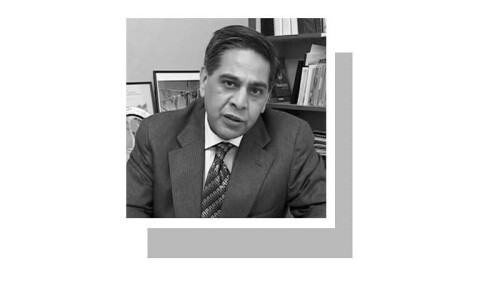
The writer is a former chief justice of the Supreme Court.
| © DAWN Group of Newspapers, 2005 |