0
0

Time for tax reforms
PAKISTAN’S economy is once again being threatened by the menace of twin deficits — budget and trade. With budgetary borrowing increasing by more than 500 per cent in the first quarter and the trade gap widening by more than 162 per cent in the first four months of the current fiscal year, macroeconomic stability appears to have come under serious pressure. The oil and food import bills seem to have seriously upset the country’s foreign trade balance. One can hardly do anything about the oil bill in the immediate context. But then certainly a significant reduction in this bill can be brought about by taking in hand some medium-term projects for generating power with coal-fired plants and small hydro power stations. The food import bill has risen because of an increase in the import of wheat and sugar, both of which are liberally smuggled across the country’s borders with Afghanistan. This is an administrative matter and should be within the capacity of the government to stop.
Clearly, the budget deficit which is expected to be affected by about one per cent during the year because of the Oct. 8 earthquake could go much beyond four per cent if the adverse economic trends that had emerged in the first quarter are not corrected soon. The biggest headache in this context appears to be the CBR’s failure to improve its revenue collection capacity. Despite all the reforms that have been introduced in this sector over the last several years, the Board has failed to expand the tax base. It also appears to have made no improvement in its capacity to collect what is due from the existing base, as tax evasion and avoidance continue unchecked. According to the fiscal data of the first quarter released by the finance ministry, the most worrying aspect of the quarterly budgetary operation is the significant fall in revenue collection as a share of overall GDP, notwithstanding higher revenue collection in real terms. This phenomenon is the manifestation of a stagnant tax base and continued corruption in the collection agency, which allows the unscrupulous among the taxpayers to evade and avoid meeting their due tax liability.
The tariff reforms had revised downward import duties across the board but did not balance the reduction in incomes from this source by reforming the sales tax sector. The entire agriculture sector that contributes 23 per cent to the GDP is almost totally out of the tax net. And industries based on this sector also enjoy similar concessions. In both the services and the industrial sectors tax evasion and avoidance is the norm, not exception. In fact, if the sales tax regime had been introduced in this country with no exemptions allowed and all the economic sectors were to pay their legitimate dues honestly, Pakistan would not have had to go around the world asking for donations to finance the gigantic task of the earthquake-related relief, rescue, reconstruction and rehabilitation operations. Most of the donations have been pledged in the shape of soft loans, which, though they do not carry harsh repayment terms, will still add to the debilitating debt burden. Could not we do what other civilized societies have done when faced with such colossal tragedies? This we could do by introducing some major reforms aimed at establishing distributive justice without unduly threatening the wealth amassing ability of the rich and the powerful.
Targeting Iran?
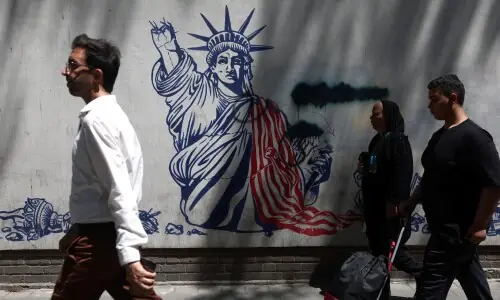
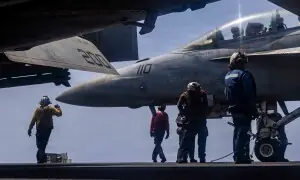
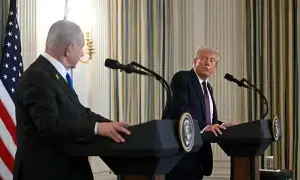
RELATIVELY speaking, it is a mild warning. Speaking to reporters in Tel Aviv on Thursday, Israeli Prime Minister Ariel Sharon warned that his government would not accept an Iran that has nuclear weapons. Significantly, he said a nuclear-armed Iran would be opposed by “Israel and not only Israel” - a reference obviously to the US, which has often warned of military action if Tehran went ahead with its purported nuclear weapons programme. The former Likud and now Kadima leader said his government was making all “necessary preparations” to meet the situation, but hinted that he expected the current diplomatic efforts on the issue to succeed. If Israel were really to believe in diplomatic solutions of all the problems that confront it, the Middle East would be a better place. Unfortunately, since its founding in 1948, it has had a trigger-happy existence and believes in the use of force to solve its problems. The occupation of the Gaza strip for 38 years, the annexation of the Golan heights captured in 1967, the 1982 invasion of Lebanon, and now what looks like an open-ended military occupation of the West Bank give an indication of the kind of solutions Israel believes in. In addition to these military exploits, Israel has acquired notoriety for commando action and assassinations. There is a long list, but what is relevant here is Israel’s attack on an Iraqi nuclear reactor in 1981. Will Israel attack Iranian nuclear installations? If it does, it would do so with America’s tacit approval. In fact, Washington itself has several times hinted at military action against Iran. That would be a bad day for the region. Israeli depredations in the occupied territory and whatever is going on these days in Iraq have contributed in no small measure to the Bush administration’s negative image in the Arab-Islamic world. Should America give the go-ahead to Israel to attack Iran, the region could be thrown into a new turmoil, and the gainer will be neither America nor its “moderate” supporters but extremists and fanatics who believe in terrorism and senseless violence seeking a solution to the Muslim world’s problems.
Kara film festival
THE fifth Kara film festival, which opened in Karachi yesterday is the biggest ever: 150 films from Iran, India, Britain, France, Germany, Spain, and many other parts of the world, and several local and foreign actors and producers in attendance. The festival has become a much-awaited event on Karachi’s social calendar and should also help raise the city’s profile. This year, well-known Indian actor Anupam Kher, and big-name producers Subhash Ghai and Mahesh Bhatt are also attending, along with several Pakistani film stars such as Meera, Resham, producer Javaid Fazil and upcoming director Mubashar Lucman.
However, the irony of a film festival of increasing international repute being held in a country where commercial cinema is all but dead is too obvious to be missed. Independent film festivals — especially because they showcase the works of new or emerging actors, directors and producers — can play a key role in injecting fresh ideas and life into the mainstream cinema industry. They are seen as a platform for alternative and non-commercial cinema, where experimentation and creativity can lead to new ideas and approaches to making films, some of which can then be passed on to mainstream cinema. This has unfortunately not happened in the case of Pakistan. In fact, as the fortunes of the Kara have risen in the five years of its existence, the reverse has been true of our commercial cinema. It seems as if both alternative and mainstream practitioners of the cinema craft do not want anything to do with each other. Films are still being produced with the same old hackneyed story lines, bad scripts, poor acting talent and no semblance of intelligent direction. It’s all well and good to have well-known actors or directors from across the border, but surely the larger issue of collaboration between alternative and mainstream cinema, and of a positive influence on the latter, of a festival like Kara, is yet to be realized.
WTO: the steep road to Hong Kong
The World Trade Organization (WTO) negotiations are moving at a snail’s pace with the developed countries extremely reluctant to concede much. They continue to hold rigid positions, especially on agricultural subsidies. The developing countries, on the other hand, appear to be softening their stance, with some of them making ‘private’ deals with the OECD countries, as the more powerful developed countries gain ground by dividing the developing countries, weakening their resolve as a group.
There are large inequities and imbalances in the WTO agreements related to agriculture that go against the interest of small farmers in developing countries while developed countries continue to drag their feet on reforms. The champions of liberal global trade — the EU, the US and Japan — continue to insist that a different set of rules should apply to trade in agricultural products in sharp contrast to their demand for progressive liberalization of trade in industrial products.
The negotiations on agriculture focus on the level of import tariffs and subsidies. In July, 2004, the WTO general council decided that the subsidy on exports of agricultural products by the EU and by the US as export credit and food aid would be phased out over an agreed time frame, because such support increased exports to the developing countries, affecting livelihoods of farmers operating at subsistence levels. The developing countries have proposed its termination in five years, while the EU is willing to contemplate a phase-out period of 10 years.
In agriculture, however, the more controversial subsidy is the domestic subsidy provided in developed countries (EU gives financial support to its farmers by as much as $280 billion per annum) encouraging these farmers to continue with unviable agriculture production at the expense of opportunities that could become available to developing country farmers. This subsidy is generally referred to as the ‘green box subsidy’. Its continuation is defended on the rather weak argument that it does not distort trade in agricultural products. While it does not represent a direct intervention in the market, it enhances incomes of farmers and places farmers of developing countries at a disadvantage.
The July decision provided an opportunity to severely restrict ‘green box’ payment. However, the developed countries suggested that developing countries should also be allowed to provide their farmers with domestic subsidies, knowing fully well that developing countries do not have the financial wherewithal to provide such support.
Moreover, developing countries are also being denied access to markets of developed countries through high tariffs on agricultural products and through “special safeguards” — an option denied to most developing countries, although, they are being allowed to select special products for reasons of food security and rural economy (small farmer’s livelihood concerns).
The negotiations with respect to import duties on industrial goods revolve round the reduction of bound tariff rates (a country ‘binds’ its tariff rate by committing that it will not raise the tariff on a product above the ‘bound’ level) and by covering more products under ‘binding’. The tariff structures in developed and developing countries are different. The former have full binding coverage and generally low tariff rates (on average four per cent), although their import duties on the products of interest to developing countries are high compared to the average; these are generally referred to as peak rates. The developing countries tend to have high tariff rates and, in many cases, low binding coverage. Pakistan, largely because of an IMF programme, drastically lowered its peak tariff rates, while retaining very high rates for uncompetitive industrial sub-sectors like motor cars and motor cycles.
The key developed countries are now demanding that developing countries move quickly towards full binding coverage and institute sharp cuts in the tariff rates. The developing countries are finding it difficult to withstand this pressure. Some of them (Argentina, Brazil and India) have proposed a reduction in tariffs on products on an item by item basis, instead of merely agreeing, as has been the practice in the past, to simply bring down the average tariff by a certain percentage retaining for themselves the flexibility to spread this average over the entire range of products, taking into consideration their interests. Seeing this softening of positions and a chink in their armour, the developed countries have rejected this proposal and adopted an aggressive stance.
In the area of services, the developed countries are expressing their disgruntlement with the proposals on the liberalization of services being tabled by the developing countries. To date developing countries have liberalized a limited number of sub-sectors, consistent with the flexibility permitted in the WTO Services Agreement and the framework provided by the Data ministerial declaration of November 2001. The developed countries are, however, now demanding more, while developing countries complain about the restrictions with respect to movement of people and the requirements on qualifications.
In the meantime to gain space and further weaken the resolve of the developing countries to resist the pressure of the OECD countries in multilateral forums like the WTO, the major developed nations are entering into bilateral Free Trade Agreements with some of the developing countries, thereby biding them to commitments that they were refusing to agree to in the negotiations under the aegis of the WTO. Such an eventuality could then provide the basis for the extension and acceptance of the same obligations under the WTO framework.
In the discussion above, as a writer and supporter of the WTO and its processes, I have tried to argue that all is not well with the negotiations leading to the December summit. The developed countries continue to be intransigent on several issues, having adopted an increasingly aggressive posture. The ability of the developing countries to defy this onslaught will be severely tested when they all assemble in Hong Kong next month.
The writer is former finance minister of Punjab.
| © DAWN Group of Newspapers, 2005 |