0
0

 MEN and women have defined tasks in agriculture and their roles are often complementary. They share in crop production and livestock sectors. Today, they have a greater role to play in economic development. They contribute in all sectors of economic activity.
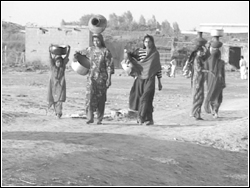
For rural women, many farm activities are extension to their domestic responsibilities, including fetching of water, and fuel and fodder collection. About 70 per cent of the female force in Pakistan is in agricultural sector- their role being the toughest of all and yet their contribution goes unnoticed and undocumented.
The role of rural women is quite different from her urban counterpart because of the lack of basic health facilities, low literacy level, poor knowledge of basic know-how, minimum use of skills and many more.
Despite of these hurdles, they effectively contribute to agriculture, food production and other micro enterprises by playing a vital role in reducing poverty with emphasis toward crop production.
Millions of women are directly involved in on-farm activities like sowing, weeding, hoeing, picking, grass cutting, cotton–sticks collection, field cleaning, milking and feeding of animals at household level, separation of seed from fibre, packing and grading of fruit, working in cotton ginning factories, packing fishes and other land and marine sea products.
Their domestic work is to clean the house, fetch drinking water, wash the dishes and clothes, collect fuel wood, prepare food, take care of children, sew and mend clothes, besides helping their men in cultivation of crops from preparation of soil to post-harvest operations. They feed and milk the livestock and their sheds, besides churning ghee. They also collect manure, prepare dung cakes and look after the sick animals.
Their role in poultry farming at household level is also important. They transplant paddy in the May and June. It needs precision and stamina to bend and transplant acres of paddy.
About 2.6 million women are involved in cotton collection in nine districts. Their participation is two per cent in ridge making; 26 per cent in seed sowing at ridge; 22 per cent in weeding; 30 per cent in hoeing; 20 per cent in manual weeding; 16 per cent in cotton thinning; 86 per cent in picking; 8 per cent in stick cutting; 23 per cent in stick collection; and eight per cent in field cleaning. The rural women provide most of the labour in post-harvest activities, including handling, stocking, processing, packaging and marketing. Rural women are also efficiently involved in preparing pesticide solutions.
In rural areas, both men and women do not have much access to sufficient resources including health facilities and education. Approximately 75 per cent males and 87 per cent of females are illiterate while they constitute 36 per cent of the total population but a mere seven per cent can read or write
Suggestions: To strengthen them several women-oriented ventures need to be explored. They have a vast scope in small enterprise such as handicraft, pot making, vocational school, embroidery centre, spinning, ginning and garment factory, and cut-flower industry.
Retail shop is also a business women can run easily followed by small scale poultry farms. Sericulture, beekeeping, mushroom cultivation, kitchen gardening, fruit preservation, nursery raising, market-oriented milk production etc., are a check-list of areas where rural women could make contribution, provided they are given necessary training and credit facilities. Joint effort is needed by the government and the private association to motivate and influence rural women to ensure admissions and increase their literacy level. Guidance is needed at all levels through print and electronic media and through the efforts of the government. It should formulate a sustainable strategy to improve their lot.