Meeting at the LoC
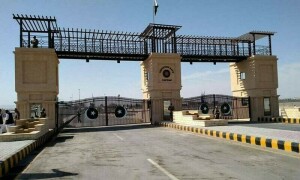
EVERY cloud has a silver lining, so goes the proverb. The tragedy of the earthquake in Kashmir has provided an opportunity for India and Pakistan to join hands to provide relief to the Kashmiris and in the process strengthen peace and stability in South Asia. The latest move by the two sides is to open foot crossings at five points across the Line of Control that divides Kashmir. In view of the damage to, or non-availability of, infrastructure in these areas, the two countries have agreed to allow crossing on foot with the same procedures and parameters that are in place for the Srinagar-Muzaffarabad bus service. They have also promised to expedite the clearance process for intending travellers. This is a great humanitarian gesture and by facilitating interaction between Kashmiris from Azad Kashmir and the Valley, Pakistan and India have in effect softened the LoC. One hopes this will be a permanent facility and in due course communication infrastructures will be built at these points to make it easier for people to travel to the other side. This had been a long standing demand of the Kashmiris as well as peace activists on both sides of the Wagah border. Such communication will in the long run make the LoC irrelevant, as pointed out by President Pervez Musharraf himself.
With the movement of people across the LoC made easier, one hopes that relief and rehabilitation in the quake-ravaged areas will be undertaken jointly by the Kashmiris themselves with help from the two neighbouring governments. Pakistan has done well to reciprocate India’s move of setting up relief-cum-medical camps at these crossing points on its side of the LoC. With the growing understanding between the two sides in this hour of shared tragedy, it is likely that these moves will have a positive impact on their political relations as well. Unsurprisingly, President Musharraf has seized on this opportunity to signal his willingness to accept the idea of demilitarization of Kashmir with the goal of a final settlement of the Kashmir dispute in view. The Indian prime minister had also made a similar offer in September when he had met an APHC delegation in New Delhi. With the two sides being like-minded on the issue, they should be able to agree on a formula for disengaging militarily in Kashmir on a mutually agreed basis.
At this time when the prospects for India-Pakistan peace look so bright, it is a pity that some hot-headed groups should be trying to queer the pitch for it and should be working to undermine the peace process. That is how the three coordinated bomb blasts in New Delhi on Saturday are widely seen. This heinous act of terrorism is to be strongly deplored. With an obscure Islamic militant group claiming responsibility for the blast that killed 61 people, it is significant that neither India nor Pakistan are blaming each other. In fact, Pakistan was quick and vehement in condemning the blasts, while India was careful not to apportion blame — even the BJP was uncharacteristically restrained in its reaction. The maturity shown by the two governments makes one hopeful that they have at last discovered that their common interest lies in joining hands to defeat the forces of violence and obscurantism in South Asia. Far too much is at stake to either ignore or go gung-ho over such happenings.
Sabotage in Balochistan
ONCE again, vital installations have been targeted in Balochistan. On Saturday, high explosive devices blew up rail tracks near Quetta, suspending train services, while a gas pipeline near Sibi was dynamited. On Oct 3 also, gas supply to Quetta and five districts in Balochistan was disrupted when saboteurs blew up a pipeline 40 kilometres southwest of the city. Those behind these acts have not been identified, but it is obvious that such attacks are a continuation of the phenomenon seen in the Sui area earlier this year. Terrorism deserves to be condemned no matter who carries it out where and when. But that blasts should go off at a time like this when an earthquake has devastated not just the northern areas but, emotionally speaking, all of Pakistan shows that only people with a twisted bent of mind could have chosen to do so. If the blasts have been set off by people who claim to fight for Balochistan’s causes, then they should know that they have hurt the Baloch cause.
The Baloch people deserve a better deal. Theirs is the country’s largest province territorially, rich in natural resources, especially minerals. Yet it has widespread poverty, low literacy, virtually no industry and a neglected farm sector. The Baloch also complain that constitutionally guaranteed provincial autonomy has been denied to them. These are legitimate grievances, which can be removed by political means and through a dialogue. In this, they have allies all over Pakistan. However, acts like the sabotage of vital installations only serve to hurt their cause and make people wonder whether those behind these acts are genuinely interested in the welfare of the Baloch people. Mr Akbar Bugti, too, has not been helping matters by speaking of an imminent military crackdown every now and then. Other politicians, far less endowed, have contributed their share to the quake relief effort. The Jamhoori Watan Party should also be concentrating on that; it should join the effort instead of being seen as playing politics at this hour.
Judicial activism
THE Supreme Court needs to be complimented for the steps it has taken in recent weeks to protect the public interest. This reminds one of the commendable action taken in recent years by the Supreme Court of India as a strong check on the government’s tendency to act arbitrarily on issues of public interest. Here it began with the Chief Justice of the court taking suo motu action based on newspaper articles and reports questioning, on environmental grounds, a Punjab government plan to construct a tourist resort in a protected forest near Murree. This was followed by the court ordering a halt to the planned construction of luxury villas in the Margalla Hills. In another suo motu action, the Chief Justice converted a letter sent to him by a prisoner in Rawalpindi’s Adiala jail alleging corruption against the jail staff. Treating the letter as a petition, the chief justice asked the inspector-general for prisons for Punjab to appear before it and respond to the prisoner’s allegations.
Now, in the aftermath of the devastating earthquake of Oct 8, the Supreme Court — in response to a petition filed by residents of Margalla Towers — has already held hearings after which it directed the Capital Development Authority to pay compensation to those whose homes were lost. In another welcome move, the court has directed that the building code for the Federal Capital should be revised, asking also the provincial governments to send copies of their building codes to the court for scrutiny. In this, perhaps, the court could seek the opinion of independent building and planning experts. Also, once the dust has settled, it may well prove worthwhile for the court to take notice of the construction of substandard school buildings which led to thousands of deaths of children and hold their planners and builders answerable.
Coping with the quake calamity
THE devastating earthquake that has caused horrendous loss of life, great human suffering, and widespread loss of private property and physical infrastructure, is likely to become a defining moment in Pakistan’s history by the sheer magnitude of challenges it has posed and would continue to pose for institutions of governance and key aspects of public policy.
The immediate priority of course is saving tens of thousands of lives and providing temporary but adequate shelter and other relief to millions of displaced persons. The role of private organizations and individuals in providing assistance and alleviating suffering has already emerged as a heartening and a rather rare example of national unity.
But a very large part of the responsibility for both immediate relief and longer-term reconstruction inevitably must rest with the government. Its role would be vital for mobilizing and coordinating external assistance, setting standards, and integrating new needs with existing economic priorities. How the army and the government agencies at various levels perform in the coming weeks and months could influence the course of political developments.
The future course of Pakistan’s relations with India would no doubt also be influenced by the extent of cooperation and movement across the LoC in Kashmir in coming weeks and months. President Musharraf’s goal of making the LoC irrelevant is worth pursuing seriously by both sides because it would not only help the Kashmiris in distress but also perhaps provide an important step towards the resolution of the Kashmir dispute.
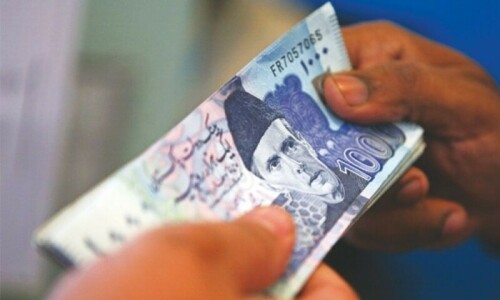
How will the earthquake affect the Pakistan economy and the economic momentum of the last three years is also a central question. Sustained high growth and serious poverty reduction efforts are the key platforms of the Musharraf government. Is there a danger that growth could slow down and the direct poverty reduction efforts, which by all accounts have yet to yield very visible results, would be hampered? These are important issues and must be debated. Initial reactions by some policy officials and private sector analysts implying that the impact on growth and the economy would be minimal were too hasty.
The full magnitude of the economic loss is yet to be ascertained, but estimates of needs have been revised steadily upwards. Even the latest government estimate that public funding requirements would be around five billion dollars could turn out to be a serious underestimate.
If the initial estimate of the need for 500,000 new dwelling units is correct, the replacement of housing stock alone may cost $2.5 billion to $4.0 billion, assuming the average construction cost per dwelling unit in the range of $ 5,000 to $ 8000. Clearly new dwelling units would have to be built to higher earthquake resistant standards. The loss of physical infrastructure — roads, schools, hospitals, government and private non-residential buildings — is also very extensive.
Reconstruction of Muzaffarabad, Balakot and Rawalkot would be quite costly. Thus, the reconstruction, relief, and rehabilitation bill could easily top $ 10 billion. It may also be politically undesirable and morally incorrect to spread the reconstruction effort over ten years. The annual spending largely for replacement of physical capital destroyed by the earthquake could thus be as much as two billion dollars for next five years.
The important thing is to get a firm assessment of needs. At the government request, World Bank and ADB have already initiated a damage assessment. This is crucial work but must be supported by a high-level counterpart government team of economists, engineers and administrators so that the government ownership of the report is assured at the outset, practical considerations in devising spending plans are kept in view, and a beginning is made in integrating reconstruction needs with the overall medium-term economic framework.
How much additional external assistance can Pakistan expect to finance earthquake-related needs? First, for this purpose, only grant assistance or assistance on very concessionary terms should be counted because borrowing on market or near-market terms is not really assistance because it has to be placed in the context of overall public debt management. The response so far to Pakistan’s appeal for assistance has not been very satisfactory in relation to the need; the total amount committed is around $1.2 billion and actual flows are small.
Also, it is not clear that the assistance indicated by the World Bank and ADB would be all truly additional because concessionary funds available with these organizations are limited and largely pre-allocated. President Musharraf is right in expressing frustration with the response of the international community. Pakistan’s friends — the US, Japan, EU, and oil-exporting Middle Eastern countries — can and should do more. The goal of mobilization of additional concessionary assistance should be aggressively pursued. But to be realistic, unless counties like the US and Saudi Arabia are willing to make a major commitment to reconstruction, it is not likely that additional concessionary assistance will total more than three or four billion dollars, only a fraction of the likely needs.
Even in the best case scenario, it would not be wise to count on more than 40-50 per cent of financing to be provided by additional external grants and concessionary loans. In the worst case scenario, Pakistan’s own resources (including borrowing abroad and at home) might have to provide two-thirds to three- quarters of the resources needed.
It must be recognized that a substantial part of the cost of earthquake relief and reconstruction (possibly in the range of $4-6 billion, in 2005 prices, over the next five years) would have to come from fiscal resources.
How can this be handled? In normal circumstances, the likely additional claims on government resources of 1-1.5 per cent of GDP annually for the next five years need not be an impossible burden to manage. However, three points that may limit the government’s ability to respond flexibly need to be noted.
First, the sharp rise in the international oil prices during the last two years has caused a major loss of terms of trade for Pakistan. The continued high oil price of over $60 per barrel is likely to increase the oil import bill by two billion dollars or nearly one per cent of GDP during 2005-06.
The government is facing stiff consumer resistance and has been unable to fully pass the higher energy costs on to the consumers in the form of higher gasoline prices, power rates, etc. To the extent that the government is not able or willing to adjust energy prices fully, the hit would be taken by the budget.
Second, notwithstanding the very strong GDP growth in the economy and continuing efforts to strengthen the tax machinery, the tax to GDP ratio fell in 2004-05. The elasticity of the tax system, that is growth translating automatically into higher tax revenues, is far from being assured.
Thirdly, the pro-poor programmes which suffered deeply in the 1990s because of declining fiscal space have just began to expand and have not yet reached a critical level. Under the circumstances, the competition between funding earthquake-related projects fully and protecting growth momentum and direct poverty reduction spending would be unavoidable.
The dilemma that the government faces is real. It needs to develop a comprehensive response to the calamity that has befallen Pakistan without sacrificing growth momentum and poverty reduction efforts. Choices have to be made. The country must be prepared and the public must be educated to accept the loss of consumption that higher international oil prices, over which Pakistan has little control, entails.
No doubt it increases the hardship for the middle classes and lower income groups but delayed adjustment in energy costs cannot be justified as protection for the poor. For instance, the very large numbers of rural poor consume little or no electricity because most of them do not have access to it.
Mobilizing larger tax revenue through effective taxation of the well-to-do groups was a big challenge even before the earthquake. Now it needs to be tackled on a war footing. Hopefully, in the spirit of national response to the tragedy, the progress towards a more responsive and fair tax system can be accelerated. The rich must be asked to do more because the burden of taxation on them remains low and this distorts even the distribution of benefits of growth.
Priorities of spending must also be revised. Postponement of large items of defence spending and long gestation period projects must also be considered. Cuts on low priority spending, either developmental or non-developmental, must be undertaken.
There may be some scope for expanding the budget deficit and increasing government borrowing over the planned levels. But this should be considered only if containment of inflationary pressures and protection of official inflationary targets would not be jeopardized. Pakistan cannot afford to sacrifice its hard-earned and well deserved monetary and exchange rate stability.
To sum up, a speedy, adequate — indeed generous — response to the plight of millions of Kashmiris devastated by the earthquake is both a national and international imperative. Pakistan is right in seeking large-scale external assistance. But it needs to be realistic about the scale of additional grant and concessionary assistance that would be forthcoming.
Even in the best case scenario, the government is likely to have to provide half of the cost of relief, rehabilitation and reconstruction that could top $10 billion.
The writer is a former chief economist of the World Bank.
| © DAWN Group of Newspapers, 2005 |