



 0
0

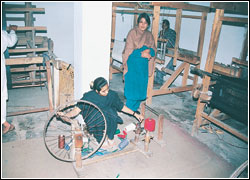 When unemployment in Pakistan is a major problem and that has been aggravated by the earthquake, a major solution for the problem is more small and medium enterprises and fast spreading SME‘s.
A recent study showed that a person could be employed in a small-scale industry at 1/80th investment of what it takes him to be employed in a large-scale industry. The location problems of the SME‘s are far less than those of the large-scale industries.
The capital needs per unit of production is small and the borrowed capital is repaid quick usually as the production in SME‘s start pretty early, unlike in a large-scale industry.
So, even a country like Japan with its giant industries has a large number of SME‘s. Some of them feed the major industries with their components and specialized products. The two industries happily co-exist and prosper. But in a country like Pakistan, although the SME‘s contribute to 30 per cent of the industrial output, there is little official patronage and less of public recognition of the importance of its contribution.
Till some eight years ago, the annual economic survey of Pakistan used to show a fixed annual growth of eight percent and that used to cause a laugh. Since then the growth figure has come down. It was 6.3 per cent last year and 6.2 per cent the year before. May be that is linked with the loan facilities available to the industry.
A few years ago a director of research of the State Bank of Pakistan estimated at a conference for the Management Association of Pakistan that loans from the banks available to the small scale industries was not more than five per cent of the total bank credit.
And now a comprehensive study conducted by the Asian Development Bank shows only six percent have access to the bank credit now. Recently, the governor of the State Bank, Dr Ishrat Hussain had admitted that such low loan facility to the SME‘s was the fault of the State Bank of Pakistan, policy wise. We have now a Small and Medium Enterprise Development Authority (SMEDA) and the SME bank. Still the loans available to the SME‘s are not more than a token.
Dr Ishrat Hussain says that consumer loans available to the persons without the usual collateral is now 10 per cent of the total loans, largely to buy luxuries. So, apparently the SME’s get far less credit than what the consumer borrowers obtain. But the banks may argue that consumer loans are given after checking the financial background of the borrowers including their salary income and that serves a purpose of the collateral, which may not be there in a solid form.
The economic survey says that hitherto the government had the same policy for large-scale industries and small scale enterprises. The same has been the official policy in respect of big traders and small traders, but that policy is changing now. Clearly the change is too slow and too little as far as the SME’s are concerned.
The Asian bank study, part III identified three major reasons for the slow or stunted growth of SME‘s: (1) lack of access to credit for most of them ; (2) the threshold burden of compliance which puts off many SME sponsors; (3) the cost of corruption associated with fiscal and regulatory framework which effects their growth as well as their capacity for risk taking.
The report says the management spends 17 per cent of the time coping with the regulatory framework instead of devoting more time to promoting its business.
This well could be the legacy of the 1970‘s when big and small units were sought to be nationalized and the outcome of CBR‘s efforts to bring the SME‘s and keep them there.
Evidently, as the growth figure shows the output of the SME‘s as a part of the economy is going down. The growth was 8.2 per cent eight years ago and now it is 6.3 per cent. So, instead of the SME‘s growing and making a larger contribution to the economy, their role seems to be shrinking or remaining static.
The Asian Development Bank had come up with a number of reforms to enable the SME‘s to play a larger role and strengthen the overall economy, but the reforms are not being diligently carried out by the government. So, a bank delegation coming from Manila to make the government expedite the reforms.
The reforms suggested cover the inhibiting regulatory and fiscal framework. They also asked for reform of the dispute dissolution process in the country. The State Bank has asked the banks to stop loans for farmhouses and it has also allowed loans for agriculture on credit cards. And now the government plans to give Rs3 billion micro loans to the victims of the earthquake.
How well all this works in favour of the SME‘s remains to be seen. What is obvious is the country needs a radical SME policy and to make the SMEDA and the SME bank far more effective instead of an excess of rhetoric stressing the importance of SME‘s. And the SME‘s should get themselves more organized and exert greater pressure on the government to be more helpful to a key sector of the economy.
While the corporate sector gets 52 per cent of the loans, the small enterprises receive much too little and the corporate sector enjoys a great many concessions. So, the return to the nation from a thousand-rupee loan to the big industry will be found less, after adjusting all the concessions than the real contribution of the small-scale industry.
For all the concessions given to the large-scale sector, it grew by only 15.4 per cent last year against 6.3 per cent growth by the unaided small sector. Hence it becomes imperative to promote the small sector all the way.






























