



 0
0

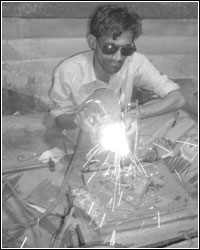 A safe and healthy work environment is the basic right of every worker. But, the global situation falls far short of this right. According to the International Labour Organization (ILO) estimation, every year more than 125 million workers become victims of occupational accidents and disease out of whom around 220,000 workers die and about 10 million are seriously disabled.
The situation is more depressing in developing countries where about 75 per cent of the global workforce lives and works. These countries have so many more serious problems like poverty and unemployment that health and safety is overlooked in policy formulation.
There are more than 820 million unemployed people in the developing countries. Industrialization in these countries focuses on production, promising investors cheap labour and tax concessions.
According to official statistics, the total population of Pakistan is about 152.53 million and its labour force is estimated at 45.76 million, around 40 per cent of which is employed in the agriculture sector.
The incidence of occupational diseases and injuries is very high because thousand of workers are routinely exposed to various chemicals and hazardous working environment.
Unfortunately, majority of mishaps are not reported to the Labour Department.
Most workers are illiterate and proper protective umbrella is not provided to them. Negligence on behalf of worker also contributes to accident and occupational illness.
A large number of illiterate workers is employed in the unregulated informal sectors like construction, agriculture, and mining, especially in small-size enterprises.
Women and children are especially vulnerable as they usually work with no access to basic occupational health and safety protection.
The industrial workers suffer diseases like lung cancer, skin and eye allergies, deafness, headaches etc; also the rate of accidents is higher in industry. In addition polluted air and waste liquid from industries contaminates air and underground water, making it hazardous for workers and others who live in the neighbourhood.
Chemicals including pesticides, fertilizers, industrial chemicals and consumer chemicals have become indispensable in many economic activities and are increasingly used in the industrial agricultural and consumer sectors.
The informal construction sector provides employment to large numbers of workers who are especially vulnerable to occupational health and safety risks. Such workers are not even provided with the protection that is available to industrial workers
Child labour is also common which results from a combination of severe poverty, employer greed, and inadequate enforcement of laws intended to control it. A government study carried out with the assistance of the ILO, has estimated that there are around 3.6 million child labourers.
Unofficially there are around 20 million because the government did not take into account the unorganized sectors like handicrafts, leather, garments, and carpets sectors cotton pickers, field workers and workers associated with home-based industry.
According to studies, around 77 per cent of women are employed in the informal sector, where they are often badly paid, with no legal protection, and poor working conditions. Even all the educated and professionals women are not aware about OHS and labour laws.
Although the law prohibits forced labour, bonded labour is quite common in the brick, glass, mechanical workshops and fishing industries and is also found in agricultural and construction fields.
Occupational safety and health information collected for the first time through Labour Force Survey shows that 3.6 per cent of the total employed persons suffered from occupational injuries/diseases, 42.9 per cent of Them are engaged in the agriculture sector. However, occupational safety and health (OSH) measures are now visible in many enterprises as it is not only a legal requirement but also a means of improving productivity.
The expansion of chemical, electronic, and biotechnology industries has introduced new work-related risks and increased their interaction with non-work factors in ill-health, such as environmental pollution. Thus, in addition to old and prevalent problems, such as traumatic injury, respiratory disease, occupational dermatitis and musculoskeletal injury, workers now suffer new stresses, such as new asthmatic disorders, psychological stress, and the ergonomic and visual effects of using video display units.
Work is increasingly characterized by a high level of demand, with little control over the nature and content of the work, leading to digestive disorders, sleep difficulties and musculoskeletal problems.
It has been reported that accidents, stress, and intense exposure to common hazards arise from unrealistic production quotas and inadequately uncontrolled overtimes. These factors create additional pressure to highly stressful work, resulting in cardiovascular and psychological disorders. Occupational risks spill over to non-employed populations, through air and water pollution, and transmission of communicable diseases.
The absence of job security, larger workloads and threats of future downsizing have all contributed to employees accepting longer work hours.
A research conducted by professor of organizational psychology in Canada has concluded that managers working over 50 hours a week are not performing at their best.






























