



 0
0

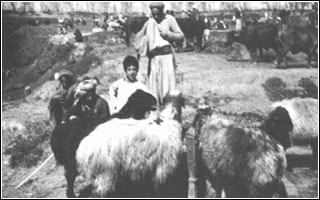 LIVESTOCK raising is a subsistence activity to meet food needs and supplement farm income in the rural areas. Almost every rural household owns some livestock with man, woman and children in the family engaged in it. The public sector involvement is insufficient while the private sector is encouraged to invest in production, processing and marketing of livestock and its products.
Growth in livestock in the last decade ranged between 5-6 per cent per annum. The present per capita consumption of milk and meat at 68.6 and 14.5kg per annum is far below the recommended dietary allowance (RDA) level for an individual.
In Pakistan, around 36 per cent of the population lives below the poverty line. The poor in rural areas are higher than in the urban with the majority constituting labourers, marginal and small farmers and artisans. About half of their income comes from the agriculture and the rest from non-farm sources. The unequal land distribution is a major factor for the poverty. Poverty alleviation calls for increase in crop and livestock productivity through substantial increase in output per unit of land, animal and labour.
Though there are 51 million heads of cattle and buffalos which make Pakistan the fifth milk production country in the world, a huge amount of foreign exchange is spent on the import of milk and its products.
The districts of Diamer, Gilgit, Ghizer, Skardu and Ghanche in the Northern Areas are rain-fed mountains spreading on 7.2496 million hectares with only 69,480 hectares cultivable. The land holdings of 0.3 acres and the subsistence level of crops make livestock an integral component here. The livestock provides security against crop failures with 40 per cent contribution to total household income. There are 1.047 million heads of goats, 0.518 million sheep, 0.398 million cattle and 6,208 buffaloes. The free grazing has tremendous potential for development if constraints are removed.
The Technology Transfer Institute (PARC) scientists have conducted a study taking into account the factors like production system, feed, disease, and marketing constraints. The data shows that the main livestock production system is transhumant, possessing 77 per cent of the total sheep and goat population. With respect to large ruminants, 82 per cent cattle are reared under intensive production system in peri-urban areas. In summer few members or the whole family along with their livestock shift to upper alpine pastures for 4-5 months. In summer the green fodder is in abundance but in winter only dry fodder is fed.
The people sell half their animals before winter starts which calls for a research to introduce fodder that can tolerate extreme cold. Besides, various diseases like foot-and-mouth, diarrhoea, pneumonia, fever and black-quarter are most common in animals. Due to tenuous veterinary facilities and no access to healthcare hundreds of them die annually.
Almost 100 per cent breeding in buffalo, cow, goat and sheep is natural with only one case of reported artificial insemination in cows. Many farmers are unaware of cross-breeding in cows and goats through natural process.
It was interesting to note that the milk marketing is unknown in the study area with per capita consumption very low perhaps due to the conversion of milk into ghee. The average ghee production per household is 67kg per year. The farmers use it believing that this local ghee is good for health and extends their life for being pure and nutritious.
Milking animals are more valuable with the rest having only meat value. The pattern of meat consumption in the research area is quite unique. Almost all farmers slaughter their dry cow as winter begins and then desiccate the meat in sun which is used during the whole season. In summer too, they slaughter young goats and rarely buy meat from the distant markets.
Women have a greater role in the agrarian society of the area. They, in one form or the other are found involved in livestock and crop husbandry practices. Their participation ranges from 65-70 per cent. Women clean sheds, collect farmyard manure, stall feeding and water animals. Fodder cutting, chopping and milking are their other activities.
The gross income for the farm household is calculated. The income comprise of three sources: crops, livestock and off-farm employment. The livestock contributes 64 per cent while crops only 14 per cent.
The analysis reveals that the return from this enterprise is affected by the size of the family, number of livestock, quantity of feed, and the labour days engaged. This enterprise has increasing return on scale (investing one rupee can earn Rs2.26) thus suggesting better opportunities.
Though, livestock plays a major role in the rural economy, no market place (mandi) exists for the sale and purchase of live animals in the Northern Areas. Milking cows are traded among fellow farmers. Buffaloes slaughtered here are brought from Punjab. Nomads sell their small ruminants to butchers and household consumers.
It is common that 10-15 days before Eid-ul-Azha, proper mandi comes in operation where small as well as large ruminants of different size, age, and breeds are traded. Even on such occasion, no proper place is allotted or controlled for marketing livestock.
Livestock is an integral part of the farming system as it provides security against crop failures. This sector not only contributes to income but also provides employment in the Northern Area. The discouraging trend of artificial insemination and cross-breeding is reducing breed variations.
Though cows produce more milk, grazing and reproduction of goats and sheep could be more economical. Large farms are more productive as these are cost efficient as compared to small and medium farms. The shortage of fodder (both dry and green) has negative effects on the productivity. Insufficient veterinary facilities and lack of medicines affect adversely.
The potential of livestock in domestic protein is enormous. Its development can open more avenues for poverty alleviation and foreign exchange earning. Goat and sheep population can be enhanced by providing more ranges and pastures. The farmers keep animals for meat, milk, leather, farmyard manure, and wool/hair. This shows their dependence on livestock raising. There is a need to harness the potential of the area. It is necessary to develop alpine pastures on the existing ranges.
To make livestock more profitable the following recommendations may be considered for policy makers, researchers and extension workers: * Feed supply should be increased by introducing high yielding fodder varieties like Alfalfa and Mott grass etc. * Range management is vital in supplying additional feed for animals in hilly areas because of paucity of land for fodder cultivation. Proper management of ranges especially through controlled and rotational grazing can increase their carrying capacity. * Feeding should be practiced after chopping and in wooden or concrete mangers, mixing of green fodder with dry fodder and treatment of wheat straw and dry grasses with urea should be encouraged. * Vaccination against contagious diseases and regular de-worming should be practiced. * High milk producing breeds should be introduced in the area and poor producing should be culled out and selective breeding should be encouraged and cross breeding with exotic animals should be done to improve milk production. * Moreover, artificial insemination and cross- breeding should be encouraged for the improvement of the breeds; establishment of dairy industry in the area for processing of surplus milk and its trans-shipments to other parts of the country is pre-requisite. * Development of large livestock farms should be encouraged as these are more cost-efficient and productive than the small farms. The proper knowledge of young stock fattening may lead to a profitable venture to produce and supply quality beef and mutton to national and international food chain.






























