



 0
0

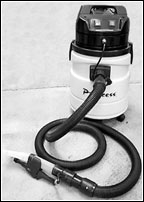 CLEANING is an all-inclusive business related to sales and services of such equipments, interior decoration, and renovation, and is linked to solid-waste management.
Rivers, seas, oceans, dams, wells, pools, residential and commercial places, schools, hospitals, airports, airplanes, ships, buses, vans, bus-stands, furniture, curtains, sofas, roads, streets, lawns, toilets, washrooms—almost everything under the sun including humans and pets— need cleaning.
Before, investing in this sector one must take into account several associated drawbacks. The most important is the fact that concept of cleaning as a whole fails to make inroads in nation’ psyche. Even the housekeeping departments of many big hotels and much of industry do not count on professional cleaners.
For maintenance and cleaning, they are exceedingly dependent on traditional modes of cleanings (at the most, a worn-out filthy towel tied at one end of a ruined wiper.)
Cleaning remains, therefore, an unrecognized and unorganized sector. This is despite the fact that almost every one agrees dirtiness is deservedly odious to the Creator and to men and is harmful to humans and businesses.
Yet, health of cleaning businesses is pathetic in Pakistan and before analysing risk factors involved in cleaning businesses, the plus-points in this sector may also be considered.
Given the fact that dusty winds blow round the years in the country as it lacks paved infrastructure, it is natural to assume, if launched, cleaning business must flourish; there is a greater pressure today than in the past on businesses to be environment-friendly.
Cleaning is the only future business to meet national and global criteria regarding conservation and preservation of environment. High standards of professional cleaning alone can maintain desired level of personal hygiene and public sanitation.
Cleaning creates large-scale employment. Be it upholstery, residential, or commercial cleaning manpower is needed. A great part of available huge surplus of untrained and unemployed manpower in Pakistan can be trained and accommodated in that sector.
Cleaning is interconnected with several businesses. To repeat, solid waste management is one; renovation/ maintenance of household another. There are people who link this service-based industry to interior decoration and to personal beautification.
The lesser private cleaner is the quack who cleans your ears while sitting on footpath. A sophisticated and trained cleaner placed in posh area extending steam-bath and refined techniques to clean your body carries the same tendency to clean as carried by the quack——both want to make money and both want to serve.
A vast range of infrastructural development that is taking place everywhere bespeaks need and scope of cleaning sector. The pathetic performance of town committees, municipal committees and failure of several development authorities be it, LDA, KDA, or CDA to keep roads and streets clean encourages a potential investor to open cleaning business.
A cleaner who does the job professionally must get a fair share of taxpayer money. And given the global trend to out-contract series of functions previously performed by the State, cleaning among the other, is the service-based business that has the potential in economic and social terms to expand— both horizontally and vertically inside and outside— the country.
Cleaning industry, if given public and private patronage has a tremendous potential to promote social integration of a certain class of people traditionally associated with the informal cleaning sector.
Actually, members of existing cleaning squads are largely Christians. They perform their duties alone as individuals or in small groups, outside the usual working hours, early in the morning or late in the evening. Public and private interest, if roused in that business, must bring respect and recognition for the existing workforce. Since cleaning is a labour-intensive sector, more workers would have to be employed outside the particular community that in turn would give a sense of profession and equality to everyone involved in cleaning.
Few words regarding the problems faced by existing cleaning companies in Pakistan might help the new comer in this business to take into account downside of this business.
First, there are not many cleaning companies and the business as a whole has no public image. It is only quite recently that some cleaning companies are budding in Lahore and Islamabad following a trend first set by Karachi. The available cleaning companies face problems related to lack of professionalism. This is because clients go for cheaper services. Seldom, they care for quality.
The lowest the bidder/ the contract, the higher the chance to get the contract/client—it is in this way client himself discourages professionalism. Working at lowest possible rate, no cleaning company can satisfy its customer that in turn impedes development of professionalism and inhibits growth of cleaning business.
In addition, often these companies face shortage of full time cleaners. Employed workers are part time cleaners (generally); these workers would be called to work only when there is a work to be done; of course, it would help them to earn few bucks but cannot help them attain a sense of belonging to a profession. Thus, for cleaning sector high level of professionalism is still very different in Pakistan.
It may be recommended, therefore, that government in partnership with the private sector should launch cleanliness awareness campaigns. Vocational training schools imparting education in cleaning sector must be opened. In depth, pre-feasibility studies at least by Small and Medium Enterprise Development Authority (SMEDA) must be conducted and cleaning kits prepared.
It is only in this way we can highlight the role and scope of cleaning companies in a progressively interconnected world.






























