0
0

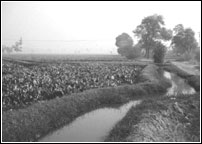 THE area under wastewater irrigation has increased significantly with about 20 million hectares producing nearly 40 per cent of the food produced worldwide. And the wastewater use is 1.3 million ha in China, 9,000 ha in Vietnam, 11,900 ha in Ghana, 32,500 ha in Pakistan, 73,000 ha in India, 50,000 ha in Mexico and 300 ha In Jordan.
A major proportion of wastewater is confined to the vicinities of big industrial cities. For example in Pakistan, the wastewater irrigated agriculture is spread on 2,000, 2,500, 600, 500 and 300 hectare in Faisalabad, Hyderabad, Bahawalpur, Burewala and Arifwala, respectively.
The main reasons of wastewater use are salinity, drought, high nutritional value, and high prices of agri-products. Rural areas around big cities like Faisalabad have saline, saline-sodic and sodic soils. Drought and salinity have complicated the situation. The area is densely populated with no access to clean irrigation water due to which farming communities are handicapped.
Wastewater has, to some extent, boosted crop production and 60 per cent of the vegetables are grown in and around big chunks of industrial web. Urban agriculture is a big source of income as these products have an access to markets where there is an all-time need of vegetables.
The income generated by these peri-urban and urban farms is much high than the farms which are situated in rural areas and irrigated by fresh water.
According to a study, in Pakistan urban farmers collect $300 per annum more than their rural counterparts who use fresh water. The philosophy is that the nutrients enriched wastewater is easily available. Nutrients boost plant growth by reducing the fertilizer use thus cutting the cost of vegetable production. It saves from exploitation by the middleman and from the transportation, handling, and loading charges.
The concept of vegetable farming (growing of vegetables during off-season) by tunnel farming has gained currency among urban farmers. These provide higher prices for being off-season. Urban agriculture serves as a sink for polluted water and helps in uplifting the socio-economic status of farmers but is a threat to the environment and health. In developing countries hardly 10 per cent of the wastewater is treated.
Unawareness on how to treat these vegetables before consumption paves way for the disease causing agents like cholera, fever, respiratory and digestive disorders, and hepatitis to enter into human body.
According to a research, 65 per cent of workers of such farms bear pathogens attacks. In poor countries where more than one-third of the population doesn’t have an access to basic necessities of life, farm workers operate without wearing gloves, footwear and protective dresses thus become easy victims of such agents.
Another problem is metal contamination due to the lack of vision in selecting vegetables for this sort of farming. Generally farmers chose leafy and those vegetables whose edible portion are roots and flourish underground like spinach, lettuce, reddish, cabbage and cauliflower. These accumulate higher amounts of heavy metals like chromium, cadmium, zinc, lead, arsenic and copper.
Surveys conducted under supervision of the IWMI, the WHO, the FAO and local environmental protection agencies have disclosed that the vegetables grown on untreated wastewater were found contaminated with toxic elements. Most heavy metals are carcinogen. These elements cause mental disorder, respiratory problems and hormonal imbalance.
A more dangerous consequence of this polluted liquid is the transmission of heavy metals through animal milk into human as fodder grown by this water accumulates higher quantities of heavy metals in animal. This contamination has been noted higher in South Asian countries where per capita consumption of milk is more than in other developing nations.
In areas where water-table is shallow, wastewater has these reservoirs on which more than 80 per cent of the population directly or indirectly is dependent. Globally, more than one billion people are deprived of safe drinking water due to the percolation of wastewater into ground and city supply lines.
In Pakistan over 50 million people drink water which is health hazardous. In such countries about 50 per cent diseases are waterborne that cost millions of dollar each year. According to one estimate approximately 45 per cent causalities each year are due to waterborne diseases.
Groundwater contamination by wastewater and arsenic, fluoride and other contaminants have threatened millions in Bangladesh, India, China, Mongolia, Thailand, Nepal, Cambodia, Leo People Democratic Republic and Myanmar.
Pakistan too, is facing arsenic and fluoride contamination in groundwater of cities like Lahore, Multan, Faisalabad, Gujranwala and Hyderabad. Luckily, nitrate pollution has been reported which is caused due to an upward movement of water in soil profiles which falls under arid to semiarid climates. But, the nitrate menace has impaired the use of drinking water in developing countries which fall under humid and tropical climates.
The environment of these countries is on the verge of degradation due to mismanagement in handling wastewater. It adds million of tons of salt to the soil each year. In Pakistan about 550 tanneries are working where salts are excessively used. The wastewater released from these tanneries carries salts and heavy metals like chromium.
Secondary salinity caused by the tanneries and industrial water has become a matter of deep concern. Scientists recall that the addition of untreated wastewater into environment is a socio-environmental crime committed by that person or group of persons who perform this task. It disturbs the structure of soil environment thus hindering plant growth.
In future, water shortage and wastewater handling would be major challenges. Wastewater management, if environmentally-friendly, may mitigate the affects of shortage.