0
0

 AFTER submission of the ‘technical committee report’ on water availability and its reported recommendation on the construction of Bhasha Dam, apprehensions have mounted about perpetual disadvantage of Sindh in Indus water sharing.
Media’s rhetoric on the theoretical advantages of “storage reservoirs” has been resumed which lacks foolproof guarantees about judicious water-sharing and proper escapade to sea.
Draft reports on downstream Kotri flows for checking sea water intrusion and ecosystem protection have also been submitted. These studies, containing valuable data, have ironically, failed to give any estimate of Kotri downstream flows. This article, therefore, presents a review of present status of water sharing and escapade to sea, to refresh the Sindh’s point of view.
Distribution and sharing: The conflict between Sindh and Punjab over water apportionment is as old as the 1870s, when Punjab started constructing irrigation infrastructure on Indus river. After restoration of provincial status of Sindh in British India, an agreement was reached in 1945, whereby the right of Sindh over Indus water was held supreme.
Distribution of water continued in accordance with the 1945 Formula till 1977 when, after construction of Tarbella dam, the federal government decided to follow ad-hoc arrangements for water apportionment between provinces.
The latest Water Accord was signed by chief ministers of all four provinces on March 16, 1991 and ratified by the Council of Common Interests on March 21, 1991.
In May 1994, however, Punjab presented a working paper as an ex-agenda item before the federal minister of water proposing a different formula for sharing shortages now known as the so-called “Historical Use Formula”. The matter was subsequently referred to federal law division, which duly observed that any interpretation of sharing shortages on the basis of historic use shall be a violation of the 1991 Accord as well as the Constitution of Islamic Republic of Pakistan.
Using its physical control over head works and dams, and different tactics at different times, Punjab has managed to share the system shortages as per the highly controversial 1994 Formula; whereby the share of Punjab works out to be around two MAF more than its full allocated share according to the 1991 Water Accord.
The share of NWFP and Balochistan is also not reduced during shortages of any magnitude, according to an arbitrary IRSA decision. Sindh alone bears the burnt of water shortages in the system, four out of five years. The so-called historic use formula was based on the sharing of water for only 13 years from 1977 to 1990, as a baseline data for arriving at the 1991 Accord.
During this period the water apportionment was made on ad-hoc basis every year. It has nothing to do with the historic use since 1945, because at that time, there was virtually no formal share for Balochistan’s Pat Feeder Canal command area as it was then a part of Sindh province.
With the allocation of 2.24 MAF approved by the ECNEC for LBOD and 0.87 MAF allowed by the President of Pakistan for Karachi city, the present sanctioned annual allocation of provinces as per 1991 Accord is as follows: Punjab 55.94 MAF, Sindh 48.76 MAF, NWFP 8.78 MAF and Balochistan 3.87 MAF.
Due to denial of share from Mangla dam and increased apportionment to Punjab, NWFP and Balochistan during shortage years, the average annual use of Sindh in recent years stands only at 43.67 MAF, against its allocated share of 48.76 MAF; while Punjab has managed to take its full share and it also utilizes an additional 45-50 MAF of fresh ground water mined through about 0.6 million shallow tube wells.
Punjab is also blessed with a better down pour. Sindh, on the contrary, lacks any significant fresh groundwater and rainfall resources; and, hence, must get its due share of water from Indus basin system for sustainable agriculture and rural livelihood.
Punjab Water Council and other pro-dam lobbies have often asserted that Sindh agriculture is an inefficient producer, whereas Punjab alone can feed Pakistan if allowed a lion’s share of water. This assertion is a mere fallacy because, even at present, Sindh contributes over 35 per cent of rice, 30 per cent of sugarcane, 20 per cent of cotton and 15 per cent wheat production.
About 80 per cent of cultivable area in Sindh can be classified as having very high, high and/or moderate potential for agricultural production; while only 20 per cent of the area has low potential for general cropping.
Given due share of water to increase area cropped more than once and to cultivate additional 1.5 million hectares of fertile land, Sindh has the potential to produce 40 per cent each of rice and sugarcane, 30 per cent each of cotton and wheat and an additional 30 per cent of fresh fruits and vegetables in Pakistan. Thus, Sindh agriculture can contribute significantly to the objectives of increasing productivity, maintaining quality and variety in exports and economic efficiency as dictated by the WTO agreement on agriculture.
The craze for full control over irrigation water is based on productivity gains realized by Punjab during Green Revolution era (1967-83), where-in it was estimated that 40 per cent each of additional productivity of HYVs of rice and wheat was contributed by higher water and fertilizer doses. The reality now is that Punjab has grown out of that phase, on account of over-application of canal and tube-well water, chemical fertilizers and pesticides since 1980s.
Punjab actually uses 50 per cent more water per acre of the CCA, when compared to Sindh. This is resulting in an increasing water logging and salinity problem and necessitating huge investments in drainage projects.
Punjab agriculture can now compete only by producing quality products such as long fibre fine cotton, aromatic long grain rice, cut rose and processed farm commodities for exports, in addition to wheat.
As against this, the marginal productivity of an additional irrigated acre is much higher in Sindh for coarse rice, sugarcane, red rose, melons, sunflower, coconut and oil palm, beetle leaf, mangoes, banana, guava, tomatoes, chillies and onion crops.
Sindh, therefore, qualifies for its share granted in Water Accord 1991, even on grounds of economic efficiency.
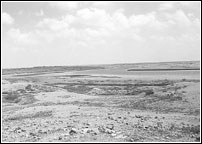
Escapade to sea: Historical escapades below Kotri have been 80 MAF prior to the construction of upstream barrages and dams. From 1975-1995, these flows gradually reduced to the average level of 35 MAF annually, the actual flow was only 0.72 MAF in 2001-02 and virtually none in 2002-03.
The IUCN team of experts recently worked out the annual requirements for outflow to sea for environmental sustenance to be 27 MAF (equivalent to 300,000 cusecs). The World Commission on Dams and Development recommends at least 10 per cent of basin flows as environmental water for the river deltaic eco-systems. This works out to be about 15 MAF for the Indus river delta.
Under present circumstances, even the allocation of 10 MAF given by the 1991 Water Accord is likely to be available only in 17 out of 72 years. The pro-dam lobbies wrongly estimate that still some 35 MAF is going to sea. They also unfortunately happen to believe that downstream escapade to sea is a mere waste; and, that it is “water for frogs and worthless forests”. Environmental and agricultural scientists know, however, that the following colossal damages have already occurred due to dwindling escapade to sea:
* Sea water intrusion has resulted in the damage of about 1.5 million acres of fertile land in 159 dehs of eight Tehsils of the deltaic districts–Thatta and Badin and Katcha (riverbank) area of Sindh.
* Mangrove forests, which once grew on 700,000 acres, now cover only about 150,000 acres causing an eminent threat to the ports of Karachi and Bin Qasim.
* Fish production and seed multiplication in the drying creeks and Indus river has declined, while Palla fish catch is nominal. Coastal wetlands and Ramsar sites have been degraded with consequent losses in biodiversity. * Depletion in flow of sweet river water and rich silt (which has gone down from 400 million tons to only 100 million tons annually), has led to what is called a ‘Hyper-Saline Condition” in coastal belt that kills life in all forms thereby adversely affecting coastal livelihoods and increasing the poverty incidence.
*) Indus river bed has shrunk and become gradually narrow; and it could be highly disastrous during super flood years, which occur once every decade.
Under the circumstances, it is imperative that the federal government and the Pakistan Army leadership manage irrevocable guarantees for the people of Sindh about appropriate water sharing and escapade to sea, without undue manipulation and interruption by the upper riparian provinces. This may also require proper reorganization of IRSA and other relevant government departments/ agencies and the use of modern technology for system reporting, monitoring and control.