0
0

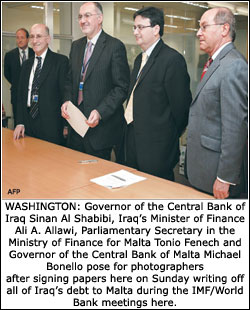 WASHINGTON, Sept 25: The International Monetary Fund (IMF) has accepted a proposal to write off debt owed by some of its poorest member countries. The World Bank, which is holding its annual meetings here along with the IMF, is expected to endorse the plan.
“Following this agreement, now reached on all the elements, managing director Rodrigo Rato has informed the committee that he will call the executive board together to complete its approval of the arrangements to deliver debt relief by the end of 2005,” said a statement issued by the IMF’s policy-steering committee.
The 184-nation IMF and the World Bank opened their meeting on Saturday promising to act on a breakthrough deal for writing off more than $40 billion owed by the poorest nations.
Some 18 African nations would benefit from the deal. The outlines of the deal were settled by the leaders of the world’s major economic powers at a summit meeting held in Scotland in July.
International financial activists demanding a better deal for the world’s poor hope that the debt write-off plan can later be expanded to allow other developing nations to benefit from it.
At the opening session on Saturday, World Bank president Paul Wolfowitz said the bank must deliver results that had a real impact on the day-to-day lives of the poor.
He said that each of the 184 nations attending the Washington gathering was accountable to the world’s poor.
Earlier this week, finance officials of the world’s seven wealthiest industrial countries had endorsed the debt write-off plan, clearing the way for its final approval by IMF and World Bank.
Finance officials from the G-7 countries pledged in a letter to Mr Wolfowitz to “cover the full cost to offset dollar for dollar” the loan repayments the World Bank would lose.
Meanwhile, French Finance Minister Thierry Breton said he and Britain‘s chancellor of the exchequer Gordon Brown would tour oil-producing countries next month on behalf of the G-7 to urge them to improve the timeliness and quality of oil market data.
Talking to reporters, US Treasury Secretary John W. Snow noted that China and Malaysia had taken steps to make their exchange rates more flexible, but urged them to do more.