0
0

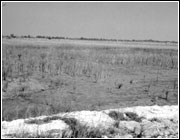 SALINITY is one of the most damaging agro-environmental problems limiting plant growth and development. In Pakistan, a large network of canals is under use for irrigation which is thought to be responsible for the build-up of salinity.
Of the 22 million hectares of the total cultivable land, 6.67 million hectares are salt-affected. Soil salinity may be robbing the country of about 25 per cent of its crop production. A major part of the salt-affected soils, about 3.5 million hectares is under rice, wheat, cotton, sugarcane, and rapeseed cultivation.
Wheat is a moderately salt tolerant crop and serves as a staple food in many countries of the world with an annual harvest of ca. 620.4 million tons. In Pakistan, wheat cultivation covered 8.158 million hectares with an annual production of about 22.12 million tons but still billions of rupees are spent on its imports annually. During 2004-05, an additional 1.4 million tons of wheat was imported. The salt stress hampers production. The seed germination, seedling emergence and early survival of wheat are particularly sensitive to salinity.
Salinity tolerance in wheat is being extensively researched but efforts to improve tolerance are hampered, particularly by the lack of understanding of the mechanisms and interaction of salinity with various environmental factors.
Wheat tolerance to salinity varies with the stage of plant growth, nature and level of salinity, duration of stress etc., and is affected by soil moisture, climate, nutrition, and management practices.
Several mechanical, chemical and biological approaches are being pursued to cope with soil salinity. One of these is to modify soil conditions to suit crop plants which are cost-intensive and little progress has been made. Along with the engineering solution to combat salinization, efforts are also made to tailor the plants so that they can thrive well under such unfavourable conditions.
Crop plants show many morphological and physiological alterations to acclimatize to unfavourable environment. One such mechanism is the accumulation of certain organic metabolites of low molecular weight which known as compatible solutes. These accumulate in the cytoplasm that is non-inhibitory to metabolism when subjected to low water potentials caused by the salinity.
Compatible solutes include glycerol, sucrose, proline and quaternary ammonium compounds. These compatible solutes provide a cellular environment that maintains the macromolecular structure and function of proteins. Generally, they protect plants from stress through different means, including cytoplasmic osmotic adjustment, protecting cytoplasm and chloroplasts from Na+ damage and hydroxyl radical scavenging, stabilization of proteins, protecting membrane structure and general maintenance of physiological stability under stressful conditions.
Among the many quaternary ammonium compounds known in plants, glycinebetaine is considered to be one of the most predominant and effective osmoprotectants. It is commonly recognized as the only solute accumulated in higher plants subjected to osmotic stress which satisfies all other solute requirements.
Accumulation of glycinebetaine helps the plant in stabilizing the structure and function of protein complexes like oxygen-evolving PS-II complex and enzymes such as Rubisco and maintains cell membrane integrity against damaging effects of abiotic stresses. Furthermore, even high concentration of glycinebetaine does not exert adverse effects on protein structure, enzyme activities, membrane functions, and metabolic processes occurring within the cell.
Glycinebetaine is abundant mainly in chloroplast where it plays a vital role in chloroplast adjustment and protection of thylakoid membrane, thereby maintaining photosynthetic efficiency which increases crop yield.
All plants however, cannot produce glycinebetaine in sufficient quantities to combat salt stress. In crops with poor or no osmolyte accumulating ability such as, genetic engineering is a way to increase stress tolerance. To date this has had some success, but transgenic plants having compatible osmolytes genes show a low level of synthesis of these solutes than required under stressful conditions.
As the biosynthesis of glycinebetaine is energetically costly and most plants do not normally accumulate sufficient amount of osmolytes, the exogenous application of glycinebetaine has been suggested as an alternative approach to improve crop productivity under stress tolerance. This approach has got considerable attention from the researchers during the last few decades.
Although many studies on salt tolerance of wheat has been carried out, basic research on biochemical and physiological role of exogenously applied glycinebetaine in salt tolerance of wheat is scarce. Keeping in mind, a study was conducted at the Botany Department of University of Agriculture, Faisalabad, a salt tolerant line S-24 and moderately salt sensitive MH-97 were used. Different levels of glycinebetaine were applied to the wheat plants at the vegetative or at the boot stage of both cultivars when grown under non-saline or saline conditions.
Salt stress caused a significant reduction in the growth and grain yield of both wheat cultivars. The inhibitory effect of salt stress was more pronounced on MH-97 than on S-24. However, this reduction in growth was alleviated by the exogenous application of glycinebetaine, particularly when glycinebetaine solution of 100 mM was applied as a foliar spray. Glycinebetaine application was more effective in alleviating the adverse effects of salt stress on both wheat cultivars when applied at the vegetative stage than when applied at the boot stage. The differential response in growth and yield of both wheat cultivars to exogenous application of glycinebetaine under saline conditions was found to be associated with their differential photosynthetic rate.
On the basis of the results of the study, it was possible to conclude that salt induced decrease in growth and yield was alleviated by the exogenous application of glycinebetaine.
Of the two (50 and 100 mM) levels of exogenous glycinebetaine application as a foliar spray, 100 mM glycinebetaine was found the most effective in alleviating the adverse effects of salt stress on the two wheat cultivars. Foliar spray was more effective when applied at the vegetative stage than when applied at the reproductive stage. Increase in growth and yield with the application of glycinebetaine in S-24 in comparison with MH-97 under saline conditions was due to better osmoprotective effect of glycinebetaine on the earlier cultivar. Thus, effectiveness of glycinebetaine application was cultivar specific. Foliar spray also increased the grain yield by increasing rate of photosynthesis through stomatal conductance. Glycinebetaine caused reduction in the accumulation of Na+ in the shoot with an increase in K+ accumulation, thereby favouring appropriate K+/Na+ ratio. Salt induced inhibition in activities of superoxide dismutase was found to be enhanced by exogenous application of glycinebetaine in both wheat cultivars which caused reduction in the amount of reactive oxygen species thereby resulting into low activities of other antioxidant enzymes (catalase and peroxidase) under salt stress.
In view of the study, it is possible to suggest that salinity tolerance could be increased in agricultural crops simply by exogenous application of compatible solutes such as glycinebetaine. With a significant growth improvement due to glycinebetaine application as a foliar spray, an increase in agronomic use of glycinebetaine on different crops to impart salinity tolerance is possible.