0
0

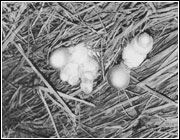 MUSHROOM cultivation which fulfils the protein requirements of human beings requires less space, care, equipment and expenditure than many plants and animals. Different agricultural and industrial straw wastes can be used for its cultivation.
Mostly, the wheat, paddy, barley, oat and gram straw, banana, sugarcane and maize leaves, empty millet heads and corn cobs, cotton waste, thin sticks and boll locules, sugarcane baggage, banana pseudostems, saw dust, logs, straw papers, manure etc., can be used as substrate (medium) for cultivation. In Pakistan huge quantity of crop wastes can be converted into edible mushrooms by using these separately or in combination.
There are thousands of mushroom varieties in the world. About 2,500 species are edible - hence not termed as toadstools. So far only 20 species are popular. The white button mushrooms or crimini/portabella or portobello (Agaricus bisporus) have commercial value. The Oyster includes different species of Pleurotus; straw different species of Volvariella; and Morels (Morchella esculentia) common in use are cultivated artificially.
Straw mushroom, Volvariella volvacea (Bull. ex. Fr.) Singer, also known as paddy straw and the Chinese mushroom, because its artificial cultivation began in China and grows best on paddy straw. It is also known as “Tributary” or “Nanhua”. This can be consumed fresh and dry, both. Only three species such as Volvariella volvacea, V. esculenta, and V. diplasia are under artificial cultivation. It contains 206.27mg of vitamin C per 100g of fresh fruiting bodies. The protein extract contains cardio-toxic proteins, volvatoxin and flammutoxin which inhibit respiration in certain tumour cells.
The mushroom can be cultivated in the tropics without special equipment in green houses, growth chambers, ditches, caves, huts, hovels, cottages, cellars, garages, sheds or shelters, bee hive shaped huts, thatched or meted roofs, thick tree groves and gardens, kitchens, bathrooms or other extra rooms of a house or any other vacant building.
The mushroom can be grown year after year with full commercial access if proper growing conditions are provided and adequate facilities available for the control of diseases and insect pests. Such conditions can be fulfilled in shelf growing by constructing proper insulated and ventilated mushroom houses. Model mushroom house must have rooms for storing, pasteurization, spawn preparation and spawning, spawn running, cropping, and packing and preservation.
The spores serving as a means of seed of mushroom are small and not visible to a naked eye. The laboratory people can inoculate sterile cereal grains with the spores or pure mycelial culture and incubate it till the development of a viable product. The grains become “spawn” and can be sown like the seed. The entire operation (spawn preparation to spawning) begins in a laboratory under sterile conditions.
The culture of straw mushroom could be obtained from the fresh fruiting body of the mushroom by tissue culture method. The culture thus obtained can be maintained on potato dextrose agar (PDA) medium, applying standard equation and method for preparation, sterilization, multiplication and inoculation. The spawn (mushroom seedling or seed) can be developed by using chopped paddy straw after boiling for half an hour and sterilization at 15-lb PSI for 20 minutes in conical flasks and inoculating with pure culture of mushroom on the following day. The pure culture and spawn needs 30oC constant temperature for 15 days. The straw mushroom needs 30-35OC temperature during cropping.
Near about all types of mushrooms grow well within the range of 80-95 per cent humidity which could be arranged with the help of a desert room cooler or by sprinkling water near the mushroom beds. The water could be sprayed over the beds but it must be kept in mind that this exercise may inhibit the growth and development.
The paddy straw leaves of different crops and empty corn cobs are chopped into 3-5cm pieces. Threshed wheat straw, cotton waste, saw dust, cotton boll locules and empty millet heads are soaked in water for 24 hours. The same is boiled in water for 30 minutes to kill insect pests and other microbes and the substrate becomes moist. The straw is then spread on an inclined cemented floor for cooling.
As the temperature comes to normal with 80 per cent moisture contents, the spawn is mixed at 10-20 per cent of the substrate dry weight - 100-200g per kg of dry substrate. The spawned substrate is filled in polythene bags under controlled temperature, humidity and light. When pinheads (initial growth of fruiting bodies) of the mushrooms appear, mouths of the bags should be opened or cut to facilitate the growth of fruiting bodies. Contaminated bags are then destroyed by burning.
The straw mushrooms are also cultivated on beds of about a square meter by placing the first layer of moist straw at about four inches. The spawn is placed 3-4 inches inside the margin of layer at 4-5 inch distance from each other and small quantity of gram flour is sprinkled. The second and third layers are prepared and spawned in the same way. The last layer is covered with a thin layer of chopped, soaked and boiled straw. Finally, the beds should be covered with polythene sheet under controlled temperature and humidity.
Cultivation of straw mushrooms on beds of un-chopped paddy straw, banana leaves etc; the bundles should be prepared of the size of straw or leaves and soaked in water for 24 hours. For bundles prepared from the banana leaves, soaking may be done for four hours only. These bundles are placed lengthwise, close to each other on cemented floor, in a cross fashion, with the opposite but ends on one side with each bed of not more than five layers. When the pinheads or small buttons of mushroom appear, the polythene sheets are removed.
The matured mushroom can be picked by twisting at the base of stem and lifting without leaving stalk. The solid portion if left may harbour flies and other insects. Only mature mushrooms are harvested carefully so as not to disturb the nearby pins. The mushroom yield the crop in flushes, therefore, care must be taken during harvesting.
The subsequent flushes depend on watering, humidity, temperature and light. Sometimes other saprophytic mushrooms as well as lower fungi and different microbes cause damage to the crop and bed. All matured, harvested or diseased mushrooms, their stalks and refuse must be removed at every harvesting and the cropping be kept clean.
The development of eggs/maturation of fruiting bodies takes 20.16 to 23.83 days after spawning and paddy straw and cotton waste are best followed by banana leaves and wheat straw. These are also reported as the best for maximum number of flushes 3.83 and 3.16 as compared to banana leaves and wheat straw 2.83 and 2.66 flushes.
The results regarding the yield performance revealed that paddy straw were best for maximum yield 67.33 per cent as compared to cotton waste 39.50 per cent; banana leaves 34.46 per cent and wheat straw 26.98 per cent.