



 0
0

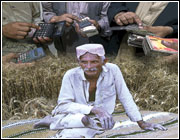 POVERTY alleviation has become the buzzword attracting a lot of attention at domestic and international levels. Mass poverty in the country is universally recognized. Poverty is more acute in rural than urban areas. Within the rural areas, there is a striking region-wise difference in the rate.
Absolute poverty is generally measured in terms of per capita income per day. This would be misleading, if, for any reason apart from direct taxes, a good part of nominal income is pre- empted, and, as a result, the disposable income is reduced to only a fraction of nominal income.
What really matters from the welfare point of view is the disposable income, as this determines the actual ability to meet the basic needs of an individual and his family. This is an attempt to highlight an area, which has a tremendous direct impact on disposable incomes in rural areas, which has been a case of benign neglect, if not a deliberate policy of the power that be. This is rural indebtedness, which, if not tackled in right earnest, can potentially frustrate all other efforts for poverty alleviation in rural areas.
Rural indebtedness has a long history in the sub-continent. Before the creation of Pakistan Muslims were known traditional borrowers from the informal sources of credit and most of them were indebted to non-Muslim money lenders up to their neck.
The mass exodus of non-Muslims from Pakistan in 1947 wiped out the massive debt. This only proved a temporary relief and gradually and steadily rural indebtedness has assumed serious proportions to pose a serious threat not only to the rural economy, but also the national economy.
In terms of overall magnitude, this may be less than the urban debt in Pakistan. What is perhaps far more crucial is the number of persons affected, the source of credit and the terms thereof. The urban debt in Pakistan is mostly business related, mainly that of government and the corporate sector, from the banking system and at nominal terms.
In sharp contrast, rural debt is personal debt involving a large segment of population, from non- institutional informal sources and at rather inhuman terms. As a result, as the system rightly goes, in rural areas, a person is generally born in debt, lives in debt, dies in debt and bequeaths debt for the coming generation.
According to a study by International Food Policy Research Institute (Washington DC), more than 80 per cent of loans taken by the low-income households are spent on consumption, food and non-food combined. These loans are mostly from the informal sector like friends, neighbours and moneylenders.
A significant proportion of the poor, who do not apply for loan, are discouraged from applying by the strict collateral requirements and high transaction costs frequently involved in doing business with formal institutions. On the other hand, the formal institutions feel reluctant to extend micro finance services to the poor due to their low paying capacity, expensive delivery, seasonal nature of demand and lack of skills required for the basic accounting (table 1).
According to the Agricultural Census 2000, there were 18.1 million rural households, of which 10 per cent were indebted. The number of farm households was 6.7 million, of which 18 per cent were under debt. Most of them were small farmers, the share of non-institutional credit was inversely related to the size of holdings. The smallest farm practically had no access to institutional credit (table 2).
According to a study by the Pakistan Institute of Development Economics (PIDE), entitled, “The Structure of Informal Credit in Pakistan” (1998), the share of non-institutional loans, which had declined from 90.2 per cent in 1973 to 41.2 per cent in 1985, was 76 per cent in 1990 and 78 per cent in 1997. The relative share of various lenders was: commission agents, 12 per cent, input dealers, 11 per cent landlord\farm machinery suppliers, 36 per cent, professional moneylenders, three per cent processing units, two per cent; shopkeepers 16 per cent, and others 11 per cent. The ratios varied according to the region. For instance, in Sindh the share of landlords\machinery suppliers was 44 per cent.
The terms at which loans are obtain from informal sources are simply atrocious and no wonder a borrowing small farmer can never hope, nay dream, to get out of it. It has been recently reported (Dawn) that rate interest charged by informal lenders in Sindh, where the traditional villain, Mahajan, continues to be very much present, is as high as six per cent per month. With this monthly rate, the simple rate per annum works out to no less than 72 per cent.
Compounded for a year or a couple of years, the rate becomes astronomical beyond the capacity of any one on honest and permissible income, not to speak of poor small farmers whose profit or net income after meeting the genuine cost of production has been eroded by increased cost of inputs. Hence the unsavoury phenomenon of perpetual indebtedness.
It was hoped that with development of banking facilities in general and the establishment of Agricultural Development Bank of Pakistan, now called Zari Taraqiati Bank Ltd., would provide some relief to small farmer by reducing his dependence on informal sources of credit. However, this has not happened.
While the ADBP\ZTBL was high jacked by the landlords, commercial banks have scrupulously avoided the small farmer. The bias is amply reflected in the amount of loans and the rate charged from the small borrowers in the agricultural sector. The position of scheduled banks, as of end-June 2003, is fully depicted in the following table. The preference to big borrowers is obvious in the rate of interest charged and the amount advanced by the banks is quite obvious to be commented upon.
The position of ZBTL has been all the more disturbing for totally ignoring the small farmer. It had lent at 14 per cent a sum of Rs7.9 billion to the top bracket of Rs500 million, but its lending, at that rate, to loans up to Rs10 thousand was only Rs42 million, for loans from Rs10 thousand to less than Rs25 thousand, it was Rs289 million (table 3).
The State Bank has recently initiated an active policy of stepping up bank credit to agriculture and, as a result, bank advances to agriculture moved up from Rs113 billion in June 2003 to Rs113.5 billion in June 2004 and was expected to touch Rs200 billion in 2005. Will this benefit the small farmers? It must be remembered that agriculture is not a monolithic sector but a dualist one with marked deference in the character of the two main stake holders.
There are landlords, in the operational sense and not in legal terms, who mostly reside in major towns, have diversified economic activity to include commerce and industry. To top it, there is the most lucrative business of politics. They constitute a powerful lobby to have their representative in every government of any hue in all its tiers.
At the other end are the poor, illiterate, dumb masses of small farmers. The real problem is of this category constituting a major portion of the total population. It would be stating the obvious that the benefit will never trickle down to the downtrodden small farmers.
The reduction in the interest rate charged by ZTBL from 14 per cent to nine per cent is undoubtedly for the big borrowers, if at all they are pleased to pay and do not get the loan ultimately written off.
The trickle down process will only work, if the small farmer has access to institutional credit. This pre-supposes not only the policy and procedures of lending to this special group, but also the convenient location of a bank office for availing the facility without undue cost in money and time.
To begin with, there were not many bank offices in rural areas to meet this criterion. This has been further reduced as a matter policy totally denuding the rural areas of banking facilities which is detrimental not only to availability of institutional credit, but also mobilization of rural saving.
More than 40 per cent of bank branches in small towns with a population of 10 thousand have been closed since 1999 at the directive of the central bank, which, in turn, is attributed to the demand by IMF. The plea is that they were loss making branches. This is barking the wrong tree. The truth is that they were loss making, not for any operational inefficiency on their part, but because they were not lending in rural areas and thus deliberately denying themselves of a sure source of income.
The small rural borrower is more credit worthy and has an excellent repayment record all over the world. What is needed is the early reversal of this ill-conceived policy of closing branches in small towns and rural areas. Villages on the periphery of towns with banks some how manage to get some credit from these branches. The crux of the problem is the hinterland, serving as the preying ground for informal lenders, and banking facilities must be taken there.
This calls for exclusively rural banks. Big farmers have no problem of access to institutional credit and it would not be a bad idea if the ZTBL is converted into a Rural Bank, pushed out of towns into rural areas and a ceiling put on individual loans to ensure small lending.
The traditional practice of collateral based lending will have to be looked into. Among other things, it seems worthwhile to try collective guarantee, which has proved quite successful in Bangladesh for the Grameen Bank lending.
A paper with tremendous potential to serve as collateral but not yet considered is the receipt or Chit issued by ginning factories and sugar mills for delivery of the commodities to them. At present, the factories and the mills inordinately delay payment, sometime spread over years, and the farmer is forced to sell the Chit in the market at a deep discount. Commercial bank can and should very well accept the Chit as collateral without any undue risk. Given the genuine will to help the small farmer, the sky is the limit for innovations.
The basic causes of rural indebtedness must be also addressed for a more durable solution. It is well known that small farmers mostly live beyond their means and some of their expenses are avoidable. The expenditure on religious and social functions, just to vie with one another, is disproportionate to the means of the small farmer and this necessitates borrowing.
Litigation, often continuing for generations, is another serous drain on the small farmer. This mostly pertains to dispute about landownership. For this, to a very large extent, the existing Patwari culture is to be blamed. While the Patwari or Tapedar is under the thumb of the landlord, he is a real nuisance to the hapless small farmer and many litigation cases are born from manipulation of land ownership record.
Computerization of land record is often talked about by government but not implemented because of powerful vested interests. Proper maintenance of land record and quicker disposal of property disputes by courts can go a long way in reducing the unnecessary burden of the farmer and, in return, spare him from leaning on the informal credit.
Education in rural areas, observance of Islamic values like austerity and strict compliance with the Quranic prohibition of acquiring other people’s wealth by devious manipulation through officials (2:189) in the Islamic Republic of Pakistan can help a lot.
Reducing the need for borrowing and replacing the informal credit by institutional credit, the latter enhancing the disposable income in a very big way, have the potential for effective meaningful poverty alleviation in rural areas. This would be an easy task as it will impinge on the power structure and there are very powerful vested interests ready to defend the status quo.
Apart from the well-known elements, there is now a new phenomenon of informal lenders not using their personal capital but serving as middlemen and earning a living thereby. The PIDE study reveals that informal lenders use their own resources up to 52 per cent and the balance is borrowed, 33 per cent from formal institutional sources and 15 per cent from informal sources. This inter-linking of formal and informal sources of rural credit is a watershed for credit management.
In conclusion, it may be observed that reducing rural indebtedness and replacing informal sources of credit by institutional credit can change the lot of rural society in a very short time. In the present circumstances, the problem can not be effectively addressed in a perfunctory manner as replacing the non-institutional with institutional credit involves displacing a person, rather an age old institution, which provides credit at the door step of the borrower in confidence, round the clock and without any fuss about the collateral, even though his terms are very onerous and method of recovery at times quite cruel. This requires a strong missionary zeal and devotion. Who would provide that critical element?






























