



 0
0

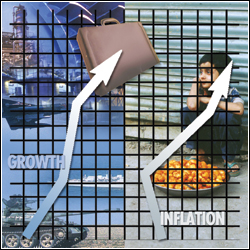 THE ultimate objective of economic policies in any country is to increase the welfare of its population. Monetary policy provides the vital support to national economic policies in achieving this goal.
Before the advent of central banks, national exchequers were responsible for handling both fiscal and monetary matters of the economy. Modern economic thinking emphasizes the independence of monetary authorities in order to minimize the risk of “inflationary bias” that is inherent in monetary institutions due to the power of creating money.
An undue zeal in using this power can easily reduce the welfare of an economy by creating hyper inflation. Similarly, an unwise reluctance in providing needed monetary accommodation can also reduce the wellbeing of economic agents by creating depression.
The goals of monetary policy are almost always multiple. These are usually enshrined in the law under which a central bank functions. Even if a central bank of a country has a single objective of maintaining price stability, as some central banks of advanced countries like members of the EMU, New Zealand, Canada, England, Australia, etc., have, this objective is without “prejudice to growth”.
This single objective has been put in the charters of their central banks because the past economic experience of these economies have firmly established that it is a low inflation of around 1-3 per cent that provides the best support to attaining the maximum possible increase in national income and employment.
This is not the case for developing countries. The structure of underdeveloped economies is much different from that of the developed counterparts. Presence and extent of poverty and a subsistence sector and the relatively inadequate outreach of its financial sector are some of the factors that make the structure of a developing country very different from that of an advance country.
Moreover, information and data problems in developing countries are much more severe than in advanced economies. This makes the art of implementing monetary policy in a developing country far more challenging than in developed countries. Nonetheless, this art is firmly rooted in the science of monetary policy as embedded in the current knowledge of economic science.
Theoretical and empirical research has shown that the monetary policy can significantly alter the course of real economic activity in the short-term, although in the long-term the impact of increase in excess money supply is only creation of inflation. [1]
Central banks of many developing countries and some advanced countries also operate to achieve multiple objectives. The most notable among the central banks of advanced countries is the Federal Reserve Board of the US which has three objectives. Its charter bounds it “to promote effectively the goals of maximum employment, stable prices, and moderate long-term interest rates”.
The State Bank of Pakistan operating under the SBP Act, 1956 also has multiple objectives. Multiple goals are first spelled generally but very wisely in its preamble “… to regulate the monetary and credit system of Pakistan and to foster its growth in the best national interest with a view to securing monetary stability and fuller utilization of the country’s productive resources”. Goals are then narrowed down in section 9A of the SBP Act and made explicit as those of inflation and growth set by the federal government.
The proposition of trade-off between inflation and growth does not hold for all levels of inflation. Recent empirical research [2] has shown that a threshold level of inflation rate in the range of 7-11 per cent is optimal for developing countries in the sense that real economic growth is maximum.
A higher than threshold level of inflation will lead to lower growth and similarly a lower than threshold level of inflation will accompany a lower than optimal rate of growth. Therefore, the costs of inflation are the reduction in the level of economic activity, including both the employment and output.
Higher the rate of inflation and the more unexpected it is, more the costs associated with it. At the same time, low inflation is good for the economy as it helps attain its potential output. This threshold rate of inflation has been recently estimated for Pakistan as nine percent, [3] which clearly shows that double-digit inflation will hurt growth.
Inflation impacts the economy, mostly negatively, in many ways. It affects income distribution in the economy through changes in relative prices. Even with stable inflation, redistribution of income and wealth occurs because of relative price changes. These effects are compounded with rising inflation because the extent of rise in prices of different goods and services in the consumption basket is different; various economic contracts extend into future and depend on expectations about price increases; and real rates of taxation are increased due to rise in prices. However, the net effects of inflation would depend on the nature and strengths of effects on aggregate demand and supply.
Inflation may affect aggregate demand through a number of distinct ways. First, inflation can affect investment activities in the economy by creating uncertainty about the future evolution of output and input prices and profitability.
Second, inflation can exert negative effect on consumer spending by reducing the real value of consumer wealth.
Third, it can reduce the real value of government expenditure, which is an important component of aggregate demand, particularly in developing countries.
Fourth, inflation can affect economic activities by promoting imports through increase in domestic prices relative to foreign prices.
Fifth, it may increase the propensity to save by increasing consumer fears and feelings of insecurity. And finally, it can move investment and consumption forward in time by inducing spending now instead of later. It may be noted that the effect of inflation on aggregate demand in the economy is not straightforward, as the last effect of inflation is beneficial to the economy.
Inflation also influences the aggregate supply situation in many ways. First, inflationary expectations encourage firms to carry larger inventories and stocks than necessary besides buying plant and equipment sooner than really necessary. Second, human resources are diverted from efficient management and production towards manoeuvring and speculation to benefit from inflation. Third, long-term contracts are discouraged and resources are wasted on frequent negotiations. Fourth, market information becomes less useful with inflation as every transaction requires new information gathering. Finally, agents excessively and needlessly economize on use of deposit balances in order not to hold depreciating money and requiring more frequent settlement of accounts.
It should be clear from the above discussion that inflation makes the job of formulating monetary policy very complicated. Furthermore, even if the monetary authorities deem the costs of inflation to be moderate, general public will be unwilling to believe this. An environment of rising inflation usually leads to deterioration in public discourse of inflation [4]. This seems to be happening now in our country!
One major reason that people tend to overstate the costs of inflation is the widespread prevalence of what is known as “inflation fallacy” [5]. This occurs because consumers think that their incomes have not kept pace with inflation. In reality, this is true only for a small number of households. Even when the increase in real income is lopsidedly in favour of the rich, increase in income of low-income households usually surpasses inflation. Another reason for the “inflation fallacy” is that when price of even a single item of consumption basket rises, every household gets affected, whereas when a person becomes unemployed, only one household gets affected.
Besides discussion related to the cost of inflation and unemployment, the composition of inflation is also of vital importance. Information that how much inflation is stemming from supply and demand pressures in the economy is of particular importance. As monetary policy is unable to control inflationary pressures arising from supply side of the economy, the central banks concentrate on the core inflation, i.e., inflation excluding oil and food.
In Pakistan, low inflation had characterized the economy since 1998/99 but at the same time the country was caught in a low level equilibrium as the average per capita growth rate during the 1990s had tumbled down to 1.9 per cent. This stagnation in economic activity had given rise to rising unemployment and therefore the major aim of economic policy was to revive economic growth and use the tool of monetary policy as an instrument for that purpose.
The SBP was duty bound both morally and legally to perform the difficult act of balancing the achievement in growth and inflation objectives. The SBP has very consciously provided a monetary stimulus to our economy in recent past till March 2005. This stimulus has immensely benefited the economy in terms of increasing the real GDP growth rate to 8.4 per cent in FY05, 1.8 percentage points higher than the target. However, inflation has also exceeded the revised target of seven per cent by a margin of 2.3 percentage points.
There are about 22 million households in our country and each one of them, whether poor or rich, is feeling the pinch of rise in prices. There are about 3.6 million persons in the labour force estimated to be unemployed. Even if all of them are from different households (which is not necessarily the case), 3.6 million households are feeling the pinch of unemployment. There is no “fallacy” in unemployment. Costs of unemployment to households are always real as opposed to the costs of inflation.
The fact that unemployment usually hurts the economy more than inflation comes up empirically in various surveys conducted in advanced countries. This new strand of empirical investigation is known as “happiness research”, which tries to measure the level of well-being of citizens. According to the latest findings, “…unemployment strongly reduces subjective self-reported well-being, both personally and for society as a whole” [6]. This research further reports, “…the effect on happiness of a one-percentage-point increase in unemployment is compensated by a 1.7-percentage-point decrease in inflation.” This means that the unemployment problem is 70 per cent more costly than the problem of inflation.
Although no such research is available for our country but it would be reasonable to assume that underlying psychological behaviour of citizens in both developed and underdeveloped countries is similar. It is only the economic structure that is different.
Furthermore, and unfortunately, we do not know the rate of unemployment of our economy for 2004-05 which has just ended. This is estimated in the labour Force Survey, which was last conducted in 2003-04. There seems to be a lag of two years in knowing the true level of unemployment. In contrast, inflation is available with a lag of only one week for the SPI and one month for the CPI and the WPI.
As the objective of the monetary policy was achieved and growth had, in fact, overshot the target generating inflationary pressures the SBP in July 2004 onwards had to shift the gear and moved more decisively to tackle inflation. The early moves were more measured and gradual but when these moves did not produce the desired dampening effect, the SBP’s policy stance turned towards a more aggressive tightening.
The prevailing discourse on inflation and monetary policy suggests that the SBP was late in tightening its monetary policy. The SBP welcomes these criticisms but solidly disagrees with them. There are clear signs of deceleration in food prices.
Furthermore, FY06 envisages a monetary expansion of 13.05 per cent, about two percentage points less than indicated by the eight per cent target of inflation and seven percent for real GDP growth. This is to ensure that the past monetary overhang is reduced gradually and inflation comes down to target level this year and continues to go down gradually in subsequent years to reach seven per cent in 2009-10. In fact, higher growth in the GDP in FY05 is also going to help achieve this.
A quantitative study on determinants of inflation in Pakistan shows that “a one per cent permanent increase in real output decreases the CPI by 0.71 per cent and the GDP deflator by one per cent after a lag of one year” [7]. In this way, the fruits of monetary policy followed in the last couple of years would continue to be felt in coming years.
References:
1. “The Science of Monetary Policy: A New Keynesian Perspective” by Richard Clarida; Jordi Gali; Mark Gertler in Journal of Economic Literature, Vol. 37, No.4 (Dec 1999).
2. “Threshold Effects in the Relationship between Inflation and Growth” by Mohsin Khan and A. Senhadji in RMF Staff Papers, Vol. 48, No.1 (2001)
3. “Inflation and Growth: An Estimate of the Threshold level of Inflation in Pakistan” by Yasir Mubarik in SBP Working Papers, NO. 8, (June, 2005)
4. “The Costs of Inflation” by Gardner Ackley in The American Economic Review, Vol.68, No.2 (May, 1978).
5. “Public Attitudes about inflation: a comparative analysis” by Kenneth Scheve in Bank of England Quarterly Bulletin: Autumn 2001.
6. “What Can Economists Learn from Research Happiness? By Bruno S. Frey and Alois Stutzer in Journal of Economic Literature, Vol. 40, No. 2 (June 2002)
7. “Determinants of Inflation in Pakistan” by Dr. Anjum Nasim, State Bank of Pakistan (August, 1997).
(The author is economic advisor to the State Bank of Pakistan)






























