



 0
0

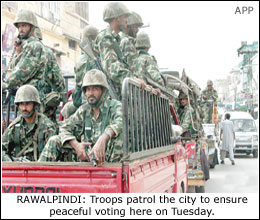 RAWALPINDI, Aug 23: Troops and police made a joint show of force here on Tuesday as the district prepared for the second phase of local government elections being held on August 25.
Troops had been called out to ensure peaceful polling as 135 of the 1,645 polling stations in the district have been declared “sensitive”.
Heavily armed troops and police contingents carried out a flag march on main Rawalpindi roads as to forewarn potential trouble- makers.
In another move, the government has put state-run hospitals and Civil Defence officials on high alert to meet any emergency during the local body polls.
A violent incident involving arch political rivals during the election campaign had heightened tension in the city and the law enforcement agencies feared it might erupt again.
Superintendent of the city police, Waqar Chohan, who led the flag march, told Dawn that police could not take any chances and would put in a more effective security plan for the polling day.
“Strict security arrangements have been taken for the polling day and nobody would be allowed to display weapons,” SP Chohan said.
A six-member Civil Defence team of bomb disposal experts has been deployed in the city while another 15-member team is being kept stand-by.
Rawalpindi’s three government hospitals have been asked to be prepared to deal with any emergency by stocking medicines and blood and keeping ambulances, doctors, nurses and paramedical staff on stand-by.
An emergency meeting of senior doctors has been scheduled at the RGH for Wednesday. Leaves of doctors related to the emergency department have been cancelled.
The flag march, comprising of 65 police vehicles and troops started from the police lines. It passed through different areas and returned to police line.
Army troops later started patrolling the declared sensitive areas.
Out of the 135 sensitive polling stations, 82 have been put in category A while the rest in category B.
About 1,760 policemen will be deployed at polling stations.
As part of the contingency plan, another 3,125 constables, 365 head constables, 310 ASI/SIs, 30 inspectors, 16 ASP/DSPs, 3 SPs and one SSP would perform the security duty.
Besides it, the 5,426 officials of Civil Defence will be posted at polling stations.
Scores of vehicles have been impounded by the local police to carry the polling staff to their destinations.
The police forced the passengers of the impounded vehicles, including women and children, to disembark and took the vans, buses and mini-trucks to police lines.
Yaqoob Malik from Attock adds: The government on Tuesday withdrew the decision to deploy army troops in Attock district just two days before the local bodies elections, causing great sense of insecurity among the voters and candidates belonging to the opposition parties.
Earlier, the district was declared very sensitive on reports of law-enforcement agencies due to prevailing political tussle and confrontation like situation between the three PML rival groups.
In a meeting between the district police officer and an army team on August 18, it had been decided that troops would be deployed at all six tehsils of the district Attock during the LB polls to assist the police and administration in maintaining law and order situation.
All the stakeholders were shocked when they came to know that troops would not be deployed despite the recommendations of the district administration.
Sources said the Punjab government was not willing to deploy the troops and it also reprimanded the district administration for making frequent demands of troops’ deployment.
Many candidates, including Mirza Abdul Rehman, approached the district returning officer and expressed reservations over the decision and demanded to make foolproof security arrangements on the polling day to avoid expected interference of the ruling party in the election process, the sources added.
When contacted DPO Capt (retired) Malik Zafar Iqbal Awan confirmed the report and said he did not know the reason behind the decision.
He said the police were fully prepare to maintain law and order situation on the election day besides providing security to the polling staff. When asked how could police alone be able to ensure peaceful election, as it already lacked manpower, the DPO could not give a satisfactory reply.




























