0
0

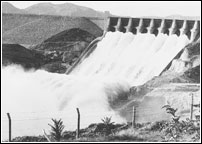 THE controversy over water availability is at the heart of conflict over building new dams for upstream water storage. Sindh’s experts estimate that every four to five years, the yearly system flows are around 123.59 MAF. The annual average water availability from 1922-23 to 2002-03 has been 138 maf.
Wapda officials, however, estimate an unbelievable figure of 152 maf as average annual flows.
The following factors must, therefore, be considered seriously to estimate average annual availability of water:
(i) at present, Pakistan has no treaty with Afghanistan for apportionment of water from Kabul River which contributes an average of 20.42 MAF to the Indus main river. Potential short term uses by Afghanistan are about eight maf. Adjusting for these uses, the water availability from western rivers will become 130 instead of 138 maf; and, in four out of five years, 116 instead of 124 maf. These uses by Afghanistan can increase in the long run, causing further reduction of water in the Indus basin.
(ii) With speedy construction of dams and barrages by India, the hypothetical contribution of eight maf by the three eastern rivers (which were sold unilaterally by Punjab technocrats and dictatorial government of Field Marshall Ayub Khan in 1960 while Sindh was under the bondage of One Unit), cannot be simply assumed as permanently available for any realistic projection.
(iii) The expectation that the on-going national programme of improvement of watercourses (NPIW) would save significant quantum of water for filling in 2-3 mega dams over the long term, is nothing but a myth as is evident from past experience of several on-farm water management projects. Being a crash programme, the NPIW has no in-built mechanism to ensure good quality works, proper O & M and sustainability through farmer participation.
(iv) The assumption that the provinces shall continue saving 12 maf of allocated water annually is also a fallacy, because there is an increasing use of water in Punjab, Balochistan and NWFP (including above rim station utilization).
Sindh technocrats have, therefore, been pleading that there is simply no surplus storable water available, if all requirements and commitments are duly met. Wapda and other pro-dam lobbies have not been able to give reliable information on future average annual availability of water flows in the system.
Under the scenario of sufficient water availability in only one out of five years, there is no way that the two mega dams (Kala Bagh and Basha) costing about $25 billion or more could be rated as feasible in financial terms.
The proposed mega dams cannot stand the test of real economic feasibility when using sensitivity elements such as regional equity, lower riparian rights, welfare and distributive justice, food security, and opportunity cost of poverty, environmental degradation and quality of drinking water.
Controversy over construction of new dams is partially also a result of mistrust which is deep rooted in the past one and a half century of broken agreements and promises by Punjab.
Some glimpses of operation of existing reservoirs are highlighted hereunder to establish the case in point:
* Dams should be filled when the water is surplus. But Mangla dam is forcibly filled in April and May when there is shortage in Sindh and heavy requirement for Kharif crop.
* After the Indus Water Treaty 1960, allowing exclusive use of 33 MAF of eastern rivers to India instead of their historic utilization of only eight maf, the withdrawals of Trimmu, Islam and Panjnad barrages on Indus have been placed at the same priority with that of Guddu, Sukkur and Kotri resulting in drastic reduction of water at the lower stream barrages.
* GTC is being constructed with a head discharge of 8,500 cusecs whereas maximum discharge allowed in Water Accord’s ten daily allocations by the CCI, in spite of valid objections by Sindh province, is 5,900 cusecs only. There is no guarantee that the GTC would not be converted into a regular irrigation canal just like its predecessors- the CJ and the TP link canals, and used for irrigation of Punjab fields even during shortage years.
* The so- called Historic Use Formula of 1994, which was neither agreed by Sindh nor approved by the CCI, is belligerently being followed for Indus water apportionment since then. Ironically, it is in vogue even after its annulment by the IRSA under directives of Chief Executive Secretariat.
* Downstream Kotri escapade to sea has been continuously denied, and apportioned by Punjab in some years, despite protests by Sindh.
* No flood canals and small dams have been constructed in Sindh province, despite pre-proposals for about a dozen such projects.
Under the circumstances, the mistrust between Sindh and Punjab has grown out of proportion. Every passing day, the provoking statements of pro-dam lobbies are fanning this fire.
It appears now that a unilateral announcement of constructing Kalabagh dam will be made shortly by the Prime Minister Mr Shaukat Aziz who, like his predecessors in power, desires to construct a mega project from the windfall dollar reserves; whereas there are several high priority areas such as social development, investment in vocational education and employment generation, cutting edge research and technology, use of atomic energy for peaceful purposes, and Thar coalfield development which qualify for critical investment and which may have a high economic internal rate of return vis-à-vis the Kala Bagh Dam.
From the review of books and materials on Sindh Water Case, one may easily conclude that there is no absolute rejection for the construction of a large carry over storage dam per se. Opposition to the two mega dams emanates from their proposed site, non-availability of water to fill the new dams in four out of five years, intended construction of irrigation canals by Punjab on new dams, low potential and high cost of power generation from proposed dams vis-à-vis exploitation of Thar coal reserves of Sindh, indifference to opportunity cost and feasible alternate uses of huge investments even in the irrigation and drainage sector, track record of violation of water accords by Punjab and lack of legal and regulatory framework to ensure judicial apportionment and sharing of Indus waters in the long run.
The government, Wapda and the pro-dam establishment of Punjab, have done nothing concrete to guarantee that water apportionment shall be done judiciously and on a sustainable basis; and, that the losses, if any, suffered by all Sindh stakeholders shall be duly compensated.
The unusually hurried process of decision making on upstream irrigation projects, has also multiplied the doubts and unleashed active resistance in Sindh.
Mangla dam with raised walls, Tarbella dam and construction of small feasible dams at different sites, can easily handle the water storage needs of Pakistan up to year 2030 A.D.
Assuming that completion of a mega irrigation project such as the KBD may require about 10 years, Pakistan has a comfortable margin of 15 years or so for confidence building measures (CBMs) to arrive at a consensus on Indus water sharing and storage.
With sincere efforts, skilled negotiation, credible guarantees for future water sharing, initiation of necessary irrigation and drainage projects in Sindh and appropriate compensation for deltaic affectees, such a consensus can most certainly be managed during a much shorter time period.
Alongside the CBMs, there is also a need to base all investment decision making on proper data base. The conflict over technicalities of water availability and appropriate carry over dam sites, can be managed through open exchange of information among all stakeholders. The current Wapda policy of denial of factual information has been a major hurdle in attaining consensus on various irrigation and drainage projects.
Reliable data is expected from the on-going work of technical committee and downstream Kotri study. In addition, there is a need to complete financial and real economic feasibility studies on other proposed dam projects/ sites.
Constitutional as well as Pakistan Army guarantees on non-construction of irrigation canals from the storage dams and adherence to mutually agreed water apportionment (invoking CCI and/or thirty party mediation during violations by any party), may be required to arrive at a consensus among all four provinces.
On the international front, it may be advisable to utilize the available time margin for striking favourable water agreements with India and Afghanistan. If need be, the 1960 Water Treaty with India may be re-negotiated through the World Bank, invoking genuine needs of Sindh agriculture and environmental escapade to sea. The big hurry of pro-dam lobbies is quite unnecessary and detrimental for provincial harmony.
The irresponsible and supra-constitutional proclamations of Punjab Water Council may magnify the manageable conflict to extraordinary proportions; whereby, the issues of apportionment of Indus waters and construction of storage dams below the Tarbela site, might get referred to third party international forums in the short run. Such a situation shall be against the national sovereignty, and all patriotic elements must try to avoid it by accommodating the genuine viewpoint of each other.