



 0
0

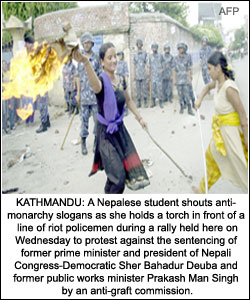 KATHMANDU: Nepal’s main political parties rejected on Monday an appeal by the country’s Maoist rebels for talks to plan joint opposition to King Gyanendra’s seizure of power, saying the guerrillas should stop killing civilians first. Their rejection of dialogue with Maoist guerrillas opposed to the monarchy came as political unrest continued in the country and pro-democracy activists clashed with police.
“We urge the Maoists to stop attacking unarmed civilians, including political activists, and stop extortion,” the top leaders of seven parties said in a statement.
“We appeal to the rebels to create an atmosphere of confidence and demonstrate that they are sincere about talks with the political parties.”
Nepal’s parties have been protesting against the Feb 1 sacking of the multi-party government by the king, who also suspended civil liberties and curbed media freedom.
Earlier this month, the elusive Maoist guerrilla chief Prachanda proposed talks with political parties to discuss the possibilities of common protests against the king to press him to roll back his seizure of power.
The rebels — since launching their violent campaign to set up a single-party communist republic by toppling the monarchy — have killed hundreds of civilians, including political workers, straining their ties with mainstream political groups.
In April, a landmine planted by the Maoists killed 38 civilians on a bus, but the rebels apologised saying the device was aimed at an army convoy.
“END MONARCHY”: About 200 pro-democracy activists, including journalists and human rights workers, clashed with police on Monday in the heart of the Nepali capital, Kathmandu.
At least two dozen of them were dragged into waiting police vans and taken to detention centres, witnesses said.
“Long live democracy, down with autocracy,” a protester shouted as police arrested other activists.
Others shouted: “Let us end absolute monarchy.” The king has ignored international pressure, including from the United States, to restore democracy and analysts say he is far from cutting any deal with the parties or the Maoists.
Gyanendra said he seized power as squabbling parties had failed to control the Maoist rebellion which has left more than 12,500 people dead since 1996.—Reuters



























