



 0
0

 STRANGE as it might appear, Pakistan’s move to expand its Islamic banking base has not been undermined by the upsurge of religious extremism. When Islamic banking started off in Egypt in 1963, the interest-free banking practices were kept undercover for fear that they may be regarded as fundamentalism——an anathema for the country’s image.
Unlike most other countries that started their Islamic banking system through private investor, in Pakistan, this system was initiated by a change in government legislation in 1981.
These new laws permitted banks to accept deposits on the basis of profit-and-loss sharing. Later, in July 1985, these laws were made more stringent and no bank was allowed to accept any interest-bearing deposits and all deposits were subject to profit-and-loss sharing rules, with a few exceptions. Nonetheless, these practices only served as a façade for the Shariah based banking while the conventional interest-based system also continued side by side.
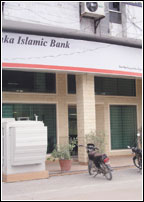
Three banks have been given full-fledged Islamic banking licences which include the Meezan Bank, Al-Baraka Bank and the recently sanctioned Bank Islami Pakistan which is expected to go into operation sometime later this year. Moreover, there are nine banks that have separate branches for purely Shariah based transactions. Hence, a total of 11 banks involved in Islamic banking have over 60 dedicated branches.
The State Bank of Pakistan (SBP) has granted branch banking licences to the Muslim Commercial Bank (MCB), Citibank, Standard Chartered Bank and an approval in principle for full-fledged banking to the Dubai Islamic Bank. The bank branches are already functioning on the basis of profit-and-loss sharing. Such banks have set the stage for a parallel-banking system in the country, with the interest based conventional banks operating in conjunction with their non-interest, Shariah-based branches.
Many foreign and local commercial banks are planning to enter the market. They are eager to make their impact in the Islamic banking sector. The current market players in this Shariah-based system, however, have yet to perfect their game.
The central bank has been granting licenses to Islamic banks but it has suspended issuing licenses temporarily on the grounds that the country is over-banked. Also, the SBP has promised to provide a level playing field to investors—both foreign and domestic—who are venturing into the field. The SBP has kept the minimum capital requirement for interest-free banks at Rs2 billion for a full-fledged bank/subsidiary and Rs50 million for a branch. It has set the cash reserve ratio to be traced at with the central bank for Islamic banks at 11 per cent—all in cash—, while that for conventional banks is 20 per cent, 15 per cent being the statutory liquidity requirement and five per cent in cash.
The reason being the lack of Shariah-compliant government securities. Islamic banks cannot maintain their liquidity requirement by securing government bonds as they are offered at a fixed interest rate, and these rates do not conform with Shariah principles. Thus, Islamic banks can invest the difference of liquidity requirement at four per cent into lucrative assets to compensate for the foregone return on the government securities.
At this point in time, the SBP does not serve as the traditional ‘lender of last resort’ for Islamic banking institutions, as how much financial support can be provided is being evaluated in the light of Shariah laws.
However, even with such a strong inclination to Islamize the banking system, the SBP is meticulously scrutinizing the personnel capabilities of banks before issuing permits. For this reason, the Bank of Khyber was not allowed to convert its Nowshera branch to an islamic bank branch as it had several managerial flaws, and needed to improve upon the performance capabilities of its personnel and strengthen its financial base.
The very recent, Bank Islami Pakistan has, in addition to Jehangir Siddiqui and Co. the DCD group as its investors. This has much to do with the central bank’s belief that an internationally reputed foreign group with technical expertise, human resource and capital will serve to strengthen the Islamic banking sector.
Foreign banks, having established a parallel banking system are overcoming their initial fear of Islamic banking. Islamic banking branches lack Shariah-compliant products, human resource and capital. By authorizing collaboration between these groups—both local and foreign—the central bank has created an environment conducive to Islamic banking sector that will help to diversify the type and maturity of financial instruments.
The need for developing— both short and long-term instruments—- is crucial as an IMF report states that although ‘the number of Islamic banking institutions has grown in Pakistan since 2001, they do not have a significant effect on the economy as their combined assets represent less than one per cent of the entire banking systems assets’, and that the Islamic banking sector faces a lack of Shariah-compliant government securities.
Even though the total assets of these institutions grew by 244 per cent to Rs44 billion and deposits grew by 263 per cent to Rs30.5 billion, a lot has to be done before this sector has a significant impact on the economy. These banks need to plunge headlong into the drive to come up with more Shariah-compliant products to be as competitive as their interest-based counterparts.
The different instruments currently used by Islamic banks centre around basic deposits, investment accounts, equity funds and Islamic hedge funds. More specifically, deposits are termed al-wadiah (safe-keeping), investment funds include the mudarba (profit-sharing), where the bank contributes the capital and the client, the technical expertise. Losses are met solely by the rab-ul-maal (owner of capital).
Investment funds also include the musharka (equity participation), where the bank and its client use their capital jointly to generate a surplus; the profits or losses are shared according to the pre-determined equity ratio. Trade financing tools include ijara (leasing), bai’muajjal (deferred-payment sale), bai’salam (pre-paid purchase), and murabaha (mark-up) financing. In a murabaha transaction, the bank finances the purchase of an asset for a client and adds a mark-up before selling it to the client.
However, many of these instruments have their setbacks. To begin with, the most popular instruments in Islamic banks are for a short-term, around two years or so. They contribute to the flexibility of the bank but impair its risk-taking ability. Because these projects take years to mature, money is tied-up for longer periods and hence, Islamic banks cannot offer returns as swiftly as conventional banks and lose out on competitive basis.
The other setback being that this mode of banking has yet to design an instrument that can help to repay government debts, and manage foreign currency deposits and foreign loans that arise from trade. Till such measures are adopted to deal with these international transactions on an interest-free basis, Pakistan has no choice but to move along with a parallel banking system.
Currently, the size of the global market for Islamic banking is estimated to be between $200-300 billion, and this specialized banking sector is said to be growing at a rate of 15 per cent annually. The system has the added advantage of curbing speculative activity as all its financing is linked to commercial transactions.
It is true that Islamic banking faces a lot of challenges that need to be overcome. There is no denying the fact that at the present level of operations, there is a lot to be desired in terms of efficient utilization of resources, creativity and innovation.






























