0
0

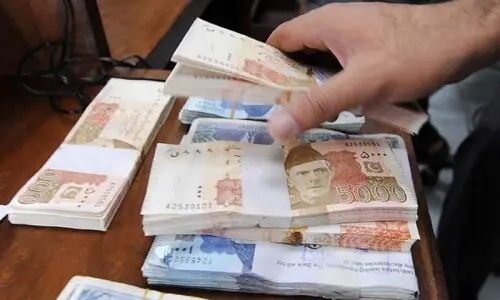
KARACHI, July 13: Taxpayers are facing problem in getting their ‘challans’ processed and even depositing of tax amount following the hooking up of all designated branches of the National Bank of Pakistan with the Income Tax Department.
The online service extended by the NBP to taxpayers for submitting challans and depositing tax amount is based on a software prepared by the Pakistan Revenue Automation Ltd (PRAL).
Perhaps the bank is not aware of the fact that its online facility is creating problems and depriving the government of much needed revenue.
There are two major deficiencies in the software for depositing tax amount in the National Bank’s designated branches. However, it is quite surprising that neither the NBP nor the tax authorities detected the fault.
Whereas the State Bank continues to accept and process the ‘challans’ manually and also collect tax amount from taxpayers, but the NBP has entirely moved to online services which is causing hardship to taxpayers.
Younus Rizwani Sheikh, former president of All Pakistan Tax Bar Association (APTBA), told Dawn that the all designated branches of the NBP from July 1, 2005 had stopped manual accepting/processing of ‘challans’ and collecting of tax amount. But the major problem was that the challans and tax amount of all those taxpayers who do not have NTNs were not accepted.
He further said that the software installed by the PRAL was so defective that it also rejected all those NTNs issued on old National Identity Cards (NICs) and only accepts NTNs issued on Computerized National Identity Cards (CNICs).
Mr Rizwani said it was needed that the National Data Registration Authority (NDRA) should have been asked to provide details of CNICs or even linked its system with PRAL for getting information for smooth running of the collection process.
Quazi Anwar Pasha, a tax consultant, told Dawn that such conditions would naturally result into less number of taxpayers whereas the country’s tax-to-GDP ratio was the lowest in the world with only 1.2 million taxpayers.
Above all, he said that more than 50 per cent of taxpayers belonged to salaried class which knew very little about tax or tax department as their tax liability was deducted at source by the employers.
Mr Pasha further said that new businesses initially operate without NTNs but may have to deal with existing and old entities having NTNs. It would mean that such category of business would also be rejected and their ‘challans’ and tax amount would not be accepted.
The tax officials normally claim that they have evolved such a simple and quick system for the issuance of new NTN to be delivered at their home, but in reality things on the ground are quite different.
As per the system for getting new NTN a taxpayer has to pay Rs50 only towards courier services and also submit photocopy of his CNIC along with a simple application form duly filled in. However, in real terms the things are not so simple and one will never get NTN at his residence or place of work if he has not given ‘illegal gratification’ to the concerned staff.
According to a survey carried out by Dawn, the rate for getting NTN is Rs1,000. After paying this amount one will get the number even in an hour time.